Amazfit launched the Balance 3 in June 2026, giving Balance 2 owners a real reason to pause and compare. Both watches share the same premium DNA — circular AMOLED displays, sapphire glass, dual-band GPS, and Amazfit’s signature long battery life — but the Balance 3 makes meaningful jumps in brightness, storage, processing power, and build quality. So is it worth upgrading, or is the Balance 2 still a smart buy? Let’s break down Amazfit Balance 3 vs Balance 2 section by section.
Design and Dimensions
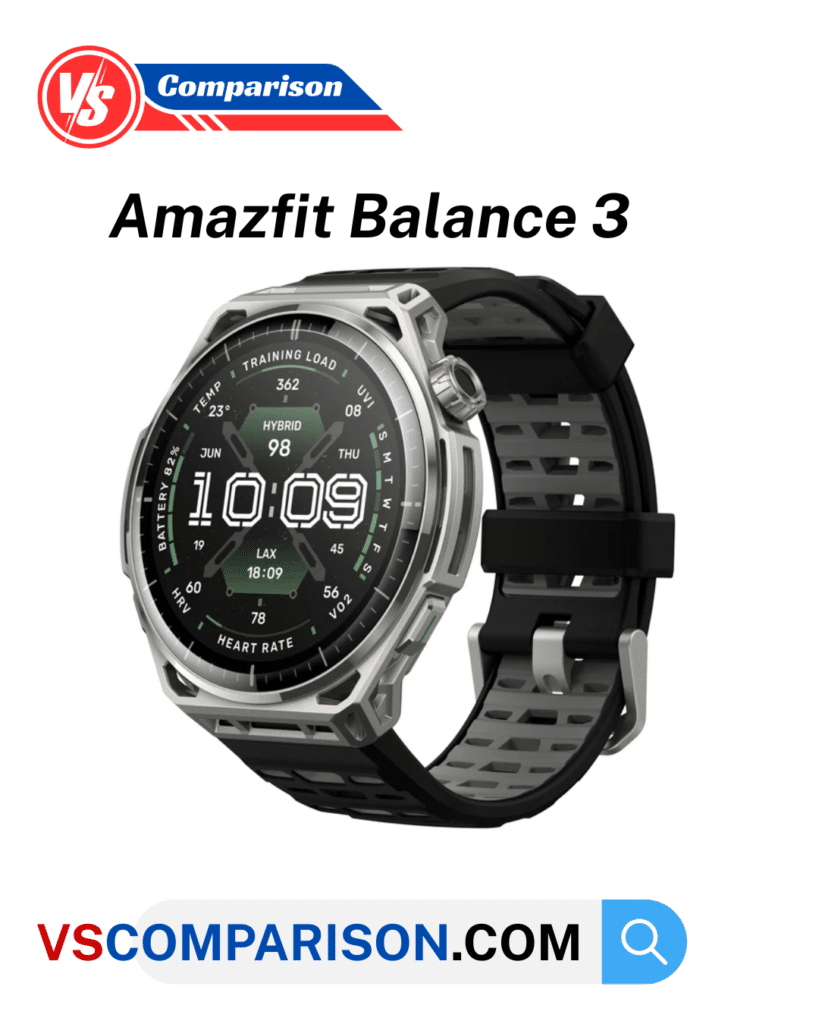
At first glance, both watches look similar. They share a round case, sapphire crystal glass protection, and a premium aesthetic that fits equally well at the gym and in the office. But there are some notable differences in size and materials.
The Balance 3 has grown slightly, sporting a 51.4mm case compared to the Balance 2’s 47mm case. It also adds two extra physical buttons on the left side, bringing the total to four, which makes it easier to navigate during workouts without touching the screen.
The Balance 3 stainless steel model weighs 62g, while the titanium variant drops to a lighter 55g. The Balance 2 used an aluminum alloy frame, while the Balance 3 steps up to either stainless steel or Grade 5 titanium.
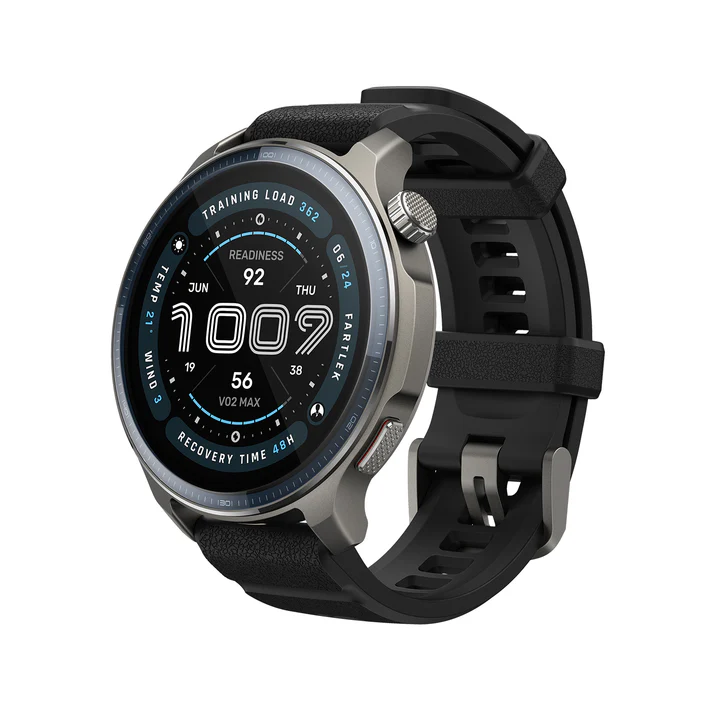
Both watches carry a 10 ATM water resistance rating, making them suitable for swimming and shallow diving. One brand-new addition on the Balance 3 is a built-in dual-mode LED flashlight with white, red, and SOS modes — a feature entirely absent on the Balance 2.
| Feature | Balance 3 | Balance 2 |
|---|---|---|
| Case Size | 51.4 x 51.4mm | 47mm |
| Thickness | 14.6mm | ~12mm |
| Weight (Steel) | 62g | ~35g |
| Body Material | Stainless Steel or Grade 5 Titanium | Aluminum alloy |
| Display | 1.5″ AMOLED, 3,000 nits | 1.5″ AMOLED, 2,000 nits |
| Glass Protection | Sapphire crystal | Sapphire crystal |
| Water Resistance | 10 ATM | 10 ATM |
| Flashlight | Yes (white, red, SOS) | No |
| Physical Buttons | 4 | 2 |
Health Tracking Features
Both the Balance 3 and Amazfit Balance 2 are built around serious health monitoring. They share the same core sensor technology and cover all the fundamentals you’d expect from premium smartwatches at this price tier.
Both models use Amazfit’s BioTracker PPG sensor for continuous heart rate, blood oxygen (SpO2), and stress monitoring. Sleep tracking, menstrual cycle tracking, and irregular heart rate alerts are available on both.
Where the Balance 3 goes further is with its new HybridCharge Energy Intelligence system, which factors in training load, daily stress levels, and sleep quality together to give you a more complete picture of your physical readiness.
It essentially tells you when to push harder and when to back off — something the Balance 2 didn’t have at launch, though Zepp Health has been rolling out some of these features via firmware updates.
| Health Feature | Balance 3 | Balance 2 |
|---|---|---|
| Continuous Heart Rate | ✅ | ✅ |
| Blood Oxygen (SpO2) | ✅ | ✅ |
| Sleep Tracking | ✅ | ✅ |
| Stress Monitoring | ✅ | ✅ |
| Body Temperature | ✅ | ✅ |
| HybridCharge Energy Intelligence | ✅ (built-in) | Partial (via updates) |
| Menstrual Cycle Tracking | ✅ | ✅ |
| AI Readiness Score | ✅ | ✅ |
Sports Tracking Features
Both watches are well-equipped for multi-sport athletes, supporting well over 100 sport modes. They both handle the standard lineup of running, cycling, swimming, hiking, and gym workouts. However, the Balance 3 pulls ahead in a few key areas.
The Balance 3 ships with Zepp OS 6 and native support for HYROX race simulations out of the box, alongside a new Weekly Focus and Training Balance feature set designed to structure your training week intelligently.
It also benefits from a much faster processor — the ZPS3044S chip, which renders maps 2.5x faster and refreshes map data 12x faster than the ZPS3044 chip inside the Balance 2.
Storage doubles from 32GB to 64GB, meaning significantly more space for offline maps and music.
The Balance 2 is no slouch either — it has HYROX support, golf mode, and Track Run mode — but the Balance 3 brings a more structured and responsive experience overall.
- Both watches support: 100+ sport modes, swim tracking, Track Run mode, virtual pacing, external heart rate strap and cycling sensor support
- Balance 3 adds: HYROX race simulation (native), faster map processor, Weekly Focus training tools, LifeLoad monitoring
- Balance 2 still has: HYROX support, golf mode, offline maps with turn-by-turn navigation
| Sports Feature | Balance 3 | Balance 2 |
|---|---|---|
| Sport Modes | 170+ | 170+ |
| HYROX Support | ✅ (native, with race sim) | ✅ |
| Golf Mode | ✅ | ✅ |
| Offline Maps | ✅ (64GB storage) | ✅ (32GB storage) |
| Processor | ZPS3044S (faster) | ZPS3044 |
| External Sensor Support | ✅ | ✅ |
| Training Load Tracking | ✅ (HybridCharge) | Partial |
GPS Performance
GPS is one area where both watches are genuinely strong, and there’s no dramatic gap between them. Both the Balance 3 and Balance 2 feature dual-band GPS with support for all major satellite systems including GPS, GLONASS, BeiDou, Galileo, NavIC, and QZSS.
The dual-band setup and circularly polarized antenna on the Balance 2 already deliver excellent signal stability in dense urban environments and under tree cover.
The Balance 3 inherits the same dual-band system and improves on the overall navigation experience through a faster processor and more storage for larger offline map downloads.
The Balance 2 scored 85% in GPS accuracy testing against over 30 other GPS watches — a strong benchmark that the Balance 3 is expected to match or better.
| GPS Feature | Balance 3 | Balance 2 |
|---|---|---|
| GPS Type | Dual-band | Dual-band |
| Satellite Systems | GPS, GLONASS, BeiDou, Galileo, NavIC, QZSS | GPS, GLONASS, BeiDou, Galileo, NavIC, QZSS |
| GPS Endurance | 41 hours | ~30 hours |
| Offline Maps | ✅ | ✅ |
| Turn-by-turn Navigation | ✅ | ✅ |
| Map Rendering Speed | 2.5x faster | Standard |
Amazfit Balance 3 vs Balance 2: Battery Life
Battery life is one of Amazfit’s biggest selling points across the entire lineup, and neither watch disappoints. Both the Balance 3 and Balance 2 are rated for up to 21 days of typical use — a figure that puts them well ahead of most Apple Watch and Wear OS competitors. Under heavier use, expect around 10–14 days.
The bigger difference between the two is GPS endurance. The Balance 3 extends GPS battery life to approximately 41 hours, a meaningful step up from the Balance 2.
This matters for ultramarathon runners, long-distance cyclists, or anyone tackling multi-day events where you can’t afford to charge mid-race.
| Battery Metric | Balance 3 | Balance 2 |
|---|---|---|
| Typical Use | Up to 21 days | Up to 21 days |
| Heavy Use | ~10–14 days | ~10 days |
| GPS Mode (continuous) | ~41 hours | ~30 hours |
| Low Power Mode | ✅ | ✅ |
| Charging | USB-C magnetic | USB-C magnetic |
Price
Price is where the decision gets real. The Balance 2 launched at $299.99 but is now commonly found for around $249.99, making it significantly more accessible. The Balance 3 Stainless Steel starts at $370, with the Titanium variant coming in at $450.
That’s a $120–$200 premium over a discounted Balance 2. Whether that’s justified depends entirely on how much you value the brighter screen, extra buttons, flashlight, faster processor, and increased storage. For casual users and everyday fitness trackers, the Balance 2 at $249.99 remains excellent value.
| Model | Price (USD) |
|---|---|
| Amazfit Balance 2 | ~$249.99 (was $299.99) |
| Amazfit Balance 3 (Stainless Steel) | $370 |
| Amazfit Balance 3 (Titanium) | $450 |
Final Verdict: Who Should Buy Which?
Both watches are excellent. The right choice comes down to where you are now and what you need going forward.
Buy the Amazfit Balance 3 if you:
- Are buying a new smartwatch today and want the latest platform
- Train in bright outdoor conditions and need maximum screen visibility (3,000 nits)
- Want the flashlight, extra physical buttons, and more responsive map navigation
- Store a large number of offline maps or music on your watch
- Are training for HYROX or following a structured hybrid training plan
- Want a stainless steel or titanium build that feels more premium on the wrist
Stick with (or buy) the Amazfit Balance 2 if you:
- Already own a Balance 2 — it remains a fantastic watch with regular firmware updates
- Want outstanding features at a lower price (~$249.99)
- Don’t need a flashlight or the extra physical buttons
- Prefer a slightly smaller, lighter watch (47mm vs 51.4mm)
- Are happy with 30 hours of GPS battery life for your longest adventures
In short, the Balance 3 is the better watch, but the Balance 2 is the better deal right now. If you already own a Balance 2, there’s no urgent reason to upgrade — the core experience is still class-leading.
But if you’re entering the Amazfit ecosystem for the first time or looking for a significant step up in hardware, the Balance 3 justifies its price with a brighter display, more capable navigation, a more refined build, and a forward-looking training platform built around the Hybrid Training system.
| Buyer Profile | Recommended Watch |
|---|---|
| New buyer, best features | Balance 3 |
| Budget-conscious buyer | Balance 2 |
| Existing Balance 2 owner | Keep Balance 2 (no urgent need) |
| Outdoor / ultra-endurance athlete | Balance 3 (41-hr GPS, flashlight) |
| HYROX competitor | Balance 3 |
| Lifestyle + everyday fitness user | Balance 2 (great value) |