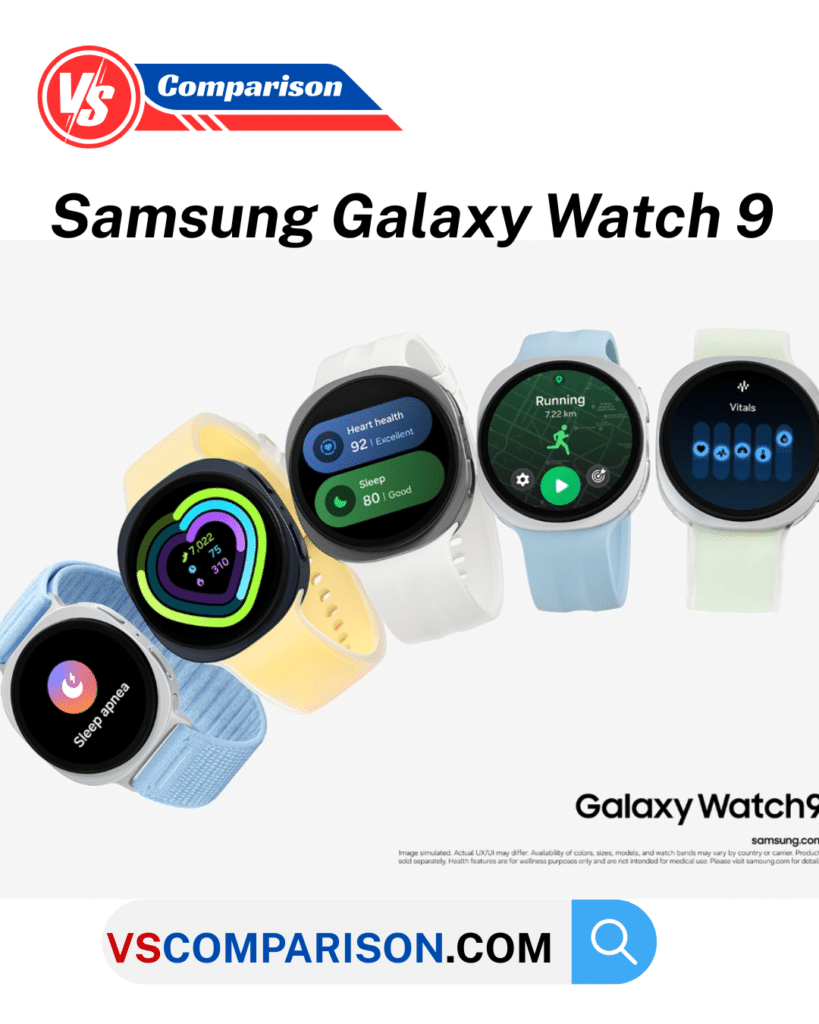
Samsung has officially unveiled the Galaxy Watch 9, launched alongside the Galaxy Watch Ultra 2 at its summer Galaxy Unpacked event.
The Successor to Samsung Galaxy Watch 8 focuses on three things: a faster chipset, a bigger battery, and a suite of new AI-powered health and fitness tools built around Samsung’s “proactive care” philosophy. Below, we break down every spec and selling point Samsung highlighted at launch — from design and display to health tracking, smart features, sports performance, battery life, and pricing.
Design Specs
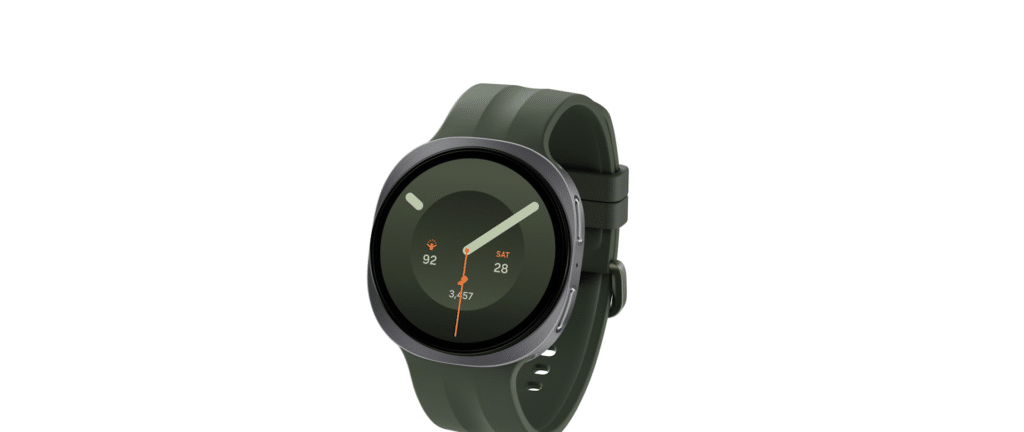
The Galaxy Watch 9 keeps Samsung’s signature circular “cushion-shape” design language, and the changes here are subtle rather than sweeping.
- Case sizes: Available in 40mm and 44mm aluminum builds
- Dimensions: 40mm measures 42.7 x 40.4 x 8.6mm (31.5g); 44mm measures 46.0 x 43.7 x 8.6mm (34.0g)
- Build: Lightweight aluminum chassis with a Sapphire crystal front
- Strap: Redesigned silicone band with an air-pocket structure, roughly 17% lighter and softer than the previous generation’s band for improved all-day comfort
- Water and dust resistance: IP68 rating, rated to 5ATM (50m) water resistance
- Additional certification: EN13319 rating, enabling recreational swimproofing up to 40m
- Colors: The 44mm model comes in Graphite and Silver; the 40mm model comes in Graphite and Cream
- Connectivity options: Bluetooth/Wi-Fi and LTE variants available in both sizes
While there’s no ground-up redesign here, the comfort tweaks and consistent premium build quality keep the Galaxy Watch 9 competitive against rivals like the Google Pixel Watch and Apple Watch Series line.
Display
Samsung has stuck with the same display foundation as its predecessor, prioritizing consistency over a major upgrade this generation.
- Screen sizes: 1.34-inch Super AMOLED (40mm) and 1.47-inch Super AMOLED (44mm)
- Peak brightness: Up to 3,000 nits (unchanged from the Galaxy Watch 8, and notably dimmer than the 5,000-nit Galaxy Watch Ultra 2)
- Protection: Sapphire crystal glass for scratch resistance
- Always-On Display (AOD): Supported, with battery estimates factoring in AOD usage
For everyday visibility, the display remains sharp and vibrant indoors and outdoors, though fitness-focused buyers who want maximum outdoor legibility may still lean toward the Ultra 2.
Galaxy Watch 9 Health Tracking Features
This is where Samsung concentrated most of its Galaxy Watch 9 upgrades. At Unpacked, Samsung outlined “five pillars” of proactive health tracking now built into the device:
- Vitals: A new dashboard that consolidates heart rate, heart rate variability (HRV), blood oxygen saturation (SpO2), skin temperature, and breathing rate into a single view. Vitals monitors overnight data to build a personal baseline over at least seven nights of sleep, then flags meaningful deviations that could signal illness or strain.
- Heart Health Score: A score derived from seven-day physical activity averages, sleep duration, BMI, and estimated blood pressure, paired with personalized cardiovascular recommendations.
- Daily Cardio Load: Tracks training strain over time and offers guidance on whether you’re overtraining or under-training, along with recovery-time estimates.
- Fitness Index: A holistic fitness score (out of 100) built from VO2 Max, Bioelectrical Impedance Analysis (BIA), average heart rate, step count, and workout recovery time — displayed on a radar chart across body composition, cardio, strength, flexibility, and endurance.
- Hearing: Monitors ambient noise exposure and provides alerts and reports to help protect long-term hearing health.
- AI-powered sleep tracking: Learns your sleep habits over time to deliver more personalized rest insights.
- Carried-over BioActive sensor suite: Continues to support metrics introduced on the Galaxy Watch 8, including Antioxidant Index (carotenoid measurement), Vascular Load, and AGEs Index.
Samsung is clear that Vitals and related tools are designed for general wellness, not medical diagnosis — but the depth of data here is a meaningful step toward the brand’s “proactive care” messaging.
Smart Features
The Galaxy Watch 9 leans heavily into its role as a companion device for the Galaxy and broader Android ecosystem.
- Chipset: Powered by Qualcomm’s new Snapdragon Wear Elite platform, a significant upgrade over the previous Exynos W1000 chip, delivering faster on-device processing and improved AI capabilities
- Memory and storage: 2GB RAM and 32GB internal storage
- Connectivity: Bluetooth 6, dual-band GPS, and optional LTE for standalone connectivity
- Google Gemini integration: Built-in Gemini AI assistant lets users get answers, manage tasks, and pull information across apps using voice alone
- Raise to Talk: A new hands-free gesture that activates Gemini simply by raising the wrist and speaking — no need to say a wake phrase or tap the screen
- Samsung Health app integration: Required for Vitals, Fitness Index, and other advanced tracking features (Samsung Health v7.0 or later)
- Requirements: Compatible with Android 13+ smartphones and requires a Samsung account for full feature access
- Compatible with Galaxy Ring data: Sleep tracking for Vitals can draw on data from a Galaxy Ring in addition to the watch itself
For anyone already embedded in the Samsung/Android ecosystem, these integrations make the Galaxy Watch 9 function less like a standalone gadget and more like an extension of the phone.
Samsung Galaxy Watch 9 Sports Tracking
Beyond everyday health metrics, the Galaxy Watch 9 doubles down on structured training tools for runners and multi-sport athletes.
- Daily Cardio Load: Personalized training guidance based on cumulative training strain, with recovery-time recommendations to reduce injury risk
- Fitness Index training focus: Can be tailored to a specific goal — such as training for a triathlon or a running event — adjusting weekly workout recommendations accordingly
- Running Coach (carried over from Galaxy Watch 8): Calculates a runner’s fitness level on a 1–10 scale and builds a tailored training plan with real-time guidance
- Together feature: Lets users gamify fitness by challenging friends and family, including running challenges
- Free subscription perks: Galaxy Watch 9 buyers receive a 60-day Strava trial and a two-month iFIT trial at launch
- Dual-band GPS: For more accurate outdoor route tracking during runs, rides, and other GPS-based workouts
These tools position the Galaxy Watch 9 as a genuine training partner rather than just a fitness tracker that logs steps — particularly for users training toward specific events.
Galaxy Gatch 9 Battery Life
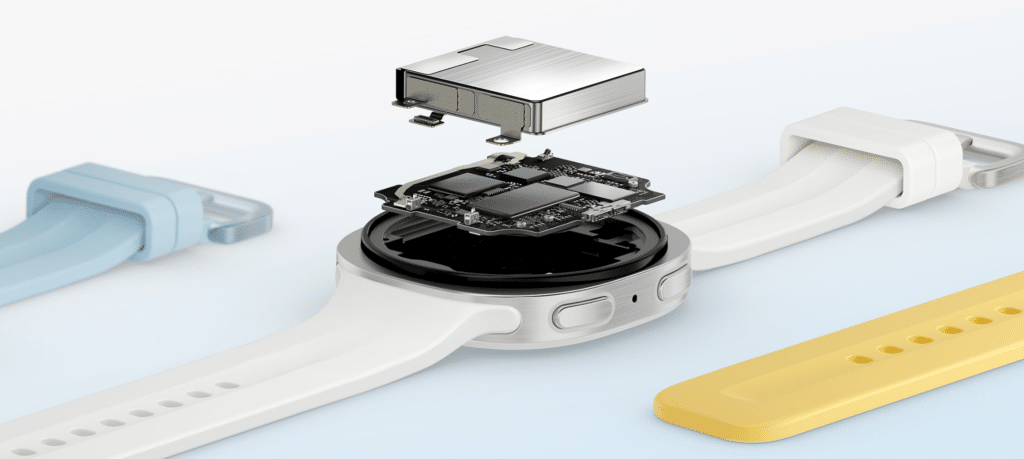
Battery life was one of the most requested improvements after the Galaxy Watch 8, and Samsung has delivered a modest but welcome bump.
- 40mm battery: 390mAh (up from 325mAh on the Galaxy Watch 8 — roughly a 20% increase)
- 44mm battery: 445mAh (up from 435mAh on the Galaxy Watch 8)
- Estimated runtime: Samsung is touting up to 30 hours of use with the Always-On Display enabled
- Charging speed: Approximately 90 minutes for a full charge
While it’s not a dramatic multi-day leap, the larger battery combined with the more power-efficient Snapdragon Wear Elite chip should meaningfully ease the one-day battery anxiety that plagued the previous generation.
Price
The Galaxy Watch 9 comes in at a higher price point than its predecessor, reflecting both the hardware upgrade and broader industry-wide component cost increases.
- 40mm, Bluetooth/Wi-Fi: $379.99 (£349 in the UK)
- 40mm, LTE: $429.99
- 44mm, Bluetooth/Wi-Fi: $409.99 (£379 in the UK)
- 44mm, LTE: $459.99
- EU starting price: From €409
For comparison, the Galaxy Watch 8 launched at $349.99, so buyers should expect roughly a $30–$50 premium across the lineup this generation.
Pre-orders opened alongside the Unpacked announcement, with general availability following shortly after.
Final Thoughts
The Samsung Galaxy Watch 9 is best described as a refinement rather than a reinvention. The design, display, and core sensor hardware are largely carried over from the Galaxy Watch 8, but the combination of the Snapdragon Wear Elite chipset, a larger battery, and a genuinely expanded suite of AI-driven health tools — Vitals, Heart Health Score, Daily Cardio Load, and Fitness Index — gives it real substance under the hood.
Paired with deep Samsung and Android integration, hands-free Gemini access, and solid sports-training features, the Galaxy Watch 9 remains one of the most complete Android smartwatch options on the market, even if the price increase makes it a slightly tougher sell than last year’s model.