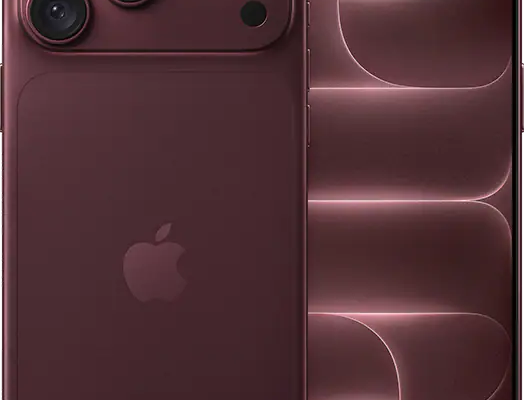
Xiaomi launched the 18 Fold in China on September 7, 2026, two days before Apple unveiled its first foldable, the iPhone Duo.
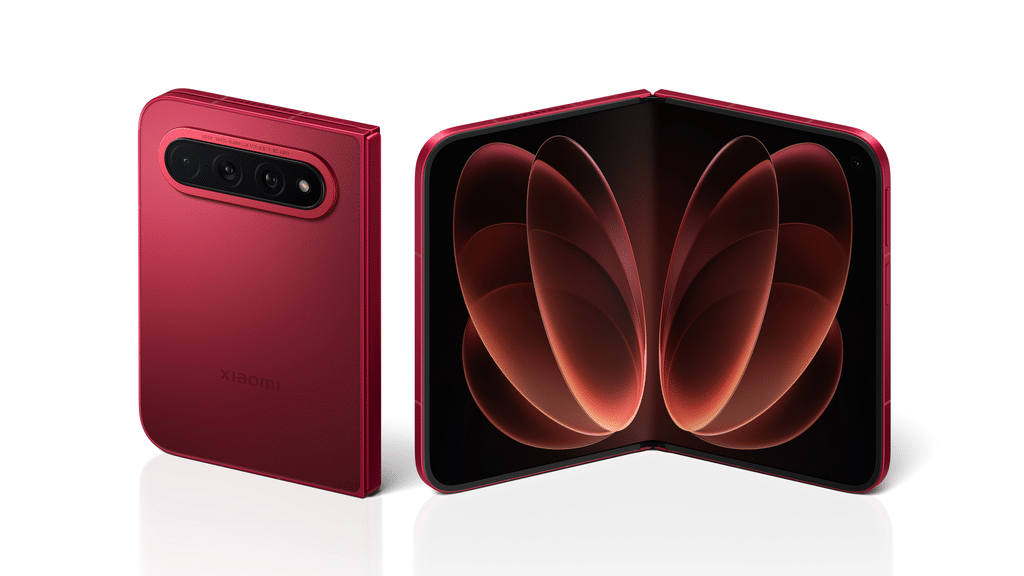
On paper, Xiaomi’s latest book-style foldable matches or beats Apple’s debut in almost every measurable category — with one major caveat: you can’t buy it outside China.
Dimensions and Design
The Xiaomi 18 Fold adopts a wide, passport-style form factor that closely mirrors the iPhone Duo’s approach to foldable design. When folded, it measures 117.8 × 83.6 × 10.68mm; unfolded, it expands to 163.8mm wide and just 5.02mm thick.
At 219 grams, it is lighter than most previous Xiaomi foldables and notably lighter than the iPhone Duo’s 254g.
Apple’s foldable, by contrast, is thinner and lighter overall. The iPhone Duo weighs 201g and measures 9.7mm folded and 4.5mm unfolded, giving it an edge in portability.
However, the Duo’s weight has been a point of criticism — at 254g in some configurations, it is the heaviest 2026 foldable, heavier even than the iPhone 18 Pro Max.
Build quality differs meaningfully. The Xiaomi 18 Fold uses a 7000-series aluminum alloy frame with Xiaomi Shield Glass 3.0 on the outer display and back panel, rated for 1.2-meter drop resistance.
The iPhone Duo counters with a grade 5 titanium frame and IP68 dust and water resistance, a rare feature among foldables. Xiaomi’s device carries IP58 and IP59 ratings, which should handle everyday exposure but fall short of full submersion protection.
The Xiaomi 18 Fold’s new Dragon Bone hinge incorporates a patented three-link design and a dual-layer ultra-thin glass (UTG) structure — a 50μm upper layer with a 30μm support layer — yielding 258% higher inner display impact resistance and an average crease depth of no more than 30μm.
Display Specs
Xiaomi’s foldable features a 7.58-inch inner display and a 5.38-inch cover screen, both using LTPO AMOLED panels with 1–120Hz adaptive refresh rates and peak brightness of 4,000 nits.
The inner screen offers 2,364 × 1,672 pixels, while the outer panel delivers 1,712 × 1,168 pixels. Both displays share an aspect ratio close to √2:1, matching standard A4 paper proportions for efficient content utilization.
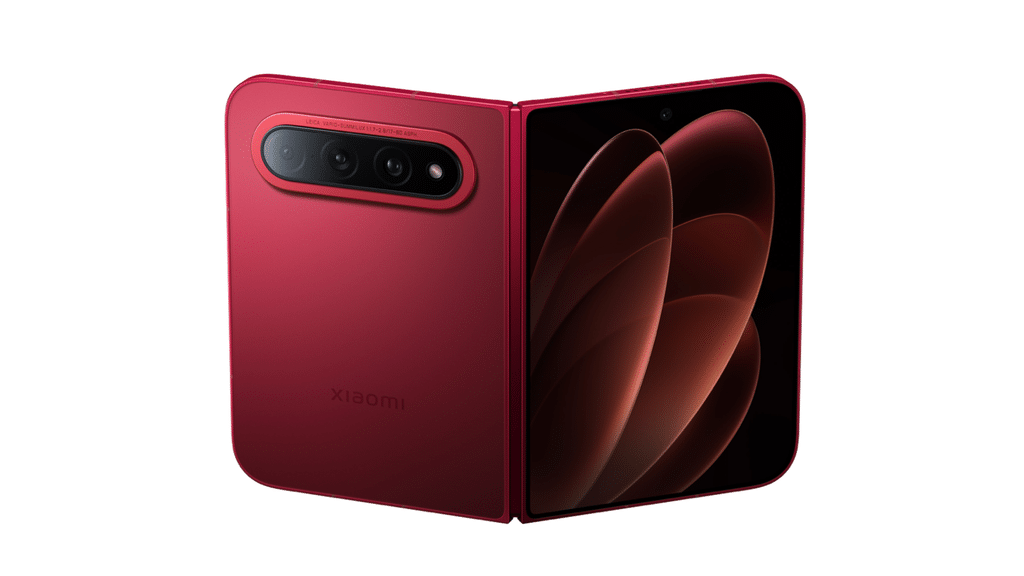
The iPhone Duo technically offers slightly larger screens — a 7.6-inch inner display and a 5.4-inch outer panel — but the difference is marginal.
Apple’s displays also support 120Hz ProMotion and 3,000-nit peak brightness, though they trail Xiaomi’s 4,000-nit figure.
The Duo’s inner display uses a nano-texture coating to reduce glare and minimize the visible crease, a feature Xiaomi does not match.
Where Xiaomi pulls ahead is on the cover screen experience.
The 5.38-inch outer display is designed for genuine one-handed use, with an on-screen keyboard that is 8% wider than standard 6.9-inch bar phones, making typing and navigation noticeably more comfortable when the device is closed.
Xiaomi 18 Fold Camera
This is arguably the most significant hardware gap between the two foldables.
The Xiaomi 18 Fold carries a Leica-engineered triple camera system: a 200MP main sensor with an f/1.7 aperture and OIS, a 50MP periscope telephoto with 3.5x optical zoom and OIS, and a 50MP ultrawide with an f/2.4 aperture.
There are also 16MP front-facing cameras on both the inner and outer displays.
The iPhone Duo takes a markedly simpler approach, with dual 48MP main and ultrawide lenses — and no dedicated telephoto camera at all.
This means Apple’s foldable relies entirely on digital zoom for any magnification, whereas Xiaomi offers genuine optical reach. For photography enthusiasts, the Xiaomi 18 Fold is the clear winner on versatility.
The Leica partnership also brings Xiaomi’s signature color science and lens simulation modes, which have been well-received on previous Xiaomi flagships.
Apple’s computational photography remains excellent, but without a telephoto lens, the Duo simply cannot compete on optical zoom capability.
Software Features and Optimization
The Xiaomi 18 Fold runs Android 17-based HyperOS 4, purpose-built for foldable multitasking. The headline feature is support for up to six split-screen apps simultaneously, far exceeding what the iPhone Duo offers.
Two-way split provides two well-proportioned viewing areas, while three-way split gives each section a layout close to that of a mainstream full-screen smartphone.
The “Super Xiao Ai Inspiration Ball” is Xiaomi’s take on an AI assistant tailored to foldables — a single voice command can trigger multitasking layouts, so you can write a document, view a spreadsheet, and reply to messages all on one screen without manual app arrangement.
HyperOS 4 also introduces widget stacking and cross-device collaboration enhancements, plus a built-in AI translator and assistant in the browser.
Apple’s iOS 27 takes a more conservative but arguably more polished approach. Split View allows two apps side by side, and users can open two windows of the same app, save app pairings, and use Siri AI on one side while viewing content on the other. Apple Intelligence features are deeply integrated throughout the system, and the experience is described as feeling similar to using an iPad, with apps expanding naturally to fill the larger screen.
The critical difference is ecosystem maturity. Apple has a unified developer platform, and the company has provided updated APIs and Xcode support for the Duo, meaning most major apps will work well from day one. Xiaomi’s HyperOS 4 is impressive on paper, but the 18 Fold is China-only, meaning no Google Play Store and limited access to Western apps and services — a significant limitation for international users.
Battery
The Xiaomi 18 Fold packs a 6,000mAh dual-layer battery with 20% silicon content and an energy density of 920 Wh/L. It supports 67W wired fast charging and 50W wireless charging.
The iPhone Duo has a smaller battery — exact capacity hasn’t been disclosed, but it is rated for up to 31 hours of video playback on the inner screen and 44 hours when folded.
It supports 25W MagSafe wireless charging, which is slower than Xiaomi’s 50W wireless but arguably more convenient thanks to MagSafe’s magnetic alignment.
For heavy users, Xiaomi’s larger battery and faster charging give it a clear endurance advantage, especially when running the 7.58-inch display at high brightness.
Xiaomi 18 Fold Price and Availability
The Xiaomi 18 Fold starts at CNY 10,999 (approximately $1,638) for the 12GB + 256GB variant and tops out at CNY 14,999 (approximately $2,235) for the 16GB + 1TB model.
A limited Ceramic Special Edition with 16GB + 1TB is priced at CNY 15,999 (approximately $2,384) and capped at 1,500 units.
It is available in Black, Nishino Red, and Warm Gold White, with sales beginning September 10 in China.
The iPhone Duo starts at $1,999 for 256GB and goes up to $3,199 for 2TB. It launched globally across more than 70 countries. Apple’s foldable is more expensive at every tier, but it is genuinely available worldwide.
The most consequential difference is availability. Xiaomi has not announced plans to release the 18 Fold outside China, continuing its tradition of keeping its foldables exclusive to the home market.
The iPhone Duo, despite its higher price and less impressive camera hardware, is the only one of the two that most consumers can actually buy.
For buyers in China who want the most capable foldable hardware available, the Xiaomi 18 Fold is the obvious choice. For everyone else, the iPhone Duo — with its titanium build, IP68 rating, polished iOS 27 software, and global availability — remains the more practical option, even if it falls short on raw specifications.