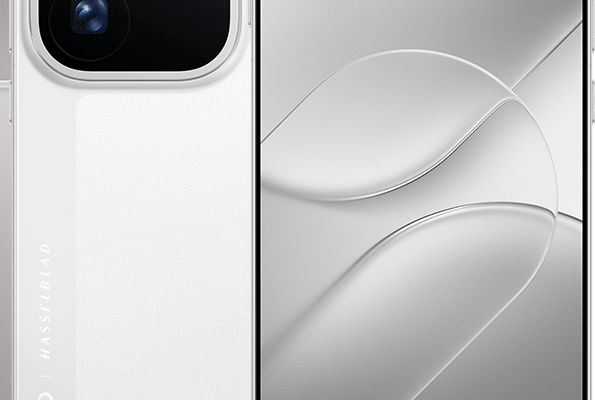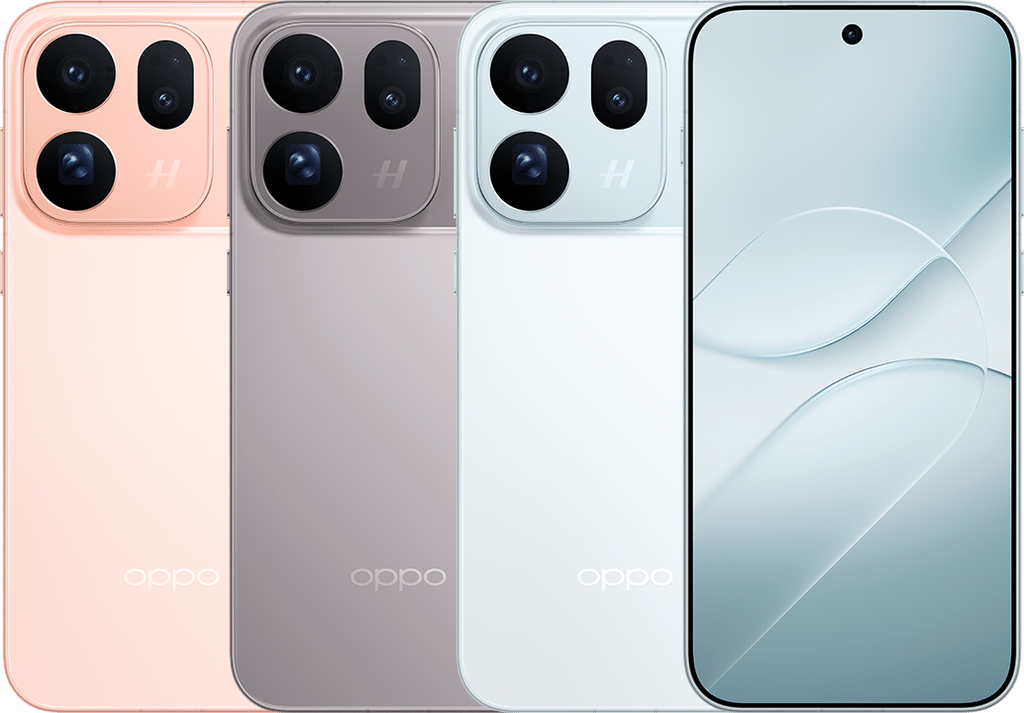
The OPPO Find X10 vs Find X9 comparison centres on cameras, display behaviour and battery capacity. Both phones keep a 6.59-inch screen and the familiar combination of main, ultrawide and telephoto cameras, but the newer model raises the resolution of two rear cameras and adds autofocus to the selfie camera. Charging speeds and the main storage technologies remain much closer.
Design and Build: A Heavier Body with Familiar Proportions
The Find X10 is slightly shorter than the Find X9, but it is also wider, thicker and heavier. Its 216g weight is 13g above the older phone, while thickness rises from 7.99mm to 8.35mm. These are modest dimensional changes rather than a move to a much larger phone.
The newer design uses a sculpted glass back that flows into the camera module. Screen protection changes from Gorilla Glass 7i to Crystal Guard. That change identifies different protective glass, but does not by itself establish which phone will survive a particular drop.
| Feature | OPPO Find X10 | OPPO Find X9 |
|---|---|---|
| Dimensions | 156.51 × 74.29 × 8.35mm | 156.98 × 73.93 × 7.99mm |
| Weight | 216g | 203g |
| Display cover | Crystal Guard | Gorilla Glass 7i |
Display: Same Size, More Flexible Refresh Rates
Both phones have a 6.59-inch AMOLED panel with 10-bit colour. The Find X10 slightly changes the resolution, so there is no substantial jump in display size or pixel density. Text and photographs occupy much the same amount of screen space.
The more useful distinction is refresh behaviour. Find X10 supports an adaptive 1–120Hz range, with 144Hz available in supported games. That highest rate does not apply to every app. Its high-brightness specification also increases, which may help visibility outdoors; it is not a measured comparison of the two phones in sunlight.
| Feature | OPPO Find X10 | OPPO Find X9 |
|---|---|---|
| Size | 6.59 inches | 6.59 inches |
| Resolution | 2768 × 1272 | 2760 × 1256 |
| Refresh rate | 1–120Hz; selected games up to 144Hz | Up to 120Hz |
| HBM brightness | 2,000 nits | 1,800 nits |
OPPO Find X10 vs Find X9: Cameras
The Find X10 has a 200MP main camera and 200MP telephoto, replacing the Find X9’s 50MP main and telephoto cameras. Both retain a 50MP autofocus ultrawide, while optical stabilisation remains available on the main and telephoto cameras.
Higher resolution provides more scope for detailed capture and cropping in suitable conditions. It does not mean every photograph contains four times as much useful detail. Lighting, focus and processing still matter. The selfie camera also changes from 32MP to 50MP with autofocus, giving the newer phone a more flexible front-camera setup.
Rear video adds 8K at 30fps. Both support 4K at up to 120fps and front-camera 4K at up to 60fps, although available frame rates depend on the selected mode.
| Feature | OPPO Find X10 | OPPO Find X9 |
|---|---|---|
| Main | 200MP f/1.6, OIS | 50MP f/1.6, OIS |
| Ultrawide | 50MP f/2.0, AF | 50MP f/2.0, AF |
| Telephoto | 200MP f/2.6, OIS | 50MP f/2.6, OIS |
| Selfie | 50MP f/2.0, AF | 32MP f/2.4 |
| Rear video maximum | 8K/30; 4K/120 | 4K/120 |
Performance: Dimensity 9600M Replaces Dimensity 9500
The Find X10 moves to MediaTek’s Dimensity 9600M, while the Find X9 uses Dimensity 9500. Both are octa-core platforms, and both phones pair their processors with fast memory and storage. The chipset change is therefore part of an update to an already high-end platform.
A newer chip name alone does not quantify gaming speed, heat or sustained performance. Those differences need comparable testing. For ordinary app use, the shared memory and storage technologies are also relevant: the newer generation does not replace an entry-level storage system with a flagship one.
| Feature | OPPO Find X10 | OPPO Find X9 |
|---|---|---|
| Chipset | Dimensity 9600M | Dimensity 9500 |
| CPU | Octa-core | Octa-core |
| Memory technology | LPDDR5X | LPDDR5X |
Software: A Newer Starting Version
The Find X10 launches with ColorOS 17, while the Find X9 launched with ColorOS 16. This is a difference in the software supplied at release; an older phone’s current installed software can change through updates. It should not be treated as proof that every new interface feature remains exclusive to the newer device.
ColorOS continues to sit at the centre of both phones’ camera controls, personalisation and everyday interface. A verified update duration for this exact Find X10 configuration was not established for this comparison, so no additional years of support are assumed.
Storage: Familiar Capacities
Find X10 offers 256GB or 512GB storage, both with 12GB RAM. Find X9 also offers these storage capacities, with an additional 16GB RAM configuration paired with 512GB. The newer generation therefore does not automatically provide more memory.
Both use UFS 4.1 storage and neither supports a memory card. Internal capacity is consequently a lasting difference between configurations, particularly for large video files. A 512GB phone has more space for local media, but that capacity does not itself establish faster processing or better camera quality.
| Feature | OPPO Find X10 | OPPO Find X9 |
|---|---|---|
| Configurations | 12GB/256GB; 12GB/512GB | 12GB/256GB; 12GB/512GB; 16GB/512GB |
| Storage type | UFS 4.1 | UFS 4.1 |
| Memory card | No | No |
Battery and Charging: More Capacity, Same Peak Charging
Find X10 has an 8,000mAh battery in its Global version and 7,150mAh in its EU version. Find X9 has a 7,025mAh battery. The capacity increase is therefore much larger for the Global battery than for the EU battery, a distinction that changes the comparison substantially.
Both retain support for 80W wired SUPERVOOC and 50W wireless AIRVOOC charging. These are supported maximums, not a constant charging rate or a promise of identical charging times. Capacity alone also cannot establish endurance because display settings, networks and workloads affect consumption.
| Feature | OPPO Find X10 | OPPO Find X9 |
|---|---|---|
| Typical capacity | Global: 8,000mAh; EU: 7,150mAh | 7,025mAh |
| Wired charging | 80W | 80W |
| Wireless charging | 50W | 50W |
Main Differences
The Find X10 makes its strongest changes in main and telephoto resolution, selfie autofocus and video options. Display size, storage technology and charging remain familiar. The result is a camera-led update with a heavier body, while the battery improvement depends on which of the two battery capacities applies.