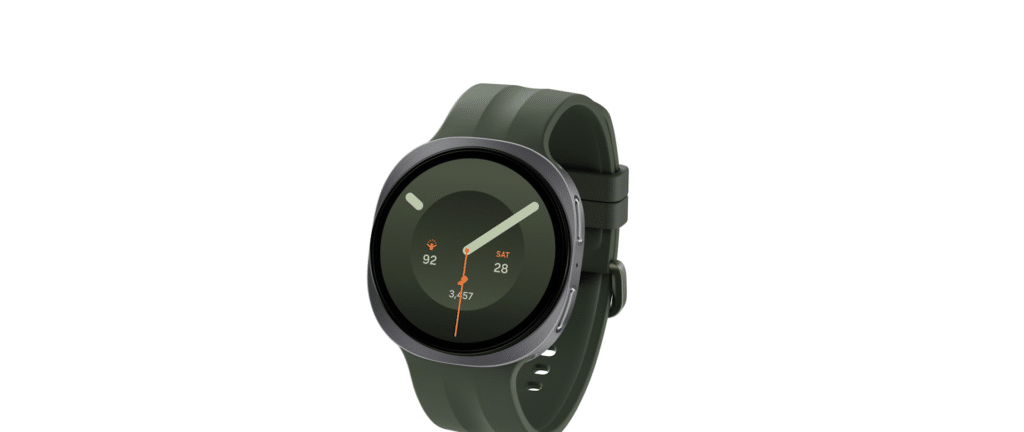
Samsung’s Galaxy Watch 9 has officially arrived, and on the surface, it looks a lot like the Watch 8 it replaces. The same squircle design, the same bright display, and the same two size options make the two generations nearly indistinguishable at a glance.
But beneath the familiar exterior, Samsung has made some meaningful changes — swapping its in-house Exynos chip for Qualcomm’s Snapdragon Wear Elite, tweaking battery capacities, and rolling out a fresh software experience.
The real question is simple: is the Galaxy Watch 9 worth the extra money, or does last year’s model remain the smarter buy? Let’s break down the key differences across design, battery life, health tracking, sports features, and pricing.
Design and Build
If you were hoping for a design overhaul, the Galaxy Watch 9 will disappoint. Samsung has stuck with the same “squircle” design — a square aluminum case with a circular display — that debuted with the Watch 8. Both watches are available in 40mm and 44mm sizes, with identical dimensions: the 40mm measures 42.7 x 40.4 x 8.6mm, while the 44mm comes in at 46.0 x 43.7 x 8.6mm.
There is a slight weight increase on the Watch 9. The 40mm model now weighs 31.5g compared to 30.0g on the Watch 8, while the 44mm version rises to 34.0g from 33.7g. In practice, this is imperceptible.
| Feature | Galaxy Watch 8 | Galaxy Watch 9 |
|---|---|---|
| Case sizes | 40mm, 44mm | 40mm, 44mm |
| Dimensions (40mm) | 42.7 x 40.4 x 8.6mm | 42.7 x 40.4 x 8.6mm |
| Dimensions (44mm) | 46.0 x 43.7 x 8.6mm | 46.0 x 43.7 x 8.6mm |
| Weight (40mm) | 30.0g | 31.5g |
| Weight (44mm) | 33.7g | 34.0g |
| Display | 1.34″ / 1.47″ Super AMOLED, 3000 nits | 1.34″ / 1.47″ Super AMOLED, 3000 nits |
| Materials | Armor Aluminum 2, Sapphire Crystal | Armor Aluminum 2, Sapphire Crystal |
| Durability | IP68, 5ATM, MIL-STD-810H | IP68, 5ATM, MIL-STD-810H |
| Colors | Graphite, Silver | Graphite, Silver, Cream (40mm) |
The display remains unchanged between generations — both feature Super AMOLED panels with up to 3,000 nits of peak brightness, ensuring excellent readability in direct sunlight.
Durability ratings are identical too, with both watches carrying IP68, 5ATM water resistance, and MIL-STD-810H military-grade certification.
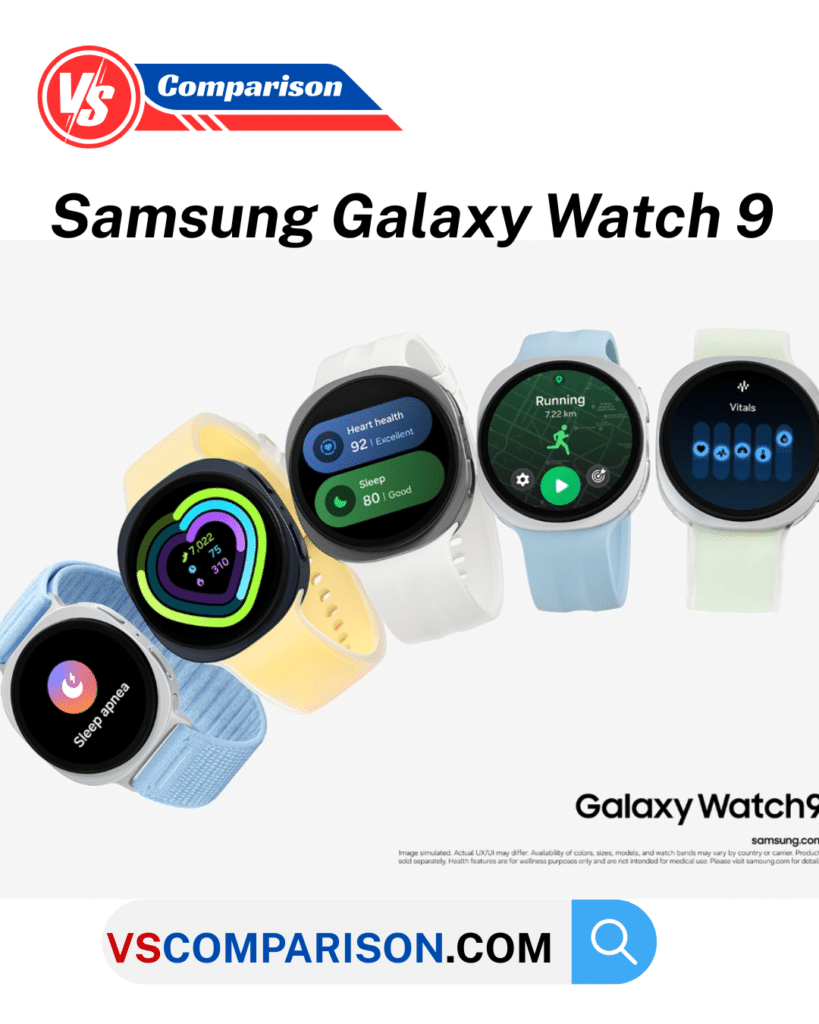
The only notable visual change is a new Cream color option for the 40mm Watch 9, replacing last year’s gray.
Samsung has also introduced a new, softer strap that’s 17% lighter and features an air pocket structure for better breathability.
Galaxy Watch 9 vs Galaxy Watch 8 Battery Life
Battery life has been a perennial weak spot for the Galaxy Watch lineup, and the Watch 9 brings modest improvements here — though the gains depend on which size you buy.
The 40mm Watch 9 jumps from 325mAh to 390mAh — a substantial 20% increase that should be genuinely noticeable. The 44mm model sees a more incremental bump, going from 435mAh to 445mAh.
| Model | Galaxy Watch 8 Battery | Galaxy Watch 9 Battery | Increase |
|---|---|---|---|
| 40mm | 325mAh | 390mAh | +65mAh (20%) |
| 44mm | 435mAh | 445mAh | +10mAh (2.3%) |
Samsung quotes up to 30 hours of runtime with Always-On Display enabled for the Watch 9. In real-world usage, both watches remain one-day devices — you’ll still be placing them on the charger every night.
Charging speeds are unchanged, with both supporting 10W wireless charging.
The biggest battery upgrade in Samsung’s 2026 lineup actually goes to the Galaxy Watch Ultra 2, which packs a massive 800mAh cell — 35% larger than its predecessor. If multi-day battery life is your priority, the Ultra 2 is worth a closer look.
Health Tracking Features
Both the Galaxy Watch 8 and Watch 9 use Samsung’s BioActive sensor — the same hardware suite that includes optical heart rate monitoring, electrical heart signal (ECG), and bioelectrical impedance analysis for body composition.
The sensor array is identical across both generations, meaning the raw tracking hardware hasn’t changed.
However, the Watch 9 introduces new software-driven health features powered by its upgraded Snapdragon Wear Elite chip and dedicated NPU:
- FDA-cleared Sleep Apnea Detection — tracks breathing disruptions during sleep
- Vitals Baseline tracking — monitors heart rate, HRV, respiratory rate, skin temperature, and blood oxygen during sleep to flag deviations
- Heart Health Score — provides an actionable cardio wellness score
- Daily Cardio Load — measures how hard you’re working out and helps prevent overtraining
The Watch 8 supports sleep apnea detection and basic health tracking as well, but the Watch 9’s AI-powered insights go a step further, offering actionable guidance rather than just raw numbers.
Sports Features
Both watches support extensive workout tracking, covering over 100 sports activities including running, cycling, swimming, and hiking. Automatic workout detection and real-time coaching are available on both generations.
The key difference lies in GPS accuracy. The Galaxy Watch 9 features dual-band GPS for more precise location tracking, faster location lock, and improved accuracy during outdoor activities like cycling and trail running.
The Watch 8 also has dual-frequency GPS, but the Snapdragon Wear Elite chip in the Watch 9 promises substantially better GPS performance overall.
| Feature | Galaxy Watch 8 | Galaxy Watch 9 |
|---|---|---|
| Workout modes | 90+ | 100+ |
| Dual-band GPS | Yes | Yes (improved accuracy) |
| Real-time coaching | Yes | Yes |
| Daily Cardio Load | No | Yes |
| Fitness Index | No | Yes |
The Watch 9 also introduces a new Fitness Index that provides a general view of overall physical performance, and adds free trials for Strava and iFIT (two months each) at launch.
Launch Price
The Galaxy Watch 9 arrives with a $30 price hike across all configurations.
| Configuration | Galaxy Watch 8 Launch Price | Galaxy Watch 9 Launch Price |
|---|---|---|
| 40mm Bluetooth | $349.99 | $379.99 |
| 40mm LTE | $399.99 | $429.99 |
| 44mm Bluetooth | $379.99 | $409.99 |
| 44mm LTE | $429.99 | $459.99 |
In US, the Galaxy Watch 9 price starts at $379.99 for the Bluetooth 40mm variant, compared to the Watch 8’s launch price of $349.99. The Watch 8 remains available from retailers and has seen periodic discounts since its launch.
Final Verdict
The Galaxy Watch 9 is a modest refresh rather than a bold reinvention. The design is unchanged, the display is identical, and the battery improvements are meaningful only on the 40mm model. The real upgrades are under the hood — a new Snapdragon chip, AI-powered health insights, and improved GPS accuracy.
Choose the Galaxy Watch 9 if: you want the latest AI health features, better GPS accuracy, and the more efficient Snapdragon processor. The 40mm model’s 20% battery bump is also a compelling reason to upgrade.
Choose the Galaxy Watch 8 if: you’re on a budget and don’t mind missing out on the AI-driven health insights. The Watch 8 remains a highly capable smartwatch with the same design, display, and core sensors — and it’s now available at discounted prices.
For those seeking the ultimate in durability and battery life, Samsung’s Galaxy Watch Ultra 2 offers a 47mm titanium case, a 5,000-nit display, and an 800mAh battery — a significant step up from both the Watch 8 and Watch 9