The screenless fitness band market just got a serious shake-up. Google has officially unveiled the Fitbit Air — a featherlight, display‑free health tracker that squarely targets Whoop users but at a much lower entry price.
The New Fitbit Air was announced on May 7, 2026 and available on hitting store shelves from May 26, 2026.
It comes bundled with three months of Google Health Premium, and perhaps most impressively, all of its core tracking features work without a mandatory subscription!
Here’s our full breakdown of everything the Fitbit Air brings to the table, how it stacks up against rivals like the Polar Loop, Whoop 5.0, and Amazfit Helio Strap, and whether it deserves a spot on your wrist.
Key Selling Features of the Fitbit Air
Ultra‑Lightweight, Barely‑There Design
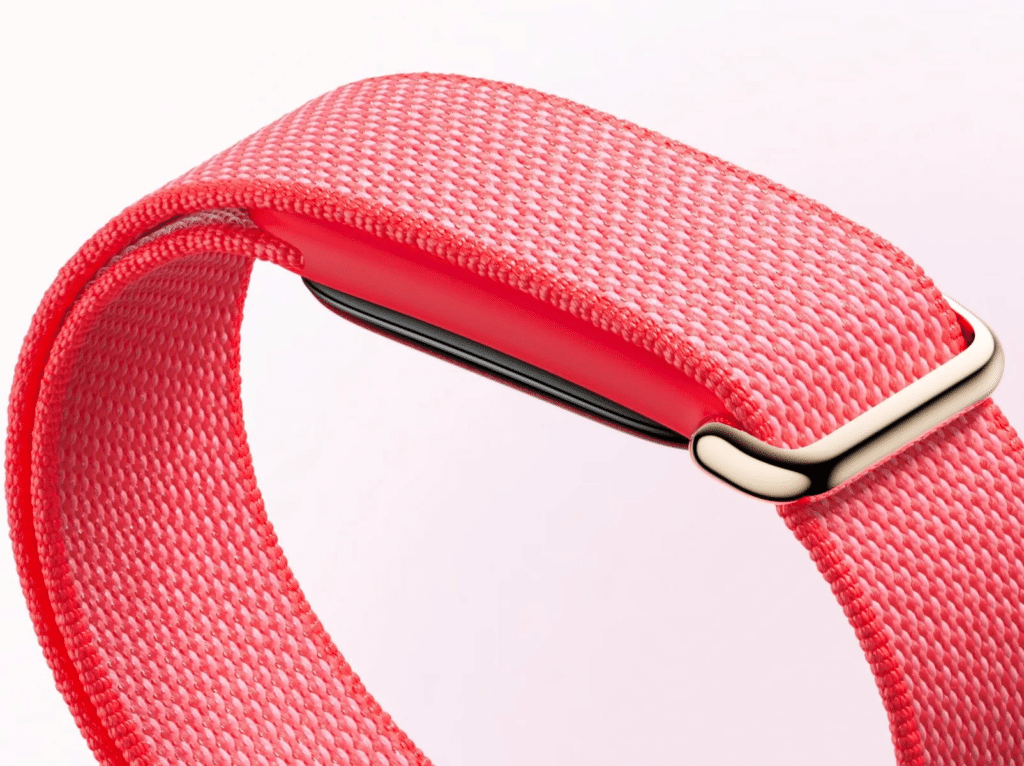
The Fitbit Air is built around a tiny, removable “pebble” that slides into the underside of the band.
- Device body: 34.9 mm long × 17 mm wide × 8.3 mm thick
- Weight: 5.2 grams for the tracker alone; just 12 grams with the strap included
- Band styles: The included Performance Loop is a micro‑adjustable woven fabric band; optional Active Bands (silicone, sweat‑proof).
- Colours: Obsidian, Fog, Lavender, and Berry (plus a special rye‑brown/ orange Curry Edition)
Google says it’s the smallest tracker the company has ever made, and the “set and forget” comfort makes it easy to wear 24/7 — even during sleep.
Truly Screenless, Distraction‑Free Experience
Following the philosophy popularized by Whoop, the Fitbit Air ditches the display entirely. There are no notifications, no buzzing alarms, and no temptation to check stats mid‑workout.
Instead, the band passively collects health data and syncs it to your phone via Bluetooth 5.0. A small LED shows battery status, and a vibration motor powers a silent Smart Wake alarm and haptic alerts.
Comprehensive Health & Fitness Sensors
Despite its tiny size, the Air packs a full suite of sensors:
- Optical heart rate monitor (24/7 tracking)
- 3‑axis accelerometer + gyroscope for motion tracking
- Red & infrared sensors for blood oxygen (SpO₂) monitoring
- Device temperature sensor for skin temperature variation
- Vibration motor for haptic feedback
What it tracks:
- 24/7 heart rate with high/low alerts
- Heart rate variability (HRV)
- Atrial fibrillation (AFib) irregular rhythm notifications
- Blood oxygen saturation (SpO₂)
- Skin temperature variations
- Sleep stages & duration (with a sleep score now 15% more accurate, Google claims)
- Automatic activity detection for walks, runs, swims, and more
- Steps, distance, and calorie burn
The device is water‑resistant to 50 metres, so it’s safe for pool swimming and showering.
7‑Day Battery Life with Ultra‑Fast Charging
Battery anxiety is virtually eliminated:
- Up to 7 days on a single charge
- 5‑minute quick charge adds a full day of use
- Full recharge (0‑100%) takes about 90 minutes
The included magnetic charger finally uses USB‑C on the other end — a welcome update for anyone juggling multiple devices.
The New Google Health App & Gemini AI Health Coach
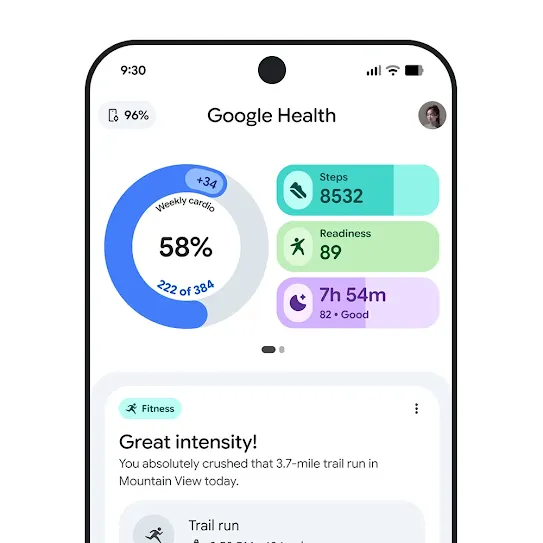
Arguably the biggest change is on the software side. Starting May 19, 2026, the legacy Fitbit app will automatically update to the new Google Health app, which centralizes all your health data into four tabs: Today, Fitness, Sleep, and Health.
The headline feature is Google Health Coach, a Gemini‑powered AI assistant that analyses your biometrics and delivers personalised guidance:
- Adaptive workout plans
- Sleep improvement recommendations
- Nutrition and meal photo analysis
- Insights pulled from medical records and Apple Health / Health Connect data
The Coach is part of the Google Health Premium subscription ($99.99 per year), but every Fitbit Air buyer gets a 3‑month free trial.
Even without the subscription, the free tier still shows step counts, distance, cardio load, training readiness, sleep stages, heart rate, and SpO₂.
Fitbit Air Price: No Locked‑In Subscription
Perhaps the Fitbit Air’s strongest selling point is its business model. Unlike Whoop, which requires a $199+ annual membership to access any data ,the Fitbit Air gives you a one‑time hardware purchase of $99.99 and keeps the core tracking features completely free.
If you want the AI Coach and advanced insights, the $9.99 monthly Premium is there — but it’s optional, not mandatory.
How the Fitbit Air Compares to Competitors
Polar Loop
- Price: $199.99 (one‑time, no subscription)
- Battery: Up to 8 days
- Pros: Accurate heart rate, comfortable fabric band, free app with recovery data
- Cons: Lacks SpO₂ and skin temperature sensors; no AFib detection; no vibration motor or haptic alerts; app can feel cluttered
- Verdict: A solid Whoop alternative for basic health tracking, but the Fitbit Air undercuts it by $100 while offering a richer sensor suite and the optional AI Coach.
Amazfit Helio Strap
- Price: $99.99 (one‑time, no subscription)
- Battery: Up to 10 days
- Pros: Very lightweight (20g), 27 sports modes, 25 strength‑training exercise recognition, Bluetooth broadcast to apps like Strava
- Cons: Only one colour (black), Zepp Health app still maturing, overly sensitive auto‑exercise detection, no ECG or advanced wellness insights
- Verdict: The Amazfit offers great battery life and workout tracking for the price, but its software and health insights lag behind Google’s polished Google Health app and Gemini AI Coach.
Whoop 5.0 / Whoop MG
- Price: Hardware included with membership; plans start at 199/year(approx.16.58/month)
- Battery: 4‑5 days (with a portable battery slide‑on charger)
- Pros: The most mature screenless platform; industry‑leading strain, recovery, and sleep analytics; strong AI Coach; robust community and data‑sharing features
- Cons: Requires a mandatory subscription; no SpO₂ or skin temperature tracking (Whoop MG adds some advanced sensors); lock‑in cost adds up over time; hardware alone is not usable
- Verdict: Whoop remains the gold standard for serious athletes who want deep analytics and are willing to pay for the service. The Fitbit Air, however, delivers 80‑90% of the functionality at a fraction of the total cost, especially if you skip the Premium subscription.
Should You Buy the Fitbit Air?
The Fitbit Air is a compelling package: a feather‑light, screenless tracker with a full array of sensors, a polished new app, and an optional AI health coach — all for under $100.
Its decision to keep core features free and make a subscription truly optional gives it a distinct edge over Whoop, while the sensor suite and Google‑backed software outshine the Polar Loop and Amazfit Helio Strap.
If you’re an everyday user who wants passive, 24/7 health monitoring without the noise of a smartwatch (and without the recurring bills), the Fitbit Air is easily one of the best values in the screenless fitness band category right now.
And with pre‑orders open and the official launch on May 26, it won’t be long before we see just how big of a dent it makes in the wearable health market.