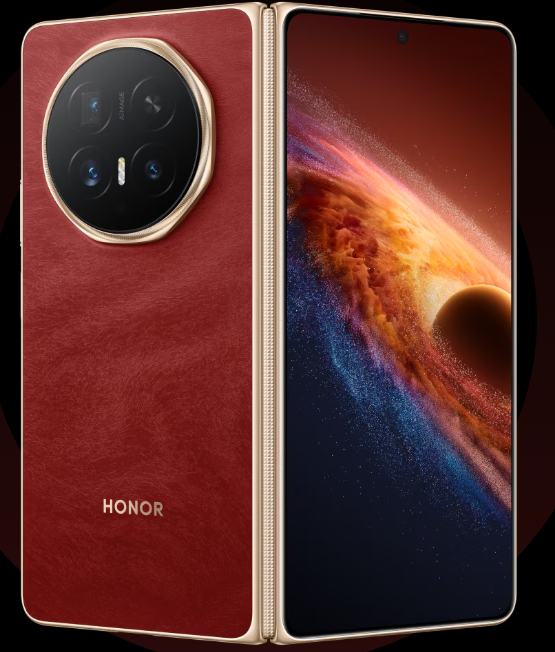
The HONOR Magic V6 vs Magic V5 comparison keeps the same book-style folding design while changing several important parts inside it. The V6 introduces Snapdragon 8 Elite Gen 5, a larger battery and faster charging, alongside a slightly larger outer display.
The 7.95-inch inner screen and the main rear-camera resolutions remain familiar. This comparison uses the 6,660mAh international Magic V6 and 5,820mAh international Magic V5 configurations, keeping them separate from different-capacity Chinese versions.
Design and Build: Similar Dimensions, Better Dust Protection
The white Magic V6 is 8.75mm thick when folded and 4.0mm when open. The white Magic V5 measures 8.8mm and 4.1mm respectively. That is a small reduction in thickness, rather than a dramatic redesign. Weight moves in the other direction: the white V6 weighs approximately 219g, compared with 217g for the white V5.
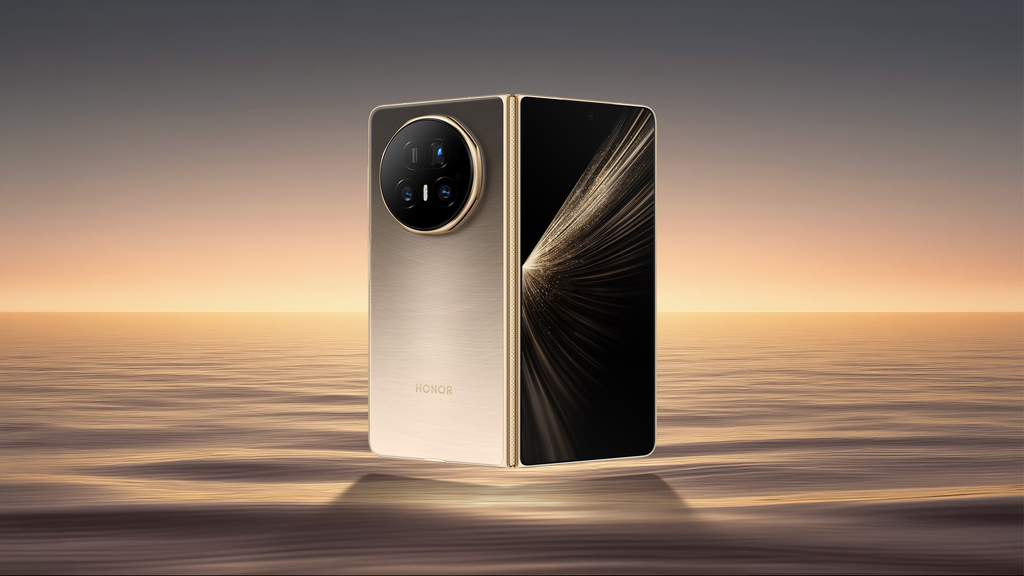
Colour choice affects these measurements. Other finishes measure 9mm folded on both generations and weigh around 224g on the V6 versus 222g on the V5. The more substantial specification change is protection: the V6 has IP68 and IP69 ratings, compared with IP58 and IP59 on the V5. The first digit increases from 5 to 6, improving the rated level of dust protection.
| Feature | Magic V6 | Magic V5 |
|---|---|---|
| Folded thickness, white | 8.75mm | 8.8mm |
| Open thickness, white | 4.0mm | 4.1mm |
| Weight, white | Approx. 219g | Approx. 217g |
| Protection ratings | IP68 / IP69 | IP58 / IP59 |
Displays: A Larger Cover Screen
The Honor Magic V6 expands the outer display from 6.43 to 6.52 inches. Its resolution rises from 2376 × 1060 to 2420 × 1080 pixels. This is a modest increase in working space for messages, maps and other tasks performed without opening the phone.
The inner display remains 7.95 inches with a 2352 × 2172 resolution. Opening either model therefore provides essentially the same screen dimensions for documents and side-by-side apps. Both use OLED panels on the inside and outside. The cover display is the clearer size change; the larger folding panel remains a shared feature rather than a reason by itself to move between generations.
| Feature | Magic V6 | Magic V5 |
|---|---|---|
| Outer screen | 6.52-inch OLED | 6.43-inch OLED |
| Outer resolution | 2420 × 1080 | 2376 × 1060 |
| Inner screen | 7.95-inch OLED | 7.95-inch OLED |
| Inner resolution | 2352 × 2172 | 2352 × 2172 |
Performance: A New Snapdragon Generation
Snapdragon 8 Elite Gen 5 replaces Snapdragon 8 Elite, and the GPU changes from Adreno 830 to Adreno 840. Both processors have eight CPU cores, so the change concerns the platform and its components rather than a simple increase in core count.
On a folding phone, processing power supports more than games: multiple open apps, camera processing and large documents also use the hardware. The V6 brings the newer platform to those tasks while retaining the same basic phone-and-tablet arrangement. Its two prime CPU cores reach 4.6GHz, compared with 4.32GHz on the V5.
| Feature | Magic V6 | Magic V5 |
|---|---|---|
| Processor | Snapdragon 8 Elite Gen 5 | Snapdragon 8 Elite |
| CPU | Octa-core | Octa-core |
| GPU | Adreno 840 | Adreno 830 |
Honor Magic V6 vs Magic V5 Camera
Both models combine a 50MP main camera, 50MP ultrawide and 64MP telephoto. Optical stabilisation is available on the main and telephoto cameras, and both offer 3x optical zoom. The V6 therefore preserves the same three focal-length roles rather than introducing another rear lens.
There is an aperture difference on the ultrawide: f/2.2 on the V6 versus f/2.0 on the V5. The main camera stays at f/1.6 and the telephoto at f/2.5. Aperture is only one part of image capture, so these numbers do not establish an overall winner. Each phone also has a 20MP camera on both screens, allowing video calls and selfies whether folded or open. Both generations support 4K recording.
| Feature | Magic V6 | Magic V5 |
|---|---|---|
| Main camera | 50MP, f/1.6, OIS | 50MP, f/1.6, OIS |
| Ultrawide | 50MP, f/2.2 | 50MP, f/2.0 |
| Telephoto | 64MP, 3x, OIS | 64MP, 3x, OIS |
| Inner / outer selfie cameras | 20MP / 20MP | 20MP / 20MP |
Software: MagicOS Moves to Android 16
The V6 launches with MagicOS 10 based on Android 16, while the V5 began with MagicOS 9.0.1 based on Android 15. These describe their starting software rather than a permanent limit on the older phone. Both Phones can be upgraded to latest version Android 17.
Both generations are designed around large-screen productivity. The V5 already offers multi-window work and Gemini integration, so multitasking is a shared feature. The newer model adds its updated MagicOS environment, including meeting and screen-suggestion tools. Individual AI functions can depend on region, language and software updates.
| Feature | Magic V6 | Magic V5 |
|---|---|---|
| Launch Android version | Android 16 | Android 15 |
| Launch interface | MagicOS 10 | MagicOS 9.0.1 |
| Multi-window working | Supported | Supported |
Storage: Matching 16GB and 512GB Versions
The international configurations compared here both have 16GB RAM and 512GB storage. That gives neither model a capacity advantage in this pairing. The newer processor does not automatically mean more space for photos, documents or offline media.
With 512GB on both phones, there is substantial room for large video files and downloaded media. The 16GB RAM configuration also remains the same for switching between apps and working across the inner screen. Regional versions offer other configurations.
| Feature | Magic V6 | Magic V5 |
|---|---|---|
| Compared RAM | 16GB | 16GB |
| Compared storage | 512GB | 512GB |
Battery and Charging: The Largest Specification Upgrade
Battery capacity increases from 5,820mAh to 6,660mAh, an additional 840mAh. That is roughly a 14% capacity increase within a very similar body size. It provides a larger energy reserve, although the runtime difference still depends on screen use and workload.
Wired charging rises from 66W to 80W, while wireless charging rises from 50W to 66W. Both methods therefore receive an upgrade. These are maximum supported powers, not constant charging rates or a direct prediction of total charging time.
| Feature | Magic V6 | Magic V5 |
|---|---|---|
| Battery, compared versions | 6,660mAh | 5,820mAh |
| Wired charging | 80W | 66W |
| Wireless charging | 66W | 50W |
Main Differences Summary
The Magic V6 makes its strongest changes in battery capacity, charging, processor and dust protection. Its outer display grows slightly, while the inner screen, camera resolutions and compared storage configuration remain closely aligned with the Magic V5.