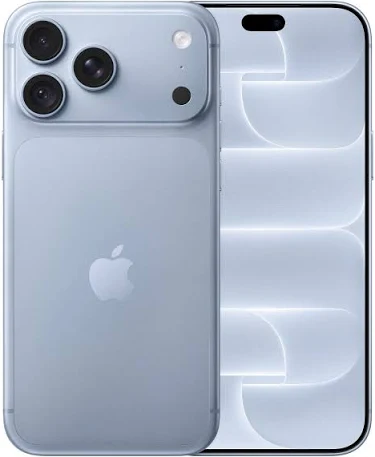
The iPhone 18 Pro vs iPhone 17 Pro comparison is defined by a handful of hardware changes rather than a complete redesign. The newer model introduces the A20 Pro chip, a variable-aperture main camera and a larger battery, while retaining the same dimensions and core display specifications.
Several familiar features also carry over, including three 48MP rear cameras, 4× optical telephoto zoom, Face ID and 25W wireless charging. The differences become clearer when each part of the two generations is compared side by side.
Design and Build: Same Dimensions, New Colours
Both phones measure 150 × 71.9 × 8.8mm, preserving the same overall footprint. The iPhone 18 Pro weighs 211g, an increase of 5g over the iPhone 17 Pro’s 206g. The newer phone is therefore slightly heavier without becoming taller, wider or thicker.
Aluminium construction and IP68 water resistance remain shared features. The more visible distinction is the colour selection: Black, Glacier and Burgundy join Silver on the iPhone 18 Pro, replacing the previous generation’s Cosmic Orange and Deep Blue alternatives. Silver is the only colour name common to both lineups.
| Feature | iPhone 18 Pro | iPhone 17 Pro |
|---|---|---|
| Dimensions | 150 × 71.9 × 8.8mm | 150 × 71.9 × 8.8mm |
| Weight | 211g | 206g |
| Frame | Aluminium | Aluminium alloy |
| Water resistance | IP68, up to 6m for 30 minutes | IP68, up to 6m for 30 minutes |
| Colours | Black, Silver, Glacier, Burgundy | Silver, Cosmic Orange, Deep Blue |
Display: The Same Size, Resolution and Brightness
The display is one of the clearest similarities. Both phones have a 6.3-inch LTPO Super Retina XDR OLED screen, a 120Hz refresh rate and a resolution of 1206 × 2622 pixels. Pixel density remains 460ppi, so the iPhone 18 Pro does not gain a resolution advantage.
Brightness is unchanged at 1,000 nits typical, 1,600 nits in high-brightness mode and 3,000 nits peak. Ceramic Shield 2 protection also carries over. These shared specifications make the screen a point of continuity rather than a major reason for the generational change.
| Feature | iPhone 18 Pro | iPhone 17 Pro |
|---|---|---|
| Screen | 6.3-inch LTPO OLED | 6.3-inch LTPO OLED |
| Resolution | 1206 × 2622, 460ppi | 1206 × 2622, 460ppi |
| Refresh rate | 120Hz | 120Hz |
| Peak brightness | 3,000 nits | 3,000 nits |
| Protection | Ceramic Shield 2 | Ceramic Shield 2 |
Cameras: Variable Aperture Is the Main Change
Shared Camera Hardware
The basic camera arrangement stays consistent: a 48MP main camera, 48MP ultrawide and 48MP periscope telephoto with 4× optical zoom. Both phones also have an 18MP front camera with autofocus. Neither the headline resolution nor the optical telephoto reach increases with the iPhone 18 Pro.
More Control on the Main Camera
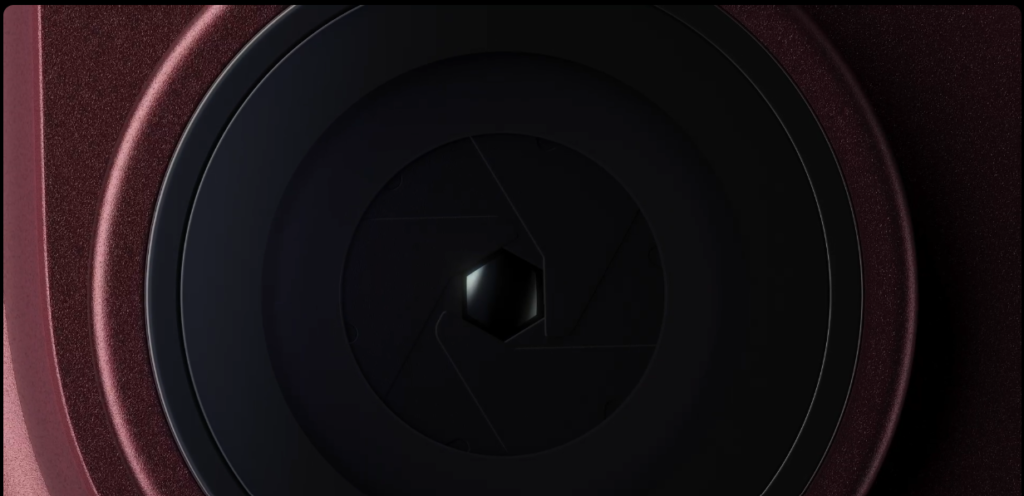
The iPhone 18 Pro adds a physical variable aperture to its main camera. Unlike a fixed opening, this allows the aperture to change, giving the camera another way to control incoming light and depth of field. It is a change to how the camera captures a scene, rather than an increase in megapixels.
Sensor-shift stabilisation and LiDAR remain part of both camera systems. Rear-camera video reaches 4K at up to 120fps on both generations, while front-camera recording reaches 4K at 60fps.
The central distinction is therefore the main camera’s aperture control, with much of the established resolution and recording capability retained.
| Feature | iPhone 18 Pro | iPhone 17 Pro |
|---|---|---|
| Main camera | 48MP, variable aperture | 48MP |
| Ultrawide | 48MP | 48MP |
| Telephoto | 48MP, 4× optical zoom | 48MP, 4× optical zoom |
| Front camera | 18MP, autofocus | 18MP, autofocus |
| Rear video | Up to 4K/120fps | Up to 4K/120fps |
| Front video | Up to 4K/60fps | Up to 4K/60fps |
Processor: A20 Pro vs A19 Pro
The iPhone 18 Pro moves to the A20 Pro chip, built on a 2nm process, while the iPhone 17 Pro uses the 3nm A19 Pro. Both have six-core CPUs, although sharing a core count does not mean the underlying processors are identical.
This is a newer silicon generation rather than a RAM upgrade: both phones have 12GB RAM. The chip change is relevant to processing-intensive tasks such as games and video work, but process size alone does not establish a specific performance or efficiency improvement.
| Feature | iPhone 18 Pro | iPhone 17 Pro |
|---|---|---|
| Chipset | A20 Pro | A19 Pro |
| Manufacturing process | 2nm | 3nm |
| CPU | Six-core | Six-core |
| RAM | 12GB | 12GB |
Software and Updates: Both Support iOS 27
The iPhone 18 Pro launches with iOS 27, whereas the iPhone 17 Pro originally shipped with iOS 26. However, the older model is compatible with iOS 27, so the launch-version difference does not leave it a full operating-system generation behind.
That distinction matters when separating software updates from hardware-exclusive features. The newer phone’s variable aperture cannot be added to the older camera through an update.
A fixed final support date has not been established for either model in this comparison, so an exact number of remaining update years is left unspecified.
| Feature | iPhone 18 Pro | iPhone 17 Pro |
|---|---|---|
| Launch software | iOS 27 | iOS 26 |
| iOS 27 support | Included at launch | Compatible via update |
| Final support date | Not established | Not established |
Storage: A New 2TB Option
The entry-level capacity remains 256GB, with 512GB and 1TB versions available on both phones. The iPhone 18 Pro adds a 2TB option, doubling the maximum internal storage compared with the iPhone 17 Pro.
This is the clearest storage change for large photo libraries and locally stored video projects. RAM stays at 12GB across the configurations, and neither phone supports a memory card.
| Feature | iPhone 18 Pro | iPhone 17 Pro |
|---|---|---|
| Storage options | 256GB, 512GB, 1TB, 2TB | 256GB, 512GB, 1TB |
| RAM | 12GB | 12GB |
| Memory-card slot | No | No |
Battery and Charging: More Capacity, Familiar Wireless Charging
The iPhone 18 Pro has a 4,056–4,228mAh battery range across variants, compared with 3,988mAh for the iPhone 17 Pro configuration covered here. The difference is 68–240mAh; capacity is higher, although the size of the increase depends on the model variant.
The iPhone 18 Pro supports 60W wired charging. For the iPhone 17 Pro, Apple specifies up to 50% charge in 20 minutes with a suitable high-wattage adapter. A wattage and a charging-time claim are different measurements, so they do not establish a direct speed comparison. Wireless charging remains 25W, and both support 4.5W reverse wired charging.
| Feature | iPhone 18 Pro | iPhone 17 Pro |
|---|---|---|
| Battery capacity | 4,056–4,228mAh, variant-dependent | 3,988mAh |
| Wired charging | 60W | Up to 50% in 20 minutes, Apple claim |
| Wireless charging | 25W | 25W |
| Reverse wired charging | 4.5W | 4.5W |
Conclusion: Targeted Changes, Familiar Foundations
The iPhone 18 Pro’s main additions are variable-aperture photography, A20 Pro silicon, a larger battery and a 2TB storage tier. The iPhone 17 Pro retains the same display specifications, camera resolutions, 4× optical telephoto reach and wireless charging power, with iOS 27 support extending their software overlap.
This is a focused hardware update, with the biggest differences concentrated in capture control, processing and storage capacity.