Garmin Cirqa is a screenless wearable released by Garmin to compete with devices like the Fitbit Air from Google, the Amazfit Helio Strap, and the Whoop band. This article compares Garmin Cirqa vs Fitbit Air side by side, covering hardware specs, design and comfort, sensor accuracy, software features, pricing, and real-world user feedback.
Fitbit Air launched first on May 26, 2026 (announced May 7), while Garmin Cirqa became available on July 24, 2026 (announced July 21). Both are designed for continuous, distraction-free health and fitness tracking without a display, relying on companion apps for data and insights.
Google’s Fitbit Air uses an optical heart rate sensor similar to those found in earlier mid-range Fitbit models such as the Charge 6. Garmin Cirqa uses the Elevate Gen 4 (V4) optical sensor, one generation behind the latest Gen 5 found in many current Garmin watches. Newer hardware does not always deliver better real-world results, as independent testing has shown.
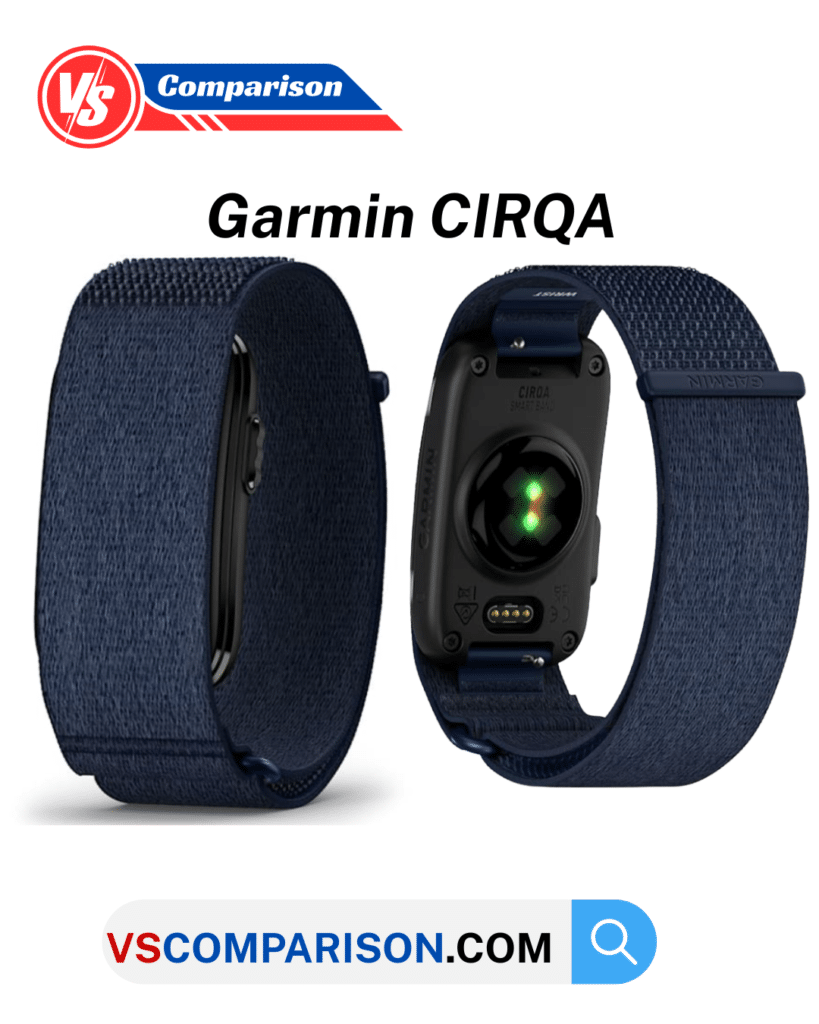
Design, Shape, and Dimensions
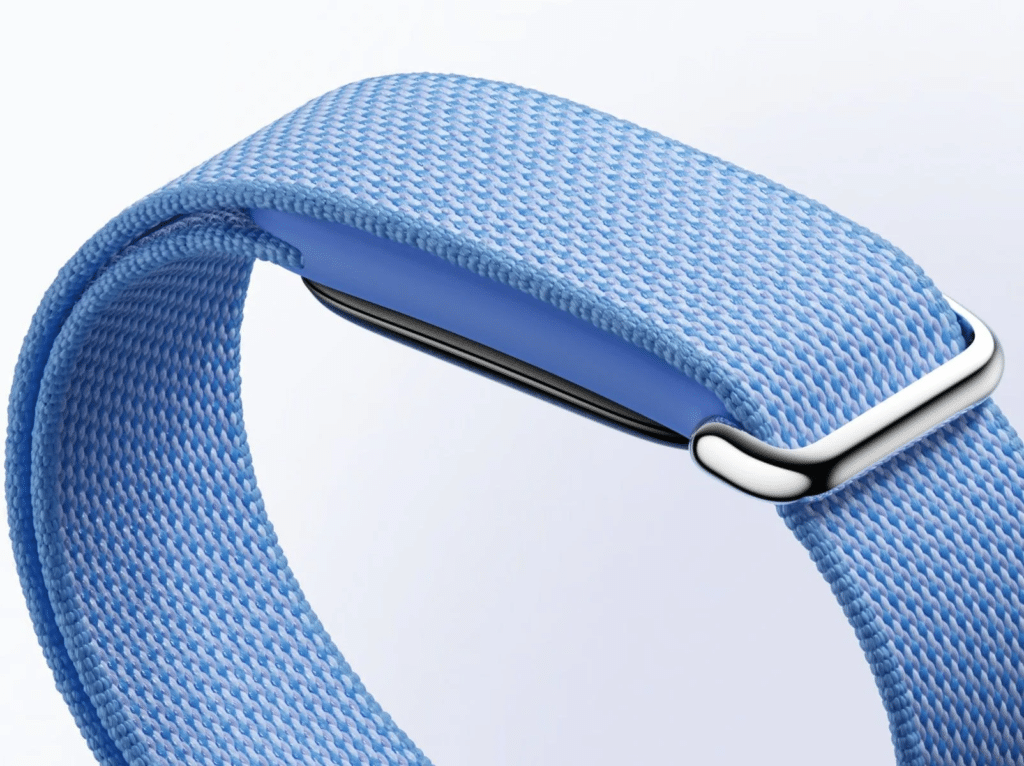
Side by side, Fitbit Air is noticeably smaller and lighter than Garmin Cirqa. This is a clear advantage for users who want a wearable they can essentially forget they are wearing, especially during sleep or daily activities.
| Feature | Garmin Cirqa | Fitbit Air |
|---|---|---|
| Module dimensions | 27 × 47 × 9 mm | 34.9 × 17 × 8.3 mm |
| Weight (with band) | ~20.7 g (S/M) / 21.2 g (L/XL) | 12 g |
| Module weight | 14.8 g | 5.2 g |
| Water resistance | 5 ATM (50 m) | 5 ATM (50 m) |
| Controls | Physical side button + vibration + LED | Vibration + LED |
| Band options | S/M and L/XL wrist; optional upper-arm bands | One-size adjustable (wrist 130–210 mm) |
Garmin Cirqa includes a programmable side button that lets you start a favorite workout, dismiss an alarm, or perform other quick actions without pulling out your phone. Fitbit Air relies primarily on automatic workout detection or starting sessions from the app.
Which Is More Comfortable?
Fitbit Air wins on comfort for most people. Its tiny, thin profile makes it easy to wear 24/7 with minimal awareness. Garmin Cirqa feels bulkier on the wrist; some users with smaller wrists note that the longer module and lugs can protrude or feel more watch-like. Cirqa performs better when worn on the upper arm (Garmin sells compatible arm bands separately), which many prefer for higher-intensity exercise accuracy and comfort during sleep.
Both use soft fabric or textile bands designed for all-day and overnight wear. Cirqa offers two wrist sizes plus arm options; Fitbit Air uses a single adjustable band range with quick-swap styles available.
Heart Rate Accuracy and Tracking Performance
Independent testing including from reviewers such as The Quantified Scientist shows Fitbit Air delivering surprisingly strong heart rate accuracy despite its more established sensor design.
In several exercise scenarios—especially wrist-based indoor cycling, running, and weightlifting—Fitbit Air often matched or outperformed Cirqa in correlation with chest-strap references. Both devices improve substantially when worn on the biceps.
Garmin Cirqa is far from poor and benefits from the broader Garmin ecosystem. Existing Garmin watch owners can use Cirqa for daytime and nighttime recovery tracking, then switch to a watch or chest strap for precise workouts. Cirqa supports over 80 activity profiles with a mix of automatic detection and manual starts via the button.
Fitbit Air focuses on core automatic detection and app-based logging, with strong irregular rhythm (AFib) notifications that Cirqa currently lacks.
Sleep tracking is solid on both, covering stages, duration, and related metrics such as HRV and skin temperature variation. Lab-grade EEG-level precision remains difficult for any wrist or arm optical device, so both perform “okay to good” in this area rather than perfect.
Garmin adds distinctive metrics such as Body Battery, Training Readiness, and VO2 max estimates; Fitbit/Google Health emphasizes readiness scores, cardio load, and AI-driven insights.
Neither has built-in GPS; both use connected GPS from a paired phone. Battery life favors Cirqa at up to 10 days versus Fitbit Air’s up to 7 days. Fitbit Air offers a useful quick-charge feature (about one day of use from a 5-minute charge); full charges take roughly 90 minutes on both.
Garmin Cirqa vs Fitbit Air: Price and Subscriptions
Price is one of the starkest differences. Garmin Cirqa retails for $199.99, while Fitbit Air starts at $99.99. Both work without a required subscription and support Android and iOS.
- Fitbit Air pairs with the Google Health app. Core metrics (heart rate, sleep, steps, SpO2, basic readiness) are free. Google Health Premium (approximately $9.99/month or $99/year) unlocks deeper AI analysis, coaching plans, and proactive insights. New devices often include a short Premium trial.
- Garmin Cirqa uses the Garmin Connect app. Most advanced training and recovery metrics are available without payment. Garmin Connect+ (about $6.99/month or $69.99/year) adds features such as AI coaching, nutrition tracking, and certain live or enhanced views. Note that live heart-rate viewing on the phone during some workouts may require Connect+ depending on setup.
Over two years the total cost gap narrows if you subscribe to both premium tiers, but Fitbit Air remains the lower-entry option for users who stay on the free tier.
Finally, Which Device Should You Buy?
Choose Garmin Cirqa if you already use Garmin watches or Connect, have a larger wrist (or plan to wear it on the upper arm), want deeper native training metrics without a mandatory subscription, prefer a physical button, and value the longer battery life. The higher price buys stronger ecosystem integration and recovery tools suited to more serious athletes.
Choose Fitbit Air if you want the smallest, lightest, most comfortable, and most affordable screenless tracker with strong heart-rate performance, AFib alerts, and solid everyday health tracking. It is the better pick for most casual users, those prioritizing discreet all-day wear, or anyone not invested in the Garmin ecosystem.
In the Garmin Cirqa vs Fitbit Air comparison, Fitbit Air generally wins on value, size, and pure comfort, while Cirqa wins on training depth and battery for Garmin users.
Both deliver capable screenless tracking; the right choice depends mainly on your existing devices, wrist size preference, and how much you value advanced metrics versus upfront cost and discretion.