The Xiaomi Smart Band series has long been the default recommendation for anyone who wants serious fitness tracking without spending smartwatch money. The Xiaomi Smart Band 11 follows that formula to the letter—and the result is another compelling, no-nonsense fitness band that punches well above its weight.
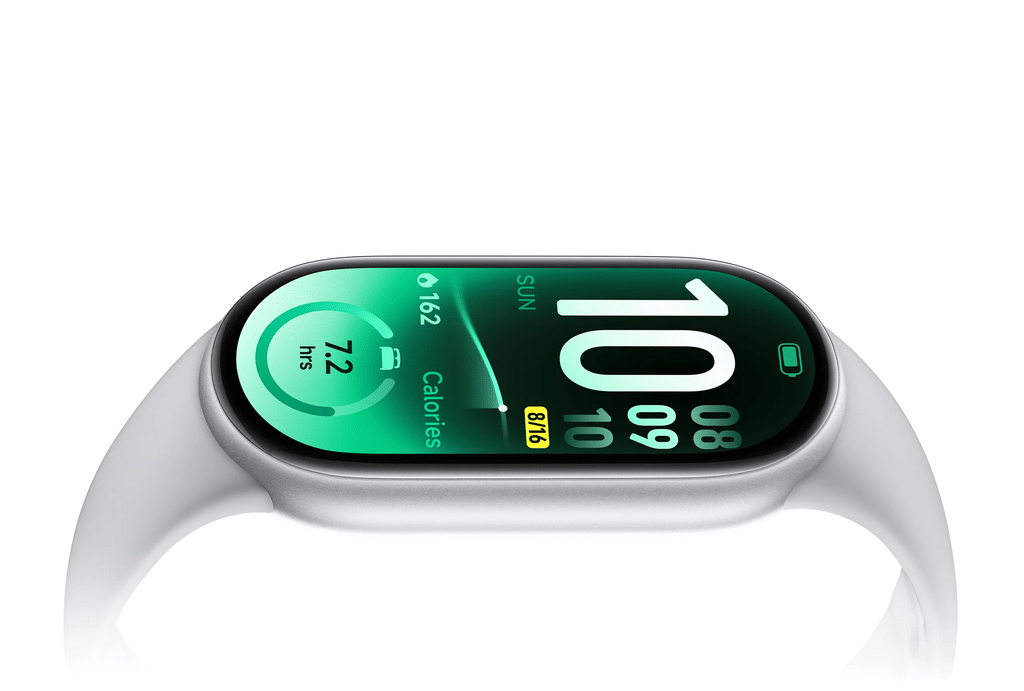
This Xiaomi Smart Band 11 review covers its main selling points, full specs, health and sports features, battery life, and the key improvements over its predecessor, the Smart Band 10.
Release Date and Pricing: When and Where You Can Get It
The Xiaomi Smart Band 11 had a staggered global rollout. It launched first in China on September 3, 2026, before expanding to global markets on September 23, 2026. It reached Hong Kong and South Korea in early October, and finally arrived in Europe on October 27, 2026.
Pricing varies significantly by region, but the band remains aggressively affordable. In Europe, the standard non-NFC model costs €59.99 (~$67), while the NFC-equipped version is €79.99 (~$89).
In Japan, it starts at JPY 6,980 (~$44), rising to JPY 9,980 (~$63) with NFC.
Other markets like Thailand and Vietnam see similar sub-$60 starting prices, making it one of the most accessible fitness trackers on the market. A Ceramic Edition in Pearl White is also available in select regions at a premium.
Design & Build: Thinner, Lighter, More Comfortable
The Xiaomi Smart Band 11 is a refinement, not a reinvention, and that is a good thing. The most tangible upgrade is its 9.99mm slim body, down from 10.95mm on the Smart Band 10.
The standard metal version weighs just 15.58g without the strap, a modest reduction from the Band 10’s 15.95g, but the cumulative effect is a band that feels noticeably less bulky on the wrist—especially during sleep.
Xiaomi has also repositioned the quick-release mechanism lower on the body, reducing the triangular gap by 10% for a more refined fit that sits more naturally against the skin. The TPU and fluoroelastomer strap features a textured surface designed for greater breathability, reducing heat and perspiration during extended wear. The Ceramic Edition elevates the build further with a pure white ceramic cover glass that feels far more premium than the price suggests.
Water resistance remains at 5 ATM, meaning the band is safe for swimming and showering up to roughly 50 meters.
Display: A Brighter Screen Makes a Real Difference
The display size is unchanged—a 1.72-inch AMOLED panel with a resolution of 212 x 520 pixels and ultra-thin 2mm symmetrical bezels. But Xiaomi has dramatically boosted peak brightness to 2,000 nits, up from the Smart Band 10’s 1,500 nits. That 33% increase is immediately noticeable outdoors; text and workout stats remain legible even in harsh midday sun, a common weakness of budget trackers.
The screen also supports a 60Hz refresh rate, making scrolling through menus and notifications feel smooth and responsive. It is not the most pixel-dense display on the market, but for a band at this price, it is vibrant, sharp, and entirely fit for purpose.
Xiaomi Smart band 11 Health Tracking
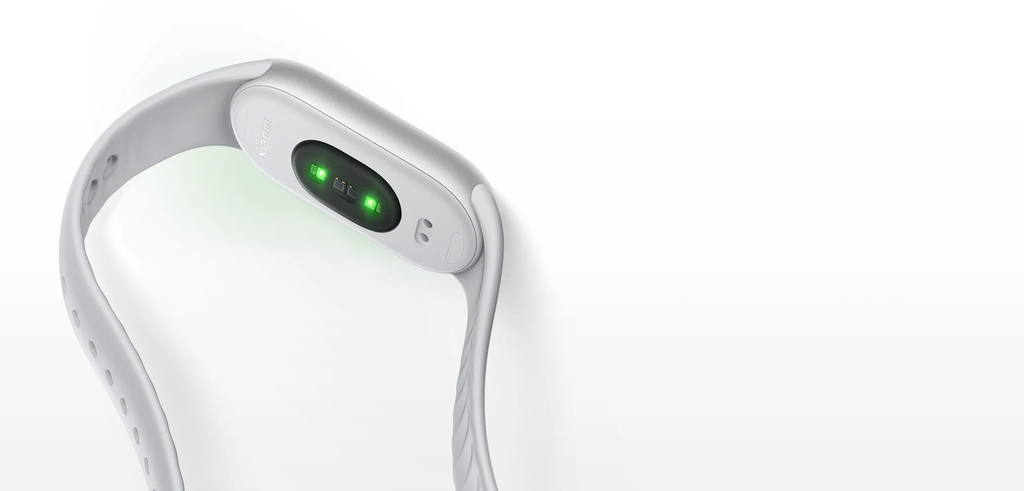
Xiaomi has upgraded the optical hardware on the Smart Band 11. The new dual-LED, dual-PD high-precision heart rate sensor, combined with Xiaomi’s latest proprietary algorithm and professional medical calibration, delivers more accurate heart rate monitoring than before. Blood oxygen (SpO₂) sensing has also been improved, alongside continuous all-day heart rate tracking with abnormal heart rate alerts.
The headline health upgrade, however, is sleep HRV tracking with AI-generated interpretation. The Smart Band 11 now monitors heart rate variability during sleep and uses AI to identify the key factors—both positive and negative—affecting your sleep quality, offering personalised recommendations to help you sleep better. It also automatically records daily activities and allows manual input for exercise, sleep, and diet, using this behavioural data to build a fuller picture of your habits over time.
This is not a medical device, but for a budget band, the depth of sleep and recovery insight on offer here is genuinely impressive and represents the most meaningful health addition this generation.
Sports & Fitness: Plenty of Modes, One Notable Absence
The Smart Band 11 supports over 150 sports modes, covering everything from running and cycling to swimming and yoga. A useful new addition is underwater heart rate monitoring, which improves the accuracy of swimming metrics by tracking heart rate even while submerged. The band also supports Bluetooth heart rate broadcasting, allowing you to share real-time heart rate data with compatible cycling computers and third-party apps.
One caveat worth flagging: Xiaomi has not announced built-in GPS for the standard Smart Band 11. Runners who want independent route tracking without carrying their phone will need to look elsewhere or rely on connected GPS from their smartphone. For casual exercisers and swimmers, however, the sensor suite and mode selection are more than adequate.
Battery Life: The Endurance Champion
Battery life remains the Smart Band 11’s crowning achievement. The 233mAh battery is unchanged from the Band 10, but efficiency gains from HyperOS 4 and the new hardware allow Xiaomi to maintain its headline claim of up to 21 days of battery life in light usage.
In more realistic scenarios, Xiaomi quotes 10 days of normal usage with expanded health monitoring enabled, and around 6 days with the Always-On Display active alongside continuous health tracking. Even at the lower end of those figures, the Smart Band 11 comfortably outlasts almost every smartwatch on the market, making it an ideal set-and-forget device for sleep tracking and round-the-clock health monitoring.
Xiaomi Smart band 11 vs Smart Band 10: Improvements
The Smart Band 11 is not a radical overhaul, but the upgrades are targeted and meaningful:
- Brighter display: 2,000 nits vs. 1,500 nits makes outdoor visibility significantly better.
- Slimmer, lighter build: 9.99mm vs. 10.95mm and a marginal weight reduction improve all-day and overnight comfort.
- Upgraded sensors: New dual-LED, dual-PD heart rate hardware and improved SpO₂ sensing deliver better accuracy.
- Sleep HRV with AI interpretation: The most substantive new health feature, adding depth to sleep analysis rather than just raw scores.
- HyperOS 4: The new software layer brings smoother performance and improved integration with both Xiaomi and Apple ecosystems.
If you already own a Smart Band 10, these are useful upgrades rather than must-have ones. For anyone on an older band or buying their first tracker, the Smart Band 11 represents a clear and easy recommendation.
Final Verdict
The Xiaomi Smart Band 11 does exactly what a budget fitness band should do: it nails the fundamentals and adds just enough new capability to stay competitive. The brighter screen and slimmer body make it more pleasant to live with, the upgraded sensors and sleep HRV tracking add genuine health value, and the multi-week battery life remains unmatched in its class.
It will not satisfy runners who demand built-in GPS, and its health insights, while improved, are not a substitute for medical-grade assessment.
But at a starting price of around $44–$67 depending on region, the Smart Band 11 is an outstanding value proposition. It is not the flashiest wearable you can buy, but it may well be the smartest purchase.
Visit our homepage to see more reviews and comparisons.