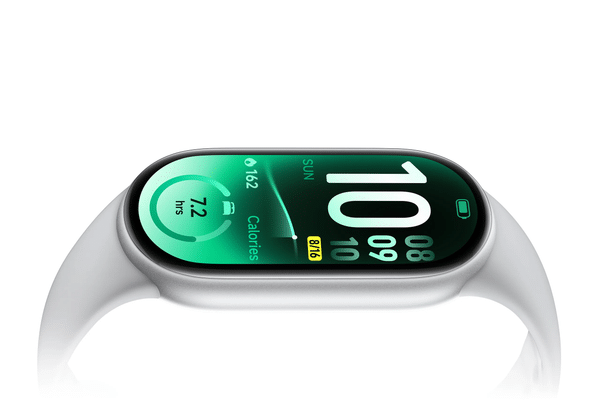
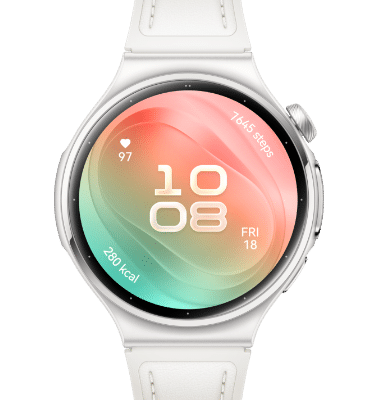
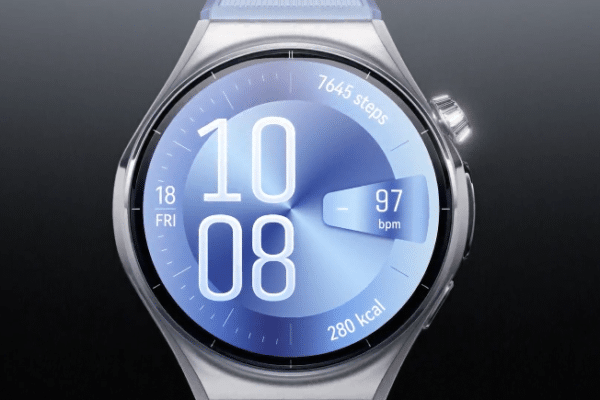
For years, the idea of a smartwatch that could take a genuine, cuff-based blood pressure reading felt like a niche compromise. The original Huawei Watch D proved the concept worked, but it looked and felt like a piece of medical equipment strapped to your wrist. The Watch D2 was a step in the right direction, softening the design without sacrificing the core technology. Now, the Huawei Watch D3 arrives with a singular mission: to make medical-grade blood pressure monitoring feel completely normal. And for the most part, it succeeds brilliantly.
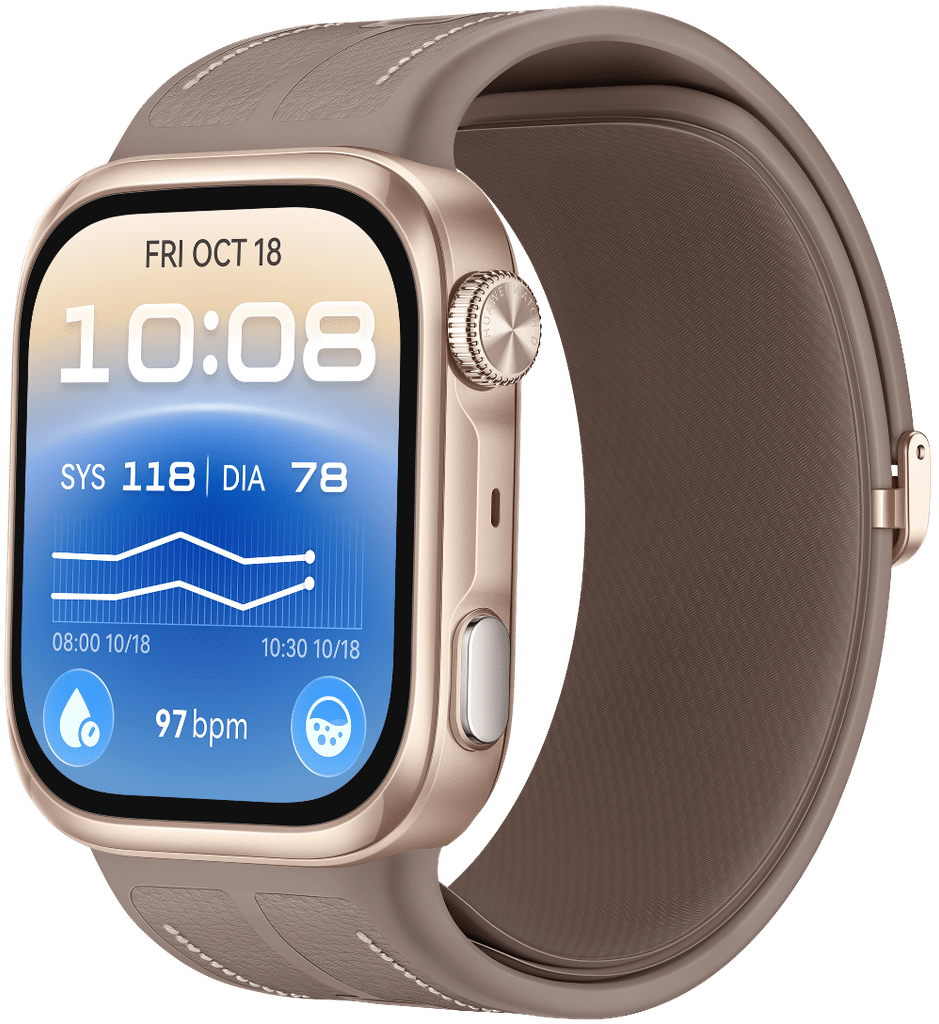
This Huawei Watch D3 review breaks down its main selling points, key specs, and the meaningful improvements Huawei has made over its predecessor, making it the most compelling health-focused smartwatch for anyone concerned about hypertension.
Design & Build: The Biggest Leap Yet
The most immediate and striking improvement in the Watch D3 is its design. Huawei has finally managed to shrink the hardware required for a built-in cuff into a chassis that can genuinely pass for a standard smartwatch.
The new model measures just 11.3mm thick and weighs approximately 40g (without the strap), representing a 15% reduction in thickness and a 9% reduction in overall weight compared to the Watch D2.
This slimming down is not just a spec-sheet victory; it fundamentally changes the wearing experience, making the watch far less obtrusive for all-day and overnight wear.
The display has also received a significant upgrade. The Watch D3 features a 1.92-inch AMOLED screen with a peak brightness of 3,000 nits, up from the D2’s 1.82-inch panel and 1,500 nits. This makes the watch effortlessly readable in direct sunlight, a crucial improvement for a device meant to be glanced at frequently for health data. The screen-to-body ratio has also increased to 82.75%, creating a more immersive and modern look.
The watch is available in three colorways—Black, Gold, and Mocha Gold—with straps that feel more integrated and less like a medical accessory. It is worth noting, however, that the Watch D3 is not fully waterproof; it is resistant to splashes but should not be submerged or worn in the shower. This remains a necessary trade-off for the inflatable airbag system.
Blood Pressure Monitoring: The Core Selling Point
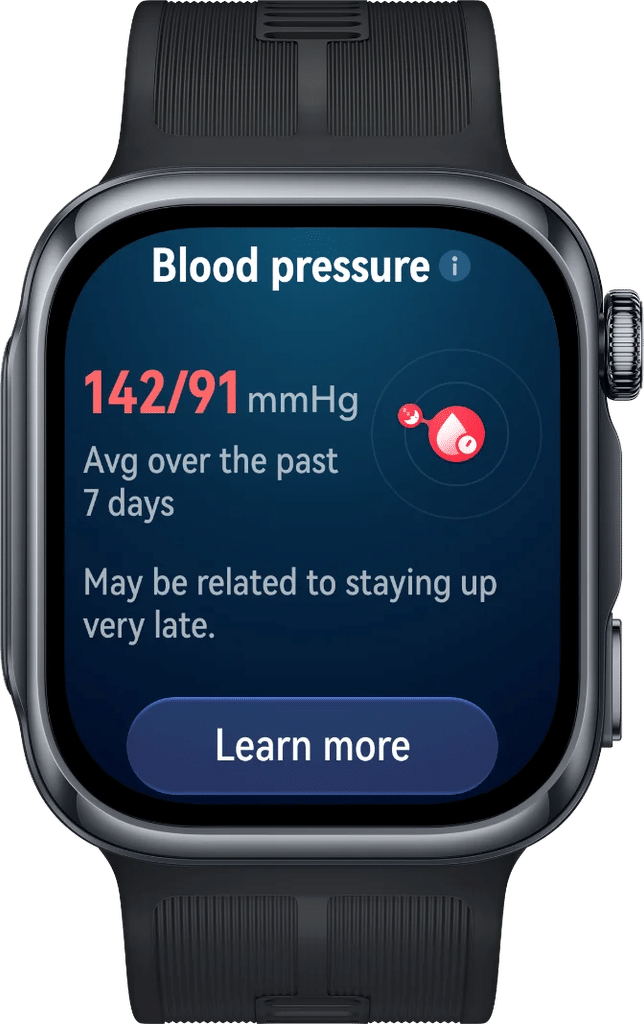
The heart of the Watch D3 is, of course, its medical-grade blood pressure monitoring. Unlike competitors that use optical sensors to estimate blood pressure trends, the Watch D3 uses a genuine oscillometric method—the same principle as a traditional upper-arm cuff. A miniature pump inside the watch body inflates a 25.5mm airbag built directly into the proprietary strap, taking a direct and accurate reading.
The accuracy of this system is what sets it apart. In comparative testing against a standard upper-arm blood pressure monitor, the Watch D3 delivered readings that were “close to reference”, with one review noting a deviation of approximately 4% for systolic pressure and 12% for diastolic pressure.
While not identical to a clinical-grade upper-arm cuff, this level of accuracy is remarkable for a wrist-worn device and represents a significant improvement over the Watch D2’s capabilities.
The Game-Changer: 24-Hour Ambulatory Blood Pressure Monitoring (ABPM)
The most significant new health feature is the introduction of 24-Hour Ambulatory Blood Pressure Monitoring (ABPM) . This mode allows the watch to automatically take readings at set intervals throughout the day and night, providing a comprehensive picture of how your blood pressure fluctuates during normal daily activities and while you sleep.
The Watch D3’s ABPM implementation follows European hypertension guidelines and provides detailed reports, including average systolic and diastolic readings for daytime, nighttime, and the full 24-hour period.
Huawei has also introduced a “Minimally Disruptive ABPM Study” mode, which reduces the number of required readings to just seven per day (four daytime and three nighttime), making long-term monitoring more comfortable and practical for users. Additionally, the Watch D3 offers pre- and post-exercise blood pressure measurements, alerting you if your blood pressure is too high before a workout and allowing you to check it within two minutes after exercising.
Beyond Blood Pressure: A Complete Health Companion
While blood pressure is the headline act, the Watch D3 is a fully-featured health and fitness smartwatch. It includes an ECG sensor for heart rate monitoring and Pulse Wave Arrhythmia analysis to detect signs of atrial fibrillation, alongside continuous SpO2 monitoring, sleep tracking (HUAWEI TruSleep), and stress monitoring.
For fitness enthusiasts, the watch supports a broad range of workout modes with built-in GPS, outdoor route navigation, and running analytics.
It also features Huawei’s Health Glance feature found in Huawei Watch 6, which provides a rapid assessment of multiple health indicators, and a Health Community feature that allows family members to receive real-time alerts and stay connected to the user’s health data.
Huawei Watch D3 Battery Life
Battery life is a critical consideration for a health-monitoring device, and the Watch D3 delivers solid endurance with a notable trade-off. Under typical usage—which includes six blood pressure measurements per day, continuous heart rate monitoring, and standard smartwatch notifications—the 540 mAh battery can last for up to 6 days. This is a commendable figure for a device with such advanced health hardware.
However, when the 24-Hour ABPM feature is enabled, battery life drops dramatically to approximately 1 day. This is an understandable consequence of the air pump activating every 15 minutes around the clock, but users relying on continuous ambulatory monitoring will need to charge daily. The watch supports 5W wireless charging, which is faster than the D2’s 3.5W charging, allowing for quick top-ups.
Improvements Over the Watch D2: A Meaningful Evolution
The Huawei Watch D3 is a story of refinement, not reinvention, and the upgrades over the Watch D2 are substantial where they matter most:
- Design and Comfort: The jump from 13.2mm to 11.3mm in thickness and the reduction in overall weight make the D3 a dramatically more wearable device for round-the-clock monitoring.
- Display: The larger 1.92-inch AMOLED screen with double the peak brightness (3,000 nits) transforms outdoor visibility and overall usability.
- Blood Pressure Capabilities: The addition of 24-Hour ABPM and pre-/post-exercise BP readings elevates the Watch D3 from a device that takes spot readings to a genuine 24/7 hypertension management tool.
- Hardware: A larger 540 mAh battery and faster 5W wireless charging address the power demands of the new features.
Final Verdict
The Huawei Watch D3 is not for everyone. It is a specialized device for a specific audience: those who need or want to monitor their blood pressure closely and are unwilling to compromise on accuracy. For that audience, it is arguably the most important smartwatch on the market.
By successfully shrinking the cuff technology into a chassis that finally looks and feels like a normal wearable, Huawei has removed the biggest barrier to adoption. The addition of 24-hour ABPM makes it a genuinely powerful tool for managing hypertension.
Its limitations—the lack of full water resistance, the one-day battery life under continuous ABPM, and the limited app ecosystem compared to Wear OS or watchOS—are real but are largely overshadowed by its unique and life-changing core capability. If blood pressure is your primary health concern, the Huawei Watch D3 is in a class of its own.