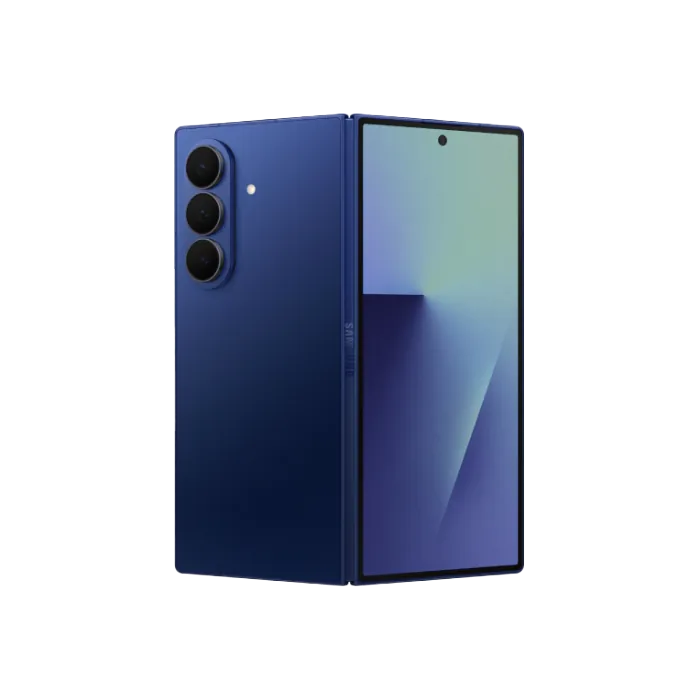
The Samsung Galaxy S25 series launched to strong reviews back in early 2025, while the Galaxy S26 base model arrived just over a year later as Samsung’s refined 2026 flagship. Announced at Galaxy Unpacked on February 25, 2026, the S26 became available for purchase starting March 6–11, 2026 (depending on region). In contrast, the Galaxy S25 was announced January 22, 2025, and hit stores February 3–7, 2025.
If you’re debating an upgrade or choosing your next Samsung phone, this in-depth Samsung Galaxy S26 vs S25 comparison covers every key area: build quality, display, memory, cameras, video, performance, software, battery, and pricing.
We’ll break it down with easy-to-read tables and clear commentary so you can decide whether the newer model justifies the extra cost.
Build and Dimensions
Samsung kept the premium feel consistent but made subtle tweaks for the S26.
| Feature | Galaxy S25 (Base) | Galaxy S26 (Base) |
|---|---|---|
| Dimensions | 146.9 x 70.5 x 7.2 mm | 149.6 x 71.7 x 7.2 mm |
| Weight | 162 g | 167 g |
| Build Materials | Gorilla Glass Victus 2 (front & back), Armor Aluminum 2 frame | Gorilla Glass Victus 2 (front & back), Armor Aluminum 2 frame |
| IP Rating | IP68 (1.5m for 30 min) | IP68 (1.5m for 30 min) |
| SIM Options | Nano-SIM + eSIM (dual) | Nano-SIM + eSIM (dual) |
The S26 is slightly taller and wider to accommodate its larger display, adding just 5g of weight. Materials and durability are virtually identical, so both phones feel equally premium and pocket-friendly.
The S26’s marginally thicker camera bump (around 10mm vs ~8.45mm) is the only noticeable design shift. If you loved the compact S25, the S26 still fits one-handed use comfortably—no major redesign here.
Galaxy S26 vs S25: Display
Both use Samsung’s excellent Dynamic LTPO AMOLED 2X panels with smooth 120Hz refresh rates.
| Feature | Galaxy S25 | Galaxy S26 |
|---|---|---|
| Size | 6.2 inches | 6.3 inches |
| Resolution | 1080 x 2340 (FHD+, ~416 ppi) | 1080 x 2340 (FHD+, ~411 ppi) |
| Type & Refresh | Dynamic LTPO AMOLED 2X, 1-120Hz, HDR10+ | Dynamic LTPO AMOLED 2X, 1-120Hz, HDR10+ |
| Peak Brightness | 2600 nits | 2600 nits |
| Protection | Corning Gorilla Glass Victus 2 | Corning Gorilla Glass Victus 2 |
The S26 gains a tiny bit of screen real estate (6.3″ vs 6.2″), which improves immersion for videos and gaming without sacrificing the compact form factor. Brightness, color accuracy, and refresh rate remain identical, delivering stunning HDR content and buttery-smooth scrolling on both.
The slight drop in pixel density on the S26 is imperceptible in daily use. Overall, displays are extremely similar—upgrades feel evolutionary rather than revolutionary.
Memory Options
Storage is one area where Samsung made a noticeable change for 2026.
| Feature | Galaxy S25 | Galaxy S26 |
|---|---|---|
| RAM | 12 GB LPDDR5X | 12 GB LPDDR5X |
| Base Storage | 128 GB (UFS 4.0) | 256 GB (UFS 4.0) |
| Options | 128/256/512 GB | 256/512 GB |
| Expandable | No | No |
The biggest win for the S26 is doubling the base storage to 256 GB at launch—no more paying extra for the entry-level model to hit usable capacity.
RAM stays at a solid 12 GB on both, more than enough for multitasking and Galaxy AI features. If you’re coming from a 128 GB S25, the S26’s standard configuration feels like a free upgrade in everyday usability.
Galaxy S26 vs S25: Camera Specs
Hardware is nearly unchanged, but software smarts elevate the newer model.
| Feature | Galaxy S25 | Galaxy S26 |
|---|---|---|
| Rear Main | 50 MP (f/1.8, OIS, PDAF) | 50 MP (f/1.8, OIS, PDAF) |
| Ultra-Wide | 12 MP (f/2.2) | 12 MP (f/2.2) |
| Telephoto | 10 MP 3x (f/2.4, OIS) | 10 MP 3x (f/2.4, OIS, PDAF) |
| Front | 12 MP (f/2.2) | 12 MP (f/2.2) |
| Key Features | ProVisual Engine, Nightography | ProVisual Engine + enhanced AI ISP |
On paper, the triple-camera setup is identical, delivering excellent 50 MP main shots, solid ultra-wide coverage, and reliable 3x optical zoom.
The S26 adds PDAF to the telephoto lens and refined AI processing (better skin tones and low-light detail via the customized NPU).
Real-world photo quality sees modest gains in dynamic range and detail—especially in challenging lighting—but casual users may not notice huge leaps unless pixel-peeping.
Video Capabilities
Video recording hardware and formats are consistent across both generations.
| Feature | Galaxy S25 | Galaxy S26 |
|---|---|---|
| Max Rear Video | 8K@30fps, 4K@60fps | 8K@30fps, 4K@60fps |
| Stabilization | OIS + EIS | OIS + Super Steady (enhanced) |
| Key Video Features | HDR, Nightography Video | Improved Nightography + AI noise reduction |
Both phones shoot stunning 8K video and smooth 4K at 60 fps with excellent stabilization.
The S26 edges ahead with superior low-light video processing and horizontal lock for shake-free 360° recording—thanks to the newer chipset and ProVisual Engine refinements.
If video is your priority, the S26 delivers slightly cleaner footage in dim conditions, but the S25 remains more than capable for most creators.
Chipset and Software (Android Version & UI)
Performance and longevity get a clear boost in 2026.
| Feature | Galaxy S25 | Galaxy S26 |
|---|---|---|
| Chipset | Snapdragon 8 Elite (3 nm) | Snapdragon 8 Elite Gen 5 (3 nm) |
| CPU/GPU | Octa-core up to 4.47 GHz / Adreno 830 | Faster octa-core / Adreno 840 |
| Software (Launch) | Android 15 + One UI 8 | Android 16 + One UI 8.5 |
| Updates | 7 years OS + security | 7 years OS + security |
The S26’s newer Snapdragon 8 Elite Gen 5 (or regional Exynos 2600) brings faster AI processing (up to 36% NPU gains), better graphics, and improved efficiency.
Benchmarks show noticeable jumps in multi-core and GPU tasks. Software-wise, Android 16 with One UI 8.5 launches with more intuitive Galaxy AI tools (Photo Assist, Now Brief, etc.).
Both get seven years of updates, so longevity is equal—but the S26 starts fresher and feels snappier out of the box.
Galaxy S26 vs S25: Battery Life
The S26 finally addresses one of the S25’s few criticisms.
| Feature | Galaxy S25 | Galaxy S26 |
|---|---|---|
| Capacity | 4000 mAh | 4300 mAh |
| Wired Charging | 25W | 25W |
| Wireless Charging | 15W + reverse | 15W + reverse |
| Typical Endurance | ~7–8 hours screen-on time | ~8–9+ hours screen-on time |
The extra 300 mAh capacity combined with the more efficient chipset delivers noticeably better real-world battery life on the S26—especially during video playback and mixed use.
Both support the same 25W wired and 15W wireless speeds (55% in ~30 minutes), so charging times are comparable.
If all-day battery was a concern on your S25, the S26 is a welcome improvement without increasing size dramatically.
Samsung Galaxy S26 vs S25: Price
Pricing reflects the storage bump and incremental upgrades.
| Variant | Galaxy S25 | Galaxy S26 |
|---|---|---|
| Launch Price (US) | $799 (128 GB) | $899 (256 GB) |
| Higher Storage | $859+ (256 GB) | $1,099+ (512 GB) |
The S26 costs $100 more at launch but includes double the base storage. Factoring in trade-in deals and current discounts (common on both models), the effective price gap shrinks.
The S25 remains a fantastic value if found on sale, while the S26’s higher starting point is justified by the bigger battery, newer processor, and out-of-box storage.
Final Verdict: Samsung Galaxy S26 vs S25 – Should You Upgrade?
The Galaxy S26 brings meaningful but incremental improvements: a slightly larger display, double the base storage, better battery life, a faster chipset with superior AI, and refined camera/video processing.
The Galaxy S25 still excels in nearly every area and offers better value if you can find it discounted.
Choose the S26 if you want future-proof performance, longer battery, and more storage right away. Stick with the S25 (or buy used/refurbished) if you already own one or prioritize saving money—the differences aren’t night-and-day for most users.
Both phones earn top marks for build quality, displays, and software support. Whichever you pick, you’re getting one of the best Android experiences available in 2026.