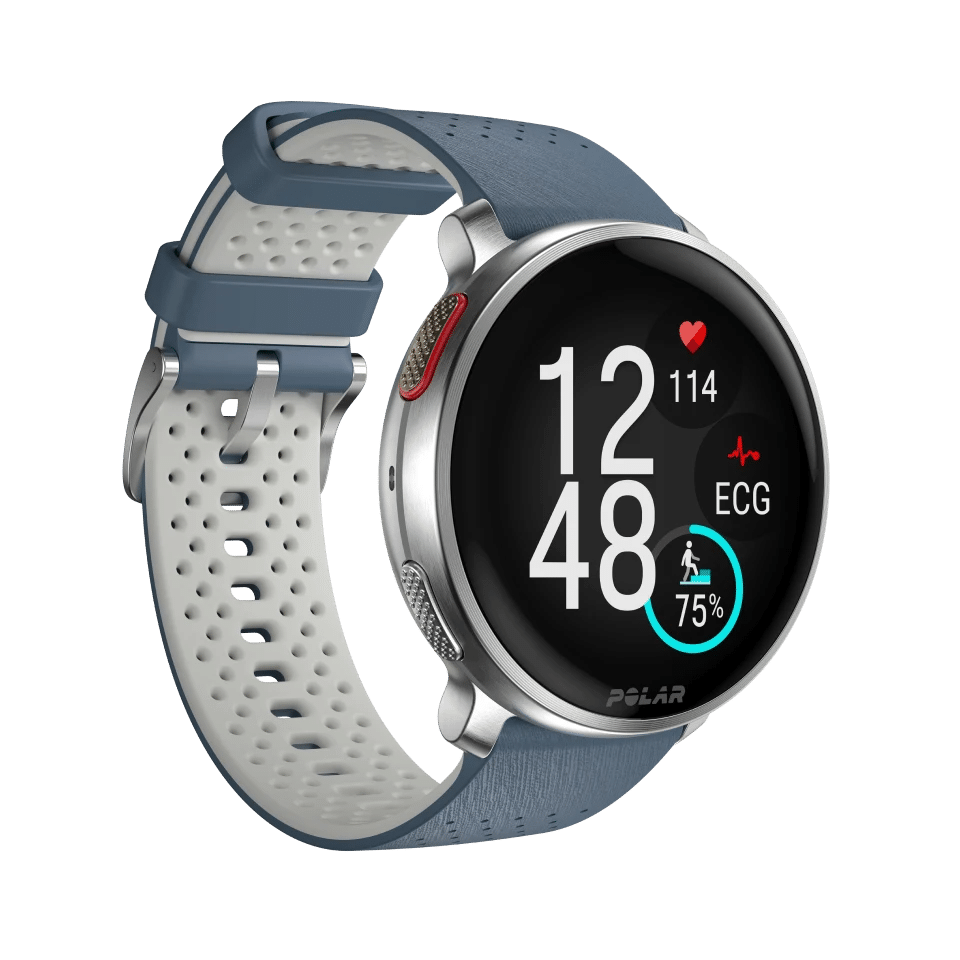
Polar Vantage M3 vs V3 can sometimes be confusing as they share identical software and core sports features. For athletes, deciding between the mid-range yet feature-rich M3 and the top-tier V3 comes down to a few key differentiators: primarily battery life, screen size, and advanced recovery tools.
This detailed comparison will help you navigate the features and specifications to find the watch that will truly elevate your performance.
🧭 Design, Display, and Build Quality
Both the Vantage M3 and Polar Vantage V3 embrace the modern smartwatch aesthetic with a vibrant AMOLED display, a significant upgrade from previous Polar models.
However, the V3 maintains its status as the premium model with slight advantages in screen size and overall footprint.
Display Technology and Visibility
Both watches feature a stunning AMOLED touchscreen which provides excellent brightness and clarity, essential for viewing metrics during sunny runs or quick glances mid-swim.
- Polar Vantage V3: Offers a larger 1.39-inch display with 454 x 454 resolution.
- Polar Vantage M3: Features a slightly smaller 1.28-inch display with 416 x 416 resolution.
While the V3 offers a slightly larger viewing area, both displays are incredibly sharp and responsive.
Size and Comfort
The Vantage M3 is designed to be the more compact and lightweight option, appealing to users with smaller wrists or those who prefer a less intrusive feel during all-day wear and sleep tracking.
| Metric | Polar Vantage M3 | Polar Vantage V3 |
| Case Dimensions | 44.7 x 44.7 x 12.2 mm | 47.3 x 47.3 x 13.5 mm |
| Total Weight | 53 g | 57 g |
| Case Material | Plastic case with Stainless Steel Bezel | Aerospace Aluminum case |
| Screen Material | Gorilla Glass 3 | Gorilla Glass (unspecified version) |
The M3’s smaller size and lighter weight make it an excellent choice for daily wear and activities where every gram counts. The V3’s aerospace aluminum case gives it a more premium and robust feel, justifying its higher-end positioning.
⚡ Performance and Hardware Capabilities
Beneath the sleek exterior, both watches are powered by the same high-speed CPU (275 MHz) and a massive 32 GB of storage, which is crucial for handling the onboard maps and a responsive user interface.
GPS and Navigation
Both models are equipped with Dual-Frequency GPS (also known as multi-band GNSS), which significantly enhances location accuracy, especially in challenging environments like dense cities with tall buildings or deep canyons.
- Offline Maps: Both watches offer free, pre-installed offline mapping with the ability to download additional regions, a major upgrade for navigation and route planning. This feature levels the playing field significantly for trail runners, cyclists, and explorers.
- Route Guidance: Both support advanced route guidance and planning through integrations like Komoot, offering turn-by-turn directions.
Polar Elixir™ Biosensing Technology
The inclusion of Polar’s Elixir™ biosensing suite is a key feature that unites the M3 and V3, providing a comprehensive view of your health and recovery.
| Sensor Feature | Polar Vantage M3 | Polar Vantage V3 |
| Wrist-ECG (Electrocardiogram) | Yes | Yes |
| SpO2 (Blood Oxygen) | Yes | Yes |
| Skin Temperature | Yes | Yes |
| OHR (Optical Heart Rate) | Gen 4 | Gen 4 |
This means both watches provide:
- ECG at the wrist to take an electrocardiogram for detailed heart data.
- SpO2 readings to monitor blood oxygen saturation.
- Nightly Skin Temperature tracking for wellness insights.
🔋 Battery Life: The Major Differentiator
For endurance athletes, battery life is often the single most important metric. This is where the Vantage V3 asserts its superiority due to its larger battery capacity (488 mAh vs. 310 mAh in the M3).
| Battery Mode | Polar Vantage M3 | Polar Vantage V3 | V3 Advantage |
| Performance Training (Full GPS/OHR) | Up to 30 hours | Up to 43 hours | +13 Hours |
| Eco Training Mode (Reduced tracking) | Up to 70 hours | Up to 140 hours | +70 Hours |
| Smartwatch Mode (Daily use) | Up to 7 days | Up to 10 days | +3 Days |
If you are an ultramarathon runner, multi-day hiker, or frequently engage in long-duration sports, the V3’s 43-hour peak training time makes it the superior choice for guaranteed coverage without a mid-activity recharge.
🛠️ Software and Advanced Training Tools
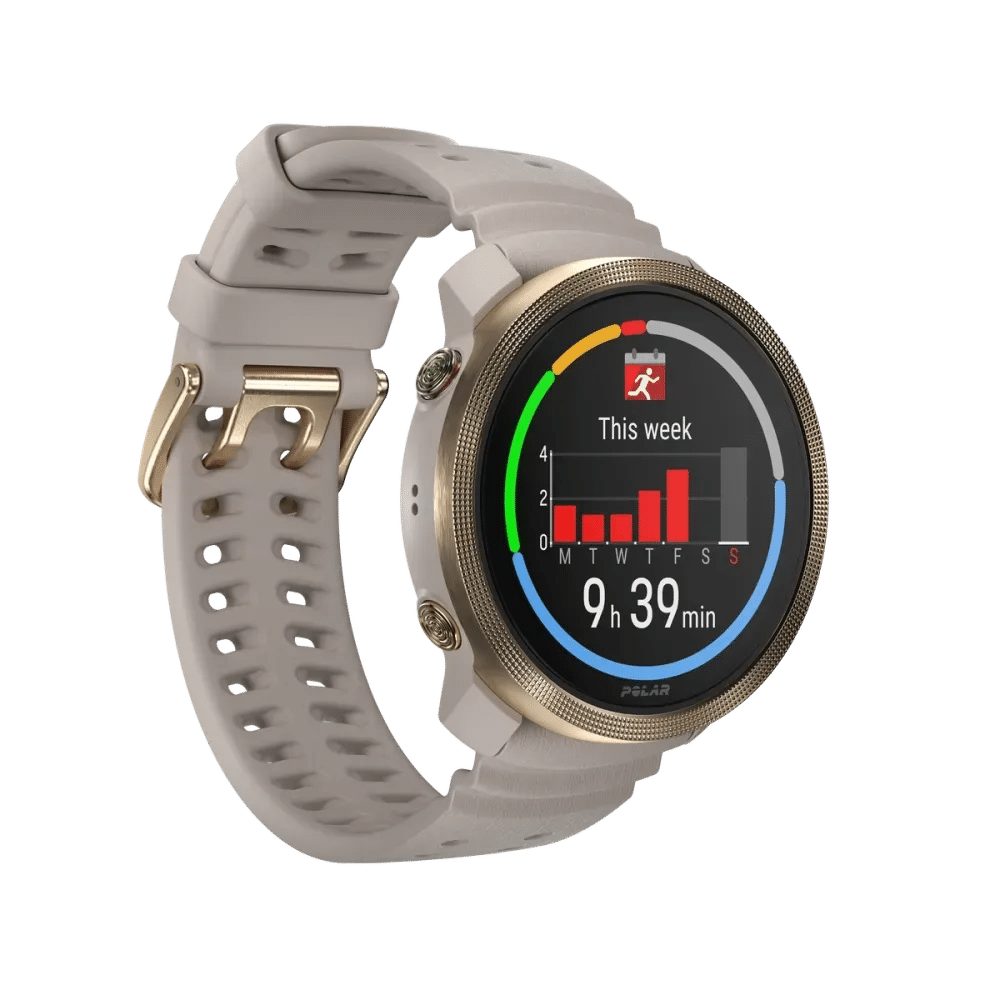
Both watches operate within the comprehensive Polar Flow ecosystem and offer an identical suite of core training, recovery, and wellness features, including:
- Training Load Pro™: Monitors the strain on your cardiovascular and musculoskeletal systems.
- Recovery Pro™: Personalized recovery feedback, which, thanks to the wrist-ECG, can be performed without an external chest strap on both models.
- Nightly Recharge™ & SleepWise™: Detailed sleep and recovery analysis.
- FitSpark®: Daily, personalized workout suggestions.
- FuelWise™: Smart fueling assistant for long sessions.
- Wrist-Based Running Power: Calculates energy output without external sensors.
The V3 offers additional Barometer and Gyroscope sensors which may provide slightly more precise altitude and movement data, contributing to its “Premium” label, but for most users, the core feature set is identical.
💰Polar Vantage M3 vs V3: Price
While prices can fluctuate based on region and retailer, the Polar Vantage M3 is positioned as the more accessible option, offering nearly all the V3’s advanced features at a significantly lower price point.
- Polar Vantage M3 Price: From $499.
- Polar Vantage V3 Price: from $599.
The Polar Vantage M3 represents exceptional value. It includes the flagship AMOLED screen, Dual-Frequency GPS, offline maps, and the entire Elixir biosensing suite (ECG, SpO2, Skin Temp) for a mid-range price.
The Polar Vantage V3 justifies its premium price with the larger, longer-lasting battery, a slightly bigger screen, the premium aluminum build, and a small margin of extra sensors for data granularity.
🏁 Conclusion: Which Polar Vantage is Right for You?
The choice between the Polar Vantage M3 and the V3 is a nuanced one, as the M3 has significantly closed the feature gap with the V3 compared to previous generations.
Choose the Polar Vantage M3 if:
- You are a dedicated multi-sport athlete on a mid-range budget.
- Your longest training sessions rarely exceed 15-20 hours of continuous GPS use.
- You prefer a lighter, more compact watch for everyday wear and sleep tracking.
- You want the latest health features (ECG, SpO2) without paying the premium price.
Polar Vantage M3 competes with watches like Suunto Race 2 and Garmin Forerunner 570.
Choose the Polar Vantage V3 if:
- You are an ultra-endurance athlete (ultramarathons, multi-day adventure racing, Ironman distance) where the 43-hour battery life is a non-negotiable requirement.
- You value the larger screen and the more premium, robust aerospace aluminum build.
- You need the most granular data possible and appreciate the extra sensors (Gyroscope, Ambient Light Sensor).
Ultimately, both watches deliver a powerful, science-backed experience within the Polar ecosystem.
The Vantage M3 offers the best feature-for-price ratio, bringing premium features to a wider audience.
The Vantage V3 remains the undisputed king for the athlete who demands the absolute maximum battery life and premium build quality for their longest, toughest challenges.
About the Author