The Pixel 11 Pro Fold vs Pixel 10 Pro Fold comparison centres on a slimmer body, brighter displays and an updated main camera.
Google’s 2026 foldable keeps the same 8-inch inner-screen format as its 2025 predecessor, while reducing weight and changing some of the materials around it.
Tensor G6 and Android 17 move the platform forward, but several fundamentals remain: 16GB RAM, a 5x telephoto camera and seven years of updates. Battery capacity is one area where the newer model goes backwards, even as wireless charging becomes faster.
Design and Build: Lighter and Thinner
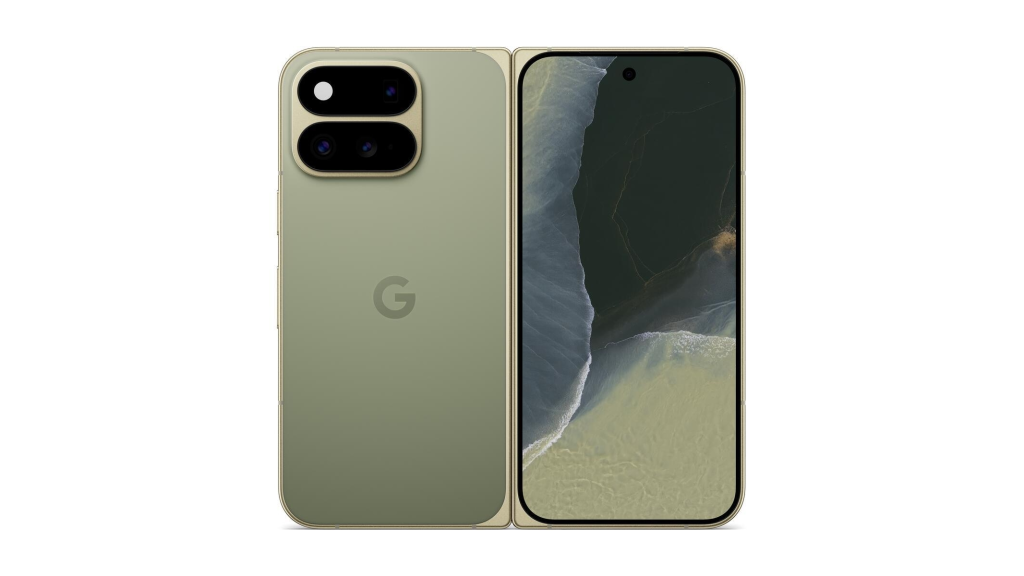
Pixel 11 Pro Fold weighs 239g, down from 258g. Its folded thickness falls from 10.8mm to 10.1mm, and its open thickness drops from 5.2mm to 5mm. The height stays at 155.2mm, so the reduction comes without shortening the phone.
The back changes from Gorilla Glass Victus 2 to a matte composite material, while glass-ceramic protection replaces Victus 2 over the cover display. Both phones retain aluminium frames and IP68 dust and water resistance.
Pixel 11 Pro Fold also adds HiLight: LEDs around the camera flash provide colour-coded call notifications and lighting during hands-free Gemini interactions.
| Feature | Pixel 11 Pro Fold | Pixel 10 Pro Fold |
|---|---|---|
| Weight | 239g | 258g |
| Thickness, folded / open | 10.1 / 5.0mm | 10.8 / 5.2mm |
| Back material | Matte composite | Gorilla Glass Victus 2 |
| Cover glass | Glass-ceramic | Gorilla Glass Victus 2 |
| Protection | IP68 | IP68 |
Displays: Brighter Panels and a More Flexible Cover Screen
The outer display grows slightly from 6.4 to 6.5 inches. More significantly, its refresh-rate range expands from 60–120Hz to 1–120Hz, allowing it to reduce refresh frequency further for static content.
Both inner displays remain 8-inch OLED panels with a 2076 × 2152 resolution and 1–120Hz refresh rate. Peak brightness rises from 3,000 to 3,600 nits on both screens.
Inner-screen HDR brightness also increases from 1,800 to 2,000 nits, while the cover screen stays at 2,000 nits HDR. Peak figures describe limited display conditions rather than constant full-screen brightness.
| Feature | Pixel 11 Pro Fold | Pixel 10 Pro Fold |
|---|---|---|
| Cover display | 6.5-inch OLED, 1–120Hz | 6.4-inch OLED, 60–120Hz |
| Cover resolution | 1080 × 2342 | 1080 × 2364 |
| Inner display | 8-inch OLED, 1–120Hz | 8-inch OLED, 1–120Hz |
| Inner resolution | 2076 × 2152 | 2076 × 2152 |
| Peak brightness, both panels | 3,600 nits | 3,000 nits |
Pixel 11 Pro Fold vs 10 pro Fold Camera: A Larger Main Sensor, Familiar Supporting Cameras
Camera Hardware
Both phones have a 48MP main camera, but Pixel 11 Pro Fold increases the sensor size from 1/2-inch to 1/1.56-inch. The f/1.7 aperture and optical stabilisation remain. A larger sensor provides more light-gathering area, although final image quality still depends on processing and shooting conditions.
The supporting cameras stay at 10.5MP for the autofocus ultrawide and 10.8MP for the stabilised 5x telephoto. Separate front and inner cameras retain 10MP resolution. The digital zoom limit rises from 20x to 30x, without increasing the telephoto lens’s 5x optical magnification.
Video and Foldable Camera Features
Both record rear video at up to 4K60 and support Video Boost and Night Sight Video. Dual Screen Preview, Rear Camera Selfie and Tabletop Mode preserve the flexibility of shooting with a folding phone. The main sensor change is more substantial than the unchanged camera resolutions suggest.
| Feature | Pixel 11 Pro Fold | Pixel 10 Pro Fold |
|---|---|---|
| Main camera | 48MP, 1/1.56-inch, OIS | 48MP, 1/2-inch, OIS |
| Ultrawide | 10.5MP, autofocus | 10.5MP, autofocus |
| Telephoto | 10.8MP, 5x optical, OIS | 10.8MP, 5x optical, OIS |
| Digital zoom limit | 30x | 20x |
| Front / inner cameras | 10MP / 10MP | 10MP / 10MP |
| Rear video | Up to 4K60 | Up to 4K60 |
Processor: Tensor G6 and Titan M3
Pixel 11 Pro Fold moves to Google Tensor G6, replacing Tensor G5 in Pixel 10 Pro Fold. The security coprocessor also changes from Titan M2 to Titan M3.
This updates the hardware behind app processing, photography and Google’s AI features. It does not, by itself, establish a specific gaming or battery-efficiency improvement. Both phones already support Gemini features, so AI assistance is not exclusive to the newer generation. The meaningful specification change is the newer Tensor platform and security hardware.
| Feature | Pixel 11 Pro Fold | Pixel 10 Pro Fold |
|---|---|---|
| Main processor | Google Tensor G6 | Google Tensor G5 |
| Security coprocessor | Titan M3 | Titan M2 |
| On-device AI model | Gemini Nano | Gemini Nano |
Software and Updates: A Newer Starting Point
Pixel 11 Pro Fold launches with Android 17, while Pixel 10 Pro Fold launched with Android 16. These are their starting versions rather than a claim that the older phone remains on its original software.
Both have seven years of OS, security and Pixel Drop updates. That period runs from initial US Google Store availability, not the date of purchase. Because Pixel 11 Pro Fold arrived later, its support period starts later too. Shared features include Circle to Search, Live Translate and Gemini Live, with availability depending on supported languages and regions.
| Feature | Pixel 11 Pro Fold | Pixel 10 Pro Fold |
|---|---|---|
| Android at launch | Android 17 | Android 16 |
| OS and security support | Seven years | Seven years |
| Pixel Drop support | Seven years | Seven years |
RAM and Storage: The Same Three Capacities
Storage choices stay at 256GB, 512GB and 1TB, each paired with 16GB RAM. There is no extra RAM reserved for the most expensive storage configuration in this comparison.
Both generations use Zoned UFS on their 512GB and 1TB versions. The newer phone therefore retains the same broad memory and storage arrangement, rather than introducing a larger maximum capacity. Large photo libraries and downloaded media have the same three capacity options across both generations.
| Feature | Pixel 11 Pro Fold | Pixel 10 Pro Fold |
|---|---|---|
| RAM, all capacities | 16GB | 16GB |
| Storage options | 256GB / 512GB / 1TB | 256GB / 512GB / 1TB |
| Zoned UFS configurations | 512GB and 1TB | 512GB and 1TB |
Battery and Charging: Smaller Battery, Faster Wireless Charging
Typical battery capacity drops from 5,015mAh to 4,806mAh, a reduction of 209mAh, or about 4%. That does not establish an equivalent reduction in battery life, because the processor, screens and software also affect power consumption.
Wireless charging improves from 15W Qi2 to 25W Qi2.2 Pixelsnap charging. For wired charging, Google claims up to 50% in about 30 minutes for both phones when using a 30W USB-C PPS charger or higher. That charger rating is not a statement of the phone’s maximum input wattage.
| Feature | Pixel 11 Pro Fold | Pixel 10 Pro Fold |
|---|---|---|
| Typical battery | 4,806mAh | 5,015mAh |
| Wireless charging | Up to 25W, Qi2.2 | Up to 15W, Qi2 |
| Google’s wired charging claim | Up to 50% in about 30 minutes | Up to 50% in about 30 minutes |
Overall Comparison
Pixel 11 Pro Fold concentrates its changes on portability, brighter displays, the larger main sensor and wireless charging. Tensor G6 and Android 17 provide a newer platform, while storage, RAM and optical zoom remain familiar. Pixel 10 Pro Fold keeps the larger battery; the newer model trades some capacity for a lighter, thinner design.