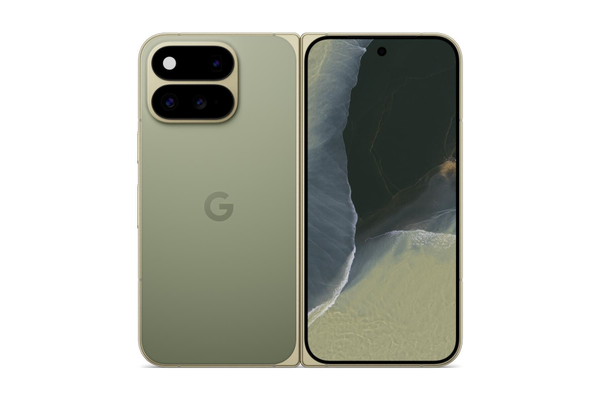
The Google Pixel 11 Pro vs Pixel 10 Pro comparison centres on a brighter display, a larger telephoto sensor, a newer Tensor processor and faster wireless charging. The familiar 6.3-inch format remains, along with three rear cameras and seven years of software support.
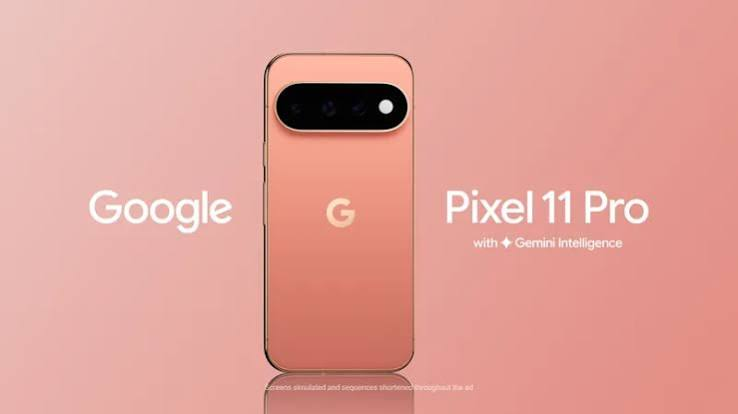
Storage and memory bring a less straightforward change. The Pixel 11 Pro starts at 256GB instead of 128GB, but its entry configuration drops from 16GB to 12GB RAM. This comparison covers the standard Pro models, rather than the larger Pro XL versions.
Design and Build: Slightly Thinner and Lighter
The Pixel 11 Pro measures 152.7 x 71.9 x 8.4mm, compared with 152.8 x 72.0 x 8.6mm for the Pixel 10 Pro. Height and width change by just 0.1mm, while thickness falls by 0.2mm. Weight decreases from 207g to 204g, leaving the overall size closely matched.
Both phones use an aluminium frame, Gorilla Glass Victus 2 back and IP68 protection. The newer phone adds an anti-scratch coating to its cover glass. Colour options change to Canyon, Olive, Fog and Obsidian, replacing Moonstone, Jade and Porcelain while retaining the Obsidian name.
| Feature | Pixel 11 Pro | Pixel 10 Pro |
|---|---|---|
| Dimensions | 152.7 x 71.9 x 8.4mm | 152.8 x 72.0 x 8.6mm |
| Weight | 204g | 207g |
| Frame / back | Aluminium / glass | Aluminium / glass |
| Dust and water rating | IP68 | IP68 |
Display: Higher Brightness Without a Size Change
Both phones have a 6.3-inch Super Actua LTPO OLED display with a resolution of 1280 x 2856 pixels. Pixel density stays at 495ppi, and the adaptive refresh range remains 1-120Hz. The Pixel 11 Pro therefore retains the same screen area, sharpness specification and maximum refresh rate.
Brightness is the main numerical change. HDR brightness rises from 2,200 to 2,400 nits, while peak brightness increases from 3,300 to 3,600 nits. These are maximum brightness specifications rather than a constant output across every screen and lighting condition.
| Feature | Pixel 11 Pro | Pixel 10 Pro |
|---|---|---|
| Screen | 6.3-inch LTPO OLED | 6.3-inch LTPO OLED |
| Resolution | 1280 x 2856, 495ppi | 1280 x 2856, 495ppi |
| Refresh rate | 1-120Hz | 1-120Hz |
| HDR brightness | Up to 2,400 nits | Up to 2,200 nits |
| Peak brightness | Up to 3,600 nits | Up to 3,300 nits |
Pixel 11 Pro vs Pixel 10 Pro Camera: The Telephoto Sensor Is the Hardware Change
Shared Main and Ultrawide Specifications
The main camera remains a 50MP f/1.68 unit with a 1/1.3-inch sensor. Both phones also have a 48MP f/1.7 ultrawide with autofocus and Macro Focus. Optical stabilisation remains available on the main and telephoto cameras, while the front camera stays at 42MP with autofocus.
The 48MP telephoto keeps its f/2.8 aperture and 5x optical magnification, but its sensor increases from 1/2.51-inch to 1/1.95-inch on the Pixel 11 Pro. The newer phone therefore changes the hardware behind the zoom lens without increasing its native optical reach.
Capture Features and Video
The Pixel 11 Pro adds Magic Capture and Instant Night Sight, while familiar features such as Camera Coach, Auto Best Take and Macro Focus remain. Maximum processed Pro Zoom increases from 100x to 120x; this is distinct from the shared 5x optical zoom.
Both models record 4K video at up to 60fps and support 8K at 24 or 30fps through Video Boost. Front-camera video also reaches 4K60 on both, so there is no increase in their headline recording resolution.
| Feature | Pixel 11 Pro | Pixel 10 Pro |
|---|---|---|
| Main camera | 50MP, f/1.68 | 50MP, f/1.68 |
| Ultrawide | 48MP, f/1.7, autofocus | 48MP, f/1.7, autofocus |
| Telephoto | 48MP, f/2.8, 5x optical | 48MP, f/2.8, 5x optical |
| Telephoto sensor | 1/1.95-inch | 1/2.51-inch |
| Maximum Pro Zoom | 120x processed zoom | 100x processed zoom |
| Front camera | 42MP, autofocus | 42MP, autofocus |
| Rear video | 4K60; 8K with Video Boost | 4K60; 8K with Video Boost |
Processor: Tensor G6 and Titan M3
The Pixel 11 Pro replaces Tensor G5 with Tensor G6 and moves from the Titan M2 security coprocessor to Titan M3. These changes sit behind the newer phone’s computing, security and AI features, rather than altering its external dimensions substantially.
Both generations retain Google’s integrated approach to the processor and software. The new chip is a clear hardware difference, but a measured gaming or battery-life advantage cannot be established from the chipset name alone. Camera functions and software features are more useful distinctions than an assumed benchmark result.
| Feature | Pixel 11 Pro | Pixel 10 Pro |
|---|---|---|
| Main processor | Google Tensor G6 | Google Tensor G5 |
| Security coprocessor | Titan M3 | Titan M2 |
Software and Updates: Android 17 at Launch
The Pixel 11 Pro launches with Android 17, while the Pixel 10 Pro launched with Android 16. Both receive seven years of OS, security and Pixel Drop updates from their initial availability. The newer phone begins that support period a year later; the duration itself has not increased.
Gemini, Circle to Search and Live Translate remain part of the Pixel experience. HiLight joins the Pixel 11 Pro’s features, alongside Gemini Intelligence. Launch versions describe each phone’s starting software, rather than implying that the Pixel 10 Pro is limited to Android 16.
| Feature | Pixel 11 Pro | Pixel 10 Pro |
|---|---|---|
| Launch Android version | Android 17 | Android 16 |
| OS, security and Pixel Drops | 7 years from availability | 7 years from availability |
| Initial availability | August 2026 | August 2025 |
Storage and RAM: More Base Storage, Less Base RAM
The Pixel 11 Pro removes the 128GB version and starts with 256GB storage paired with 12GB RAM. Its 512GB and 1TB versions have 16GB RAM. The Pixel 10 Pro offers 128GB, 256GB, 512GB and 1TB, all with 16GB RAM.
The new entry model therefore doubles the previous starting storage capacity while reducing memory by 4GB. At 512GB and 1TB, the RAM capacity stays unchanged. Both generations use Zoned UFS for those two higher storage options.
| Feature | Pixel 11 Pro | Pixel 10 Pro |
|---|---|---|
| 128GB | Not offered | 16GB RAM |
| 256GB | 12GB RAM | 16GB RAM |
| 512GB / 1TB | 16GB RAM | 16GB RAM |
Battery and Charging: Wireless Power Rises to 25W
Typical battery capacity changes only slightly, from 4,870mAh to 4,850mAh. Both retain a 4,707mAh minimum rating. There is no larger battery behind the newer generation.
Pixelsnap wireless charging increases from 15W Qi2 to 25W Qi2.2. Wired charging retains the same advertised milestone: Google claims both phones can reach up to 55% in about 30 minutes with a 30W USB-C PPS charger or higher. That is a manufacturer charging claim, not a measured result here.
| Feature | Pixel 11 Pro | Pixel 10 Pro |
|---|---|---|
| Typical capacity | 4,850mAh | 4,870mAh |
| Wireless charging | Up to 25W, Qi2.2 | Up to 15W, Qi2 |
| Google’s wired charging claim | Up to 55% in about 30 minutes | Up to 55% in about 30 minutes |
The Main Changes Summary
The Pixel 11 Pro keeps the compact Pro format while updating the telephoto sensor, processor and wireless charging. Its brighter screen and higher base storage accompany a reduction in entry-level RAM. Display resolution, optical zoom, core camera resolutions and the seven-year support commitment remain closely aligned.