The Google Pixel 10a vs Pixel 9a comparison is a case of smaller refinements around a familiar core. The 2026 Pixel 10a retains the 2025 model’s Tensor G4 processor, 5,100mAh battery and main camera resolutions. Its changes concentrate on display glass, brightness, charging and selected software features.
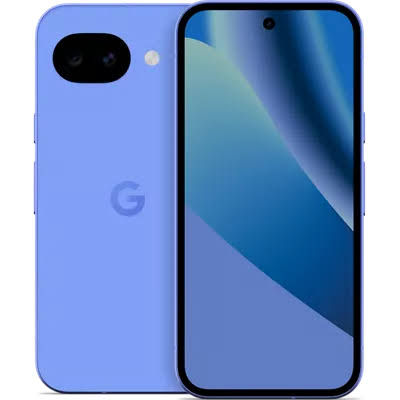
Both phones have 6.3-inch displays, 8GB RAM and a choice of 128GB or 256GB storage. Their similarities are substantial, making the specific differences more useful than a simple newer-versus-older label.
Design and Build: A Flatter Back and New Glass
The Pixel 10a measures 153.9 x 73 x 9mm and weighs 183g. The Pixel 9a is slightly taller and wider at 154.7 x 73.3 x 8.9mm, with a weight of 186g. The newer model is therefore a little smaller and lighter, although its body is fractionally thicker.
The 10a’s camera housing sits flush with its back, helping the phone lie flat on a table. Its composite back and aluminium frame retain the same broad material combination as the 9a. Both have IP68 protection. The more noticeable protection change is at the front, where Gorilla Glass 7i replaces Gorilla Glass 3.
| Feature | Pixel 10a | Pixel 9a |
|---|---|---|
| Dimensions | 153.9 x 73 x 9mm | 154.7 x 73.3 x 8.9mm |
| Weight | 183g | 186g |
| Display glass | Gorilla Glass 7i | Gorilla Glass 3 |
| Protection rating | IP68 | IP68 |
Display: Brighter, with the Same Size and Resolution
Both use a 6.3-inch Actua pOLED display with a 1080 x 2424 resolution and approximately 422ppi. Their 60-120Hz refresh-rate range is also shared. Text sharpness, screen size and the maximum refresh rate therefore stay closely matched.
Brightness is the main specification change. The 10a reaches up to 2,000 nits for HDR and 3,000 nits peak, compared with 1,800 and 2,700 nits on the 9a. Those higher ceilings give the new model more brightness headroom. Peak brightness applies under particular conditions, so it should not be confused with a brightness level maintained across every screen and task.
| Feature | Pixel 10a | Pixel 9a |
|---|---|---|
| Display | 6.3-inch pOLED | 6.3-inch pOLED |
| Resolution | 1080 x 2424 | 1080 x 2424 |
| Refresh rate | 60-120Hz | 60-120Hz |
| HDR / peak brightness | 2,000 / 3,000 nits | 1,800 / 2,700 nits |
Performance: Tensor G4 Carries Over
The Pixel 10a uses Google Tensor G4, just like the Pixel 9a. Both also include the Titan M2 security coprocessor. There is no new Tensor generation separating these two phones, and both combine that platform with 8GB RAM.
This is one of the strongest similarities in the comparison. Everyday apps, computational photography and Google AI features run on the same processor family.
The 10a’s newer camera tools do not come from a move to Tensor G5. Software can still change the available features and their behaviour, but the underlying chipset remains familiar.
| Feature | Pixel 10a | Pixel 9a |
|---|---|---|
| Processor | Tensor G4 | Tensor G4 |
| Security coprocessor | Titan M2 | Titan M2 |
| RAM | 8GB | 8GB |
Google Pixel 10a vs Pixel 9a Camera
Both phones combine a 48MP f/1.7 main camera with a 13MP f/2.2 ultrawide. Optical stabilisation supports the main camera, and both have a 13MP f/2.2 front camera. Neither adds a dedicated telephoto lens. The main sensor size remains 1/2 inch, while the ultrawide is 1/3.1 inch.
The Pixel 10a adds Camera Coach for guidance on composition and lighting, plus Auto Best Take for selecting group-photo expressions across frames. Macro Focus and Night Sight remain part of the camera experience. These are changes in how photos are captured and processed, rather than an increase in megapixels.
Video limits are also familiar: rear recording reaches 4K at 60fps, while the front camera records 4K at 30fps. The newer phone does not raise those maximum frame rates.
| Feature | Pixel 10a | Pixel 9a |
|---|---|---|
| Main camera | 48MP, f/1.7, OIS | 48MP, f/1.7, OIS |
| Ultrawide | 13MP, f/2.2 | 13MP, f/2.2 |
| Selfie camera | 13MP, f/2.2 | 13MP, f/2.2 |
| Rear / front 4K | 60fps / 30fps | 60fps / 30fps |
Software and Updates: A Later Starting Point
The Pixel 10a launched with Android 16, while the Pixel 9a launched with Android 15. Both receive seven years of OS, security and Pixel Drop updates from their original availability.
The 10a’s later release gives it a later support window; it does not mean that the older model remains on its launch software.
Gemini and Circle to Search are part of both phones’ software experience. The 10a also brings Satellite SOS to the A-series, adding an emergency communication option where the service is supported. Availability of individual AI and safety features depends on region, language and other service requirements.
| Feature | Pixel 10a | Pixel 9a |
|---|---|---|
| Launch Android version | Android 16 | Android 15 |
| Update commitment | 7 years from availability | 7 years from availability |
| Release year | 2026 | 2025 |
Storage: Matching 128GB and 256GB Options
Storage remains available in 128GB and 256GB versions, each with 8GB RAM. Neither the starting capacity nor the larger option changes between generations. Availability of individual colours and capacities can vary by market.
The 256GB version provides twice the nominal storage of the 128GB model on either generation. For large photo libraries and downloaded video, that capacity choice is more significant than the move from the 9a to the 10a itself.
| Feature | Pixel 10a | Pixel 9a |
|---|---|---|
| Storage options | 128GB, 256GB | 128GB, 256GB |
| RAM in both options | 8GB | 8GB |
Battery and Charging: Same Capacity, Higher Charging Limits
Both phones have a typical battery capacity of 5,100mAh. The 10a therefore gains no extra capacity over the 9a, despite its slightly different dimensions. Battery endurance still depends on screen brightness, connectivity and the apps in use.
Charging improves in both forms. Wired charging rises from 23W to 30W, while Qi wireless charging increases from 7.5W to 10W. These are maximum supported powers with suitable equipment. They give the 10a more charging headroom without changing the size of the battery being filled.
| Feature | Pixel 10a | Pixel 9a |
|---|---|---|
| Battery capacity | 5,100mAh | 5,100mAh |
| Wired charging | Up to 30W | Up to 23W |
| Qi wireless charging | Up to 10W | Up to 7.5W |
Main Differences Summary
The Pixel 10a refines the 9a formula with newer display glass, higher brightness, faster charging and additional photo and safety features. The processor, battery capacity, camera resolutions and storage choices remain shared, making this a focused update rather than a complete hardware overhaul.