Huawei’s Pura series has consistently pushed the boundaries of smartphone photography and design. With the Pura 90s Pro Max arriving as the latest flagship and the Pura 80 Ultra representing the previous generation’s pinnacle, potential buyers face a compelling dilemma.
Should you opt for the newer model with its groundbreaking 200MP telephoto camera, or does the Pura 80 Ultra’s dual-telephoto system and larger RAM still make it the better choice?
This comprehensive comparison breaks down every major aspect—design, display, camera hardware, software, storage, battery, and price—to help you decide which flagship deserves your investment.
Design & Build: Evolution or Revolution?
Both phones are large, premium devices with glass-and-aluminum construction, but they take noticeably different design approaches.
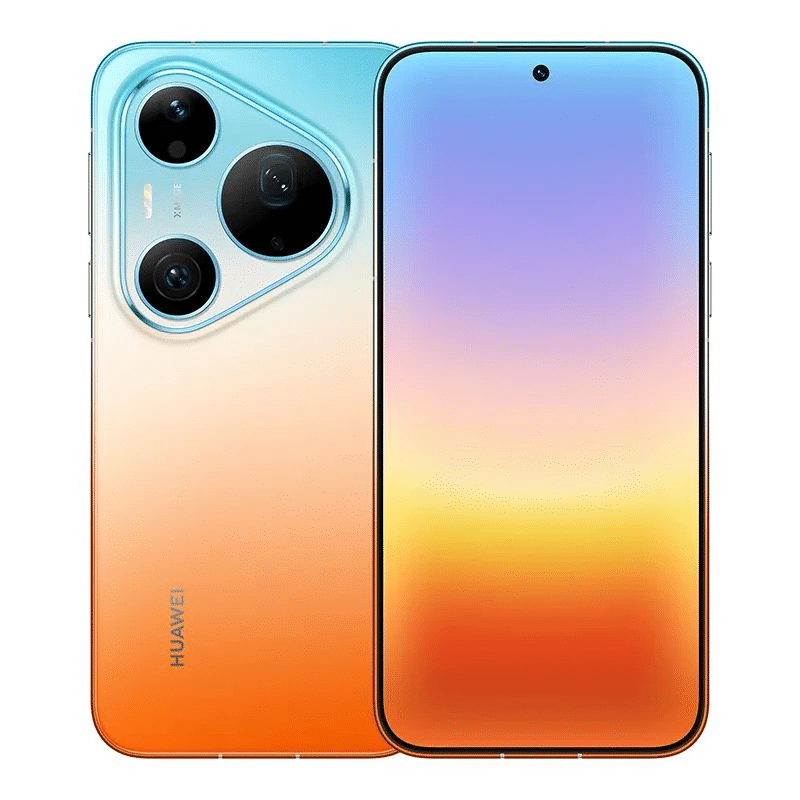
The Pura 90s Pro Max measures 164 x 77.1 x 8.1 mm and weighs approximately 230.5g. It features a distinctive triangular camera module with a mirror-like reflective surface that immediately catches the eye. Available in Blush Gold, Orange Ocean, Blaze Purple, and Graphite Black, the color options are bold and vibrant.
The Pura 80 Ultra is slightly more compact at 163 x 76.1 x 8.3 mm but marginally heavier at 233.5g. Its camera bump protrudes more significantly at approximately 12.5 mm. Color choices are more restrained with Prestige Gold and Golden Black.
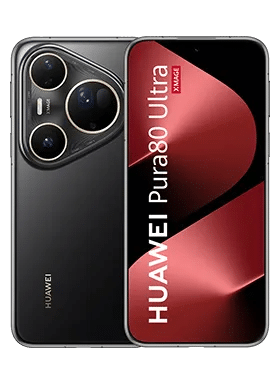
Both devices offer IP68/IP69 water and dust resistance—a significant advantage for users who need robust protection against water, dust, and even high-temperature water jets.
Design & Build Comparison
The Pura 90s Pro Max is slightly taller, wider, and thinner, with more vibrant color options. The Pura 80 Ultra has a more prominent camera bump but slightly better weight distribution. Both are equally durable with top-tier IP69 protection.
Display
The display is where both phones truly shine, though the Pura 90s Pro Max edges ahead with a larger panel.
The Pura 90s Pro Max features a 6.9-inch LTPO OLED display with a resolution of 2880 x 1308 pixels and ~460 ppi. It supports 1-120Hz adaptive refresh rate, HDR, and up to 300Hz touch sampling rate. The anti-reflective coating reduces reflected light by up to 70%, significantly improving outdoor visibility.
The Pura 80 Ultra offers a slightly smaller 6.8-inch LTPO OLED display with 2848 x 1276 pixels resolution and ~460 ppi. It also supports 1-120Hz adaptive refresh rate with 1440Hz high-frequency PWM dimming for reduced eye strain. Peak brightness reaches an impressive 3000 nits.
Both phones use Huawei’s durable Kunlun Glass for protection.
Display Comparison
The Pura 90s Pro Max offers a larger screen with superior anti-reflective coating, making it better for outdoor use. The Pura 80 Ultra counters with higher peak brightness and more advanced PWM dimming for eye comfort.
Huawei Pura 90s Pro Max vs Pura 80 Ultra: Camera
This is where the differences become most pronounced—and most fascinating. Huawei has taken fundamentally different approaches to camera systems between generations.
Pura 90s Pro Max Camera System
The Pura 90s Pro Max features a triple-camera setup:
- Main: 50MP Ultra Lighting HDR Camera with f/1.4~f/4.0 variable aperture and OIS. This uses a LOFIC sensor with RYYB pixel array.
- Ultra-Wide: 40MP f/2.2 aperture.
- Telephoto: 200MP Ultra Large Sensor Telephoto Camera with f/2.6 aperture, OIS, 1/1.28-inch RYYB sensor, and 4x optical zoom. Supports up to 100x digital zoom.
The telephoto camera is the headline feature—the industry’s first 200MP telephoto sensor. It supports 20x zoom video recording and meets CIPA 7.0 image stabilization standards. The 50MP main sensor with LOFIC technology is exclusive to the Pro Max model.
Pura 80 Ultra Camera System
The Pura 80 Ultra takes a different approach with a quad-camera system:
- Main: 50MP HDR Camera with 1-inch large sensor, f/1.6~f/4.0 variable aperture, and OIS.
- Ultra-Wide: 40MP f/2.2 aperture.
- Telephoto 1: 50MP with 3.7x optical zoom, f/2.4, Sensor Shift OIS.
- Telephoto 2: 12.5MP with 9.4x optical zoom, f/3.6, Sensor Shift OIS.
The Pura 80 Ultra’s dual-telephoto system provides two optical zoom paths—3.7x and 9.4x—without the need for complex lens-switching mechanisms. The 1-inch main sensor is significantly larger than the Pura 90s Pro Max’s 1/1.3-inch sensor.
The Pura 80 Ultra achieved an outstanding DxOMark score of 175, setting a significant gap compared to competitors.
Camera Comparison
This is a philosophical divide. The Pura 90s Pro Max prioritizes resolution and versatility with its groundbreaking 200MP telephoto and LOFIC main sensor.
The Pura 80 Ultra emphasizes optical reach and sensor size with its 1-inch main sensor and dual-telephoto system offering up to 9.4x optical zoom.
If you want extreme zoom without digital interpolation, the Pura 80 Ultra wins. If you want the highest resolution telephoto shots and the latest sensor technology, the Pura 90s Pro Max takes the crown.
Software: EMUI vs HarmonyOS
Software is where regional differences create significant divergence.
Global Versions
The Pura 90s Pro Max ships with EMUI 16.0 based on Android 16 (AOSP). Crucially, it comes with Google Mobile Services (GMS) pre-installed, giving users immediate access to the Google Play Store, Google Maps, Gmail, YouTube, and other mainstream apps in some regions.
This is a significant departure from previous Huawei flagships that shipped with Android 12.
The Pura 80 Ultra runs EMUI 15.0 based on an undisclosed version of Android. It does not come with GMS pre-installed.
Chinese Versions
In China, both phones run HarmonyOS—the Pura 90s Pro Max on HarmonyOS 6.1 and the Pura 80 Ultra on HarmonyOS 5.1.
Software Comparison
| Feature | Huawei Pura 90s Pro Max | Huawei Pura 80 Ultra |
|---|---|---|
| Global OS | EMUI 16.0 (Android 16 AOSP) | EMUI 15.0 (Android base) |
| Chinese OS | HarmonyOS 6.1 | HarmonyOS 5.1 |
| GMS Pre-installed (Global) | Yes | No |
| AI Features | EMUI 16 AI capabilities | Huawei AI Camera |
Verdict: The Pura 90s Pro Max offers a clear software advantage for global users with EMUI 16 based on Android 16 and native GMS support. The Pura 80 Ultra’s EMUI 15 lacks GMS, which may be a dealbreaker for users dependent on Google services. The Chinese versions running HarmonyOS are functionally similar but region-locked.
Storage Options
Storage configurations differ between the two models:
The Pura 90s Pro Max comes with 12GB RAM and storage options of 256GB or 512GB. There is no external storage support.
The Pura 80 Ultra offers more RAM with 16GB (12GB in some regions) and storage of 512GB or 1TB. External storage is also not supported.
Storage Comparison
| Feature | Huawei Pura 90s Pro Max | Huawei Pura 80 Ultra |
|---|---|---|
| RAM | 12GB | 16GB (12GB in some regions) |
| Internal Storage | 256GB / 512GB | 512GB / 1TB |
| Expandable Storage | Not supported | Not supported |
Verdict: The Pura 80 Ultra wins on memory and storage with 16GB RAM and up to 1TB storage. The Pura 90s Pro Max’s 12GB RAM may feel limiting for power users, though it remains adequate for most tasks.
Battery: Capacity and Charging
Battery specifications vary significantly by region due to regulatory differences.
The Pura 90s Pro Max features a 6000mAh typical capacity (5850mAh rated) for non-EU markets, but 5270mAh for EU markets. It supports 100W wired and 80W wireless fast charging.
The Pura 80 Ultra offers a 5170mAh battery with 100W wired and 80W wireless charging support.
Both phones support reverse wireless and reverse wired charging.
Battery Comparison
The Pura 90s Pro Max offers a significant battery capacity advantage (6000mAh vs 5170mAh) in non-EU markets, potentially delivering noticeably longer battery life. Both offer identical fast-charging speeds.
The Pura 90s Pro Max represents Huawei’s vision for the future—higher resolution telephoto, better software integration, and aggressive pricing.
The Pura 80 Ultra remains a photography powerhouse with its 1-inch sensor and dual-telephoto system, but it’s a year older and lacks the software advantages of its successor.
For most users, the Pura 90s Pro Max offers the better overall package: newer technology, better software, larger battery, and lower price.
However, photography purists who value extreme optical zoom and the largest possible sensor may still find the Pura 80 Ultra worth the premium.