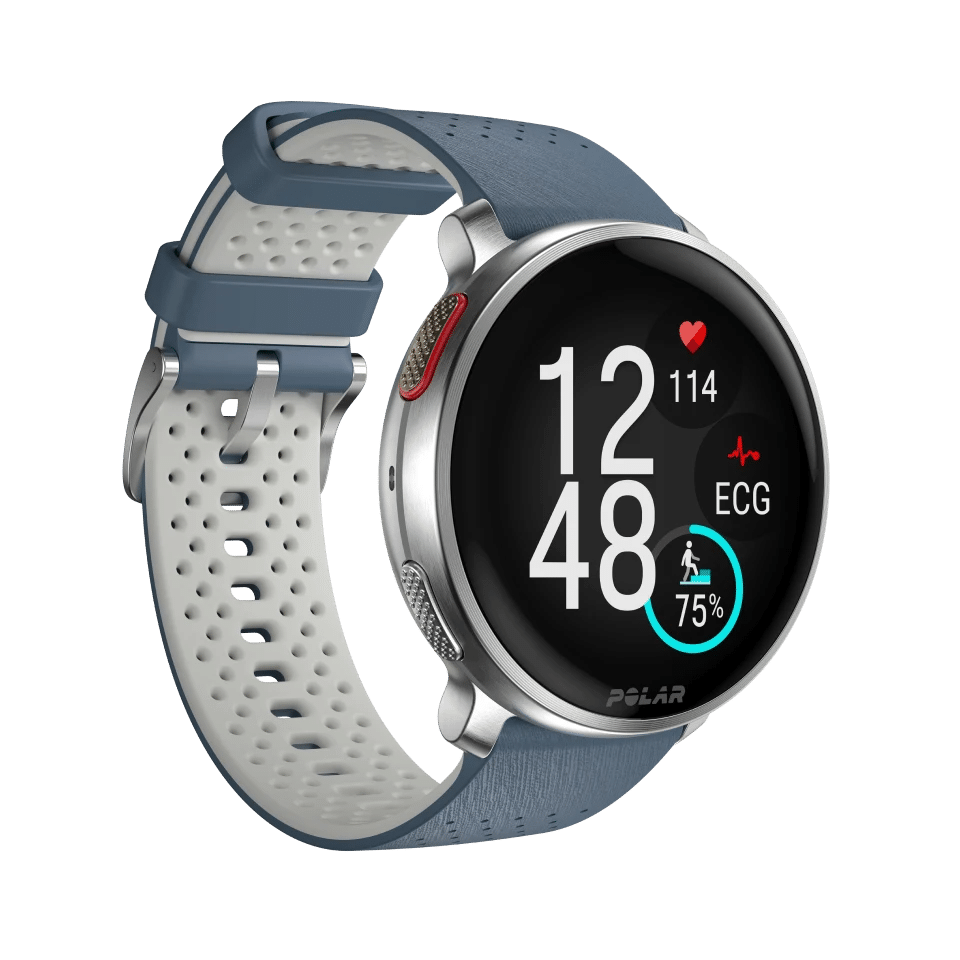
The Polar Vantage V3 isn’t just a new watch; it’s a statement. After years of playing catch-up in the premium multisport watch market, Polar has launched what some users call their most important product in a decade—perhaps ever.
Priced at $599, it represents a massive technological leap for the brand, packing an AMOLED display, dual-frequency GPS, offline maps, and a suite of advanced biosensors into a sleek package.
This review dives deep into the Vantage V3’s performance, analyzing the features that matter most to dedicated athletes and seeing if Polar has truly reclaimed its place among giants like Garmin and Suunto.
Key Specifications at a Glance
Before we explore the experience, here are the vital stats that define the Polar Vantage V3.
The Major Upgrades: Where the Vantage V3 Shines
The V3 represents a ground-up hardware refresh. Polar focused on building a powerful new platform, addressing key criticisms of past models.
A Brilliant AMOLED Display & Top-Tier GPS
Gone is the dim MIP display of old. The new 1.39-inch AMOLED screen is vibrant, with a peak brightness of about 1,050 nits, making it easily readable in direct sunlight. It’s a touchscreen, but Polar smartly retains five physical buttons for reliable control during sweaty or rainy workouts.
More crucially, Polar has integrated a dual-frequency GPS chipset and, just as importantly, redesigned the antenna.
This combination aims to deliver the pinpoint accuracy that serious runners and trail enthusiasts demand, especially in challenging urban or wooded environments.
Polar’s First Foray into Offline Mapping
This is a landmark feature for Polar. The V3 comes with 32GB of storage to house downloadable, detailed topographic maps.
You can load regional maps via your computer, and they display on the watch with trails, rivers, and contour lines.
While it supports turn-by-turn navigation with Komoot integration, it lacks on-the-fly rerouting. For Polar users, however, simply having a full-color map on the wrist is a game-changer.
The Elixir Biosensing Suite: Comprehensive Health Tracking
Polar leverages its sports science heritage with the new “Elixir” biosensing platform. Beyond the excellent Gen4 optical heart rate (OHR) sensor, Polar has added three new health sensors:
- Wrist-based ECG: Allows for on-demand heart rhythm checks and enables strap-free Orthostatic Tests for recovery metrics.
- Skin Temperature Sensor: Tracks nightly fluctuations to establish a baseline, though its practical application is still developing.
- Pulse Ox (SpO2): Monitors blood oxygen saturation levels.
The Athlete’s Experience: Daily Use & Training
Training Tools and Recovery Insights
The V3 shines with Polar’s mature ecosystem of training tools.
Training Load Pro analyzes strain on your cardiovascular and musculoskeletal systems, while Recovery Pro offers detailed guidance.
The ability to run an Orthostatic Test using the wrist ECG (no chest strap required) is a significant convenience.
For daily readiness, features like Nightly Recharge (measuring overnight recovery) and SleepWise (predicting daytime alertness) provide actionable insights.
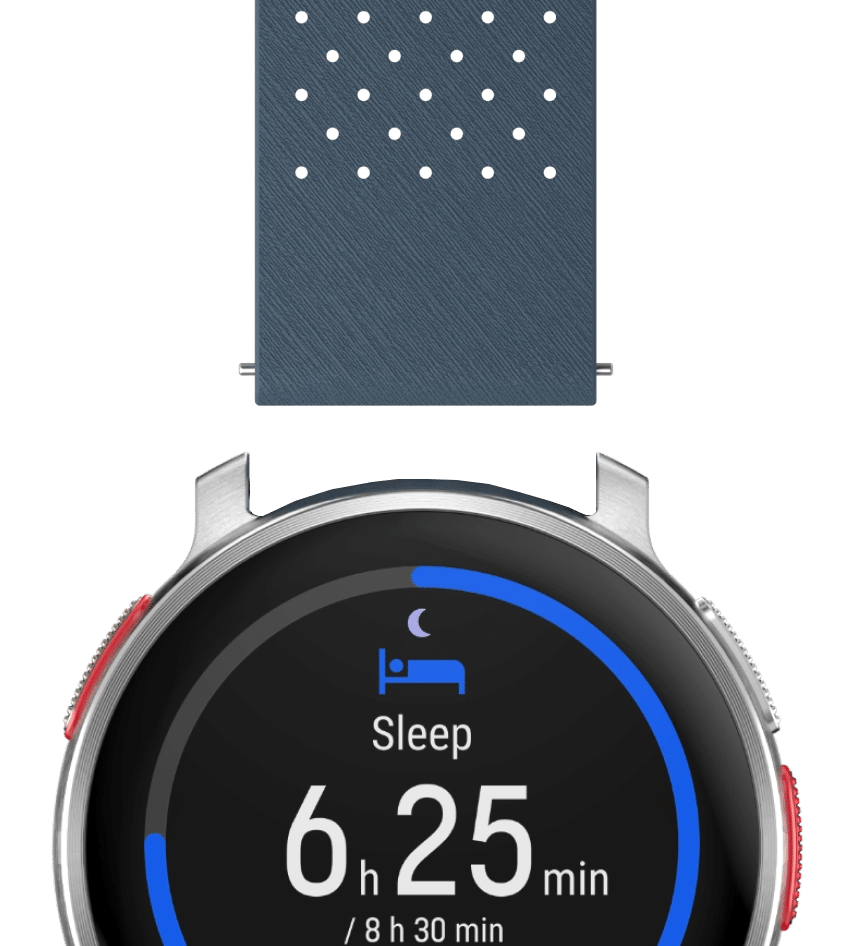
Reviewers confirm that Polar’s sleep tracking and HRV data are accurate and align well with data from other top brands.
Battery Life: The Trade-Off
Battery performance is the V3’s most debated aspect. Polar advertises up to 8 days of smartwatch use or 43 hours in full GPS mode.
In real-world testing, with always-on display and full data tracking, this Polar watch lasts closer to 5-8 days, which is solid but not class-leading.
For most athletes, a weekly charge will suffice, but ultrarunners may need to manage settings carefully.
How It Stacks Up: Vantage V3 vs The Competition
Choosing a watch often comes down to ecosystem preference. Here’s how the Vantage V3 compares to two key rivals.
Versus the Suunto Race 2
The Suunto Race 2 (starting at $499) is a compelling alternative, especially for outdoor enthusiasts.
- Strengths: The Race 2 boasts a stunning 1.5-inch AMOLED display, exceptional battery life (up to 55 hours in top GPS mode), and includes sapphire glass for scratch resistance. Its new Climb Guidance feature is excellent for hilly terrain.
- Weaknesses: Its historical weakness remains: less reliable optical heart rate during intense exercise. Its data presentation is also considered less intuitive than Polar’s.
- Verdict: Choose the Race 2 for supreme battery, a brilliant screen, and rugged outdoor features. Choose the Vantage V3 for superior heart rate accuracy and more polished, actionable physiological insights.
Versus the Garmin Forerunner 570
The Garmin Forerunner 570 ($549) represents Garmin’s mid-range AMOLED offering.
- Strengths: It offers a bright AMOLED screen, voice calls via smartphone, and offline music storage (via Spotify). It integrates seamlessly into Garmin’s unparalleled ecosystem with features like Training Readiness and Garmin Coach.
- Weaknesses: It notably lacks offline maps (only breadcrumb navigation) and does not include an ECG sensor, omissions that are hard to justify at its price point.
- Verdict: The Forerunner 570 is a better smartwatch and music companion. The Vantage V3 is the superior sports watch for the price, offering more advanced hardware like maps and ECG.
Final Verdict: Who Should Buy the Polar Vantage V3?
The Polar Vantage V3 is a triumphant return to form. It successfully modernizes Polar’s flagship with a gorgeous display, top-tier navigation, and the most comprehensive sensor suite in its history.
Buy the Polar Vantage V3 if:
- You value accurate physiological data (heart rate, recovery, sleep) above all else.
- You’ve wanted offline maps within the clean, actionable Polar Flow ecosystem.
- You appreciate a watch that focuses on athletic performance over smartwatch frills.
Consider an alternative if:
- Ultra-long battery life is your non-negotiable priority (look to Suunto or Garmin’s Fenix series).
- You need onboard music storage or advanced smart features like contactless payments.
- Your budget is below $500, where watches like the Polar Vantage M3 (See comparison of the two watches) or Coros Pace 4 offer tremendous value.
Ultimately, the Vantage V3 proves Polar is back in the game, not just as a niche player, but as a serious contender for the dedicated athlete who trusts data to guide their progress.
About the Author