In the ever-evolving world of fitness trackers, the Polar Loop stands out as a minimalist, screen-free option designed for those who want reliable health and activity insights without the distractions of a display or ongoing subscriptions.
Released in September 2025, this wearable health band from Polar promises 24/7 tracking of heart rate, sleep, and daily activity, all synced seamlessly to the free Polar Flow app.
This Polar Loop review comprehensive guide covers everything you need to know about the device’s features and how it stacks up against competitors like the Whoop Strap and Amazfit Helio Strap.
We’ll dive into its hardware, sensors, battery life, tracking capabilities, integrations, and more, based on official specs and early user feedback.
Hardware: Build, Dimensions, Weight, and Strap
Design and Construction
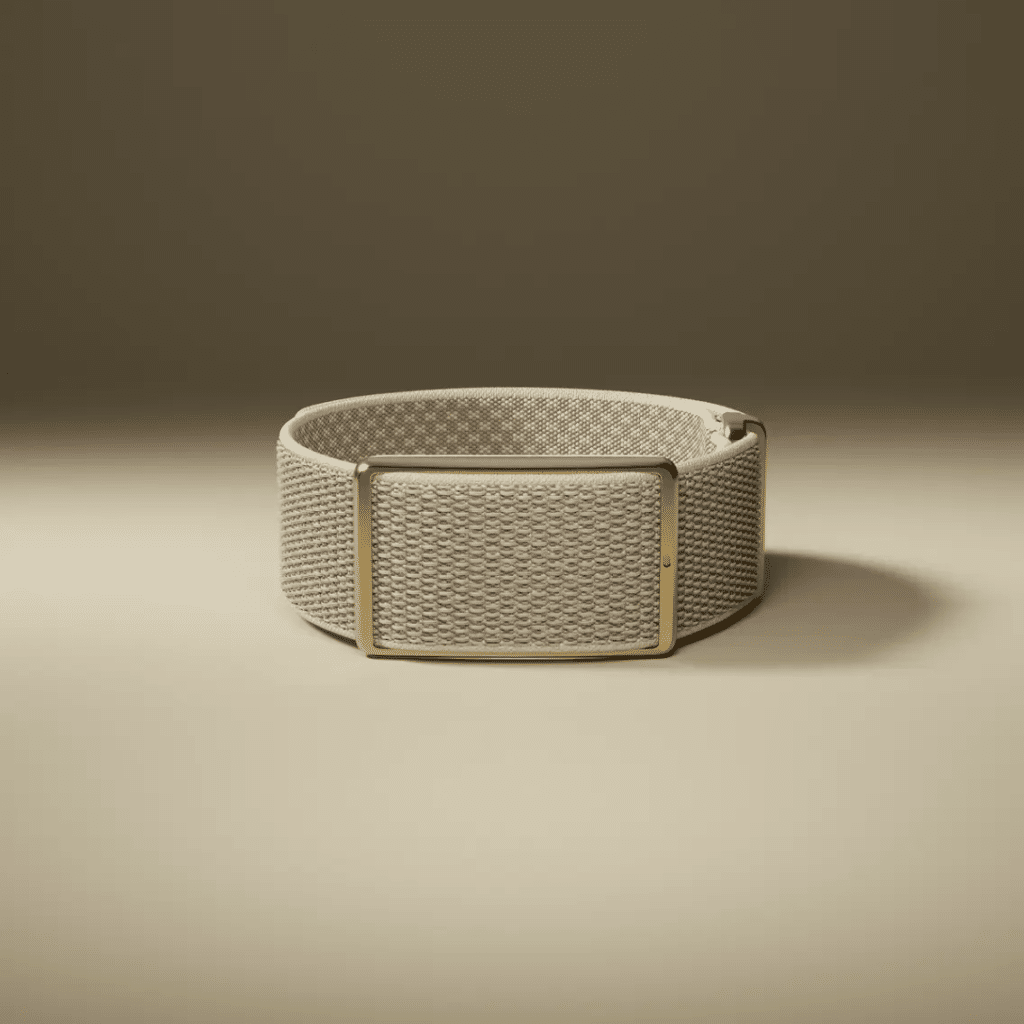
Polar has opted for a minimalist approach with a screenless band that prioritizes daily wearability. The Loop’s body is compact and unobtrusive: at approximately 42 x 27 x 9 mm with a total weight of ≈29 grams, it is lighter and slimmer than many traditional fitness watches, making it suitable for long-term wear including sleep
Key Physical Features
- No built-in display or buttons — interaction occurs through the Polar Flow app.
- Materials: Stainless steel and high-grade polymer blend for a durable yet lightweight construction.
- Bands/Straps: Soft textile or woven bands designed for comfort; interchangeable straps available separately.
- Water resistance: Rated to 30 m (WR30), tolerating rain, showers, and casual swimming.
Fit and Comfort
Its low profile and light weight make the Loop comfortable to wear unintrusively day and night, which is critical for accurate long-term tracking and recovery insights.
Sensors and Internal Components
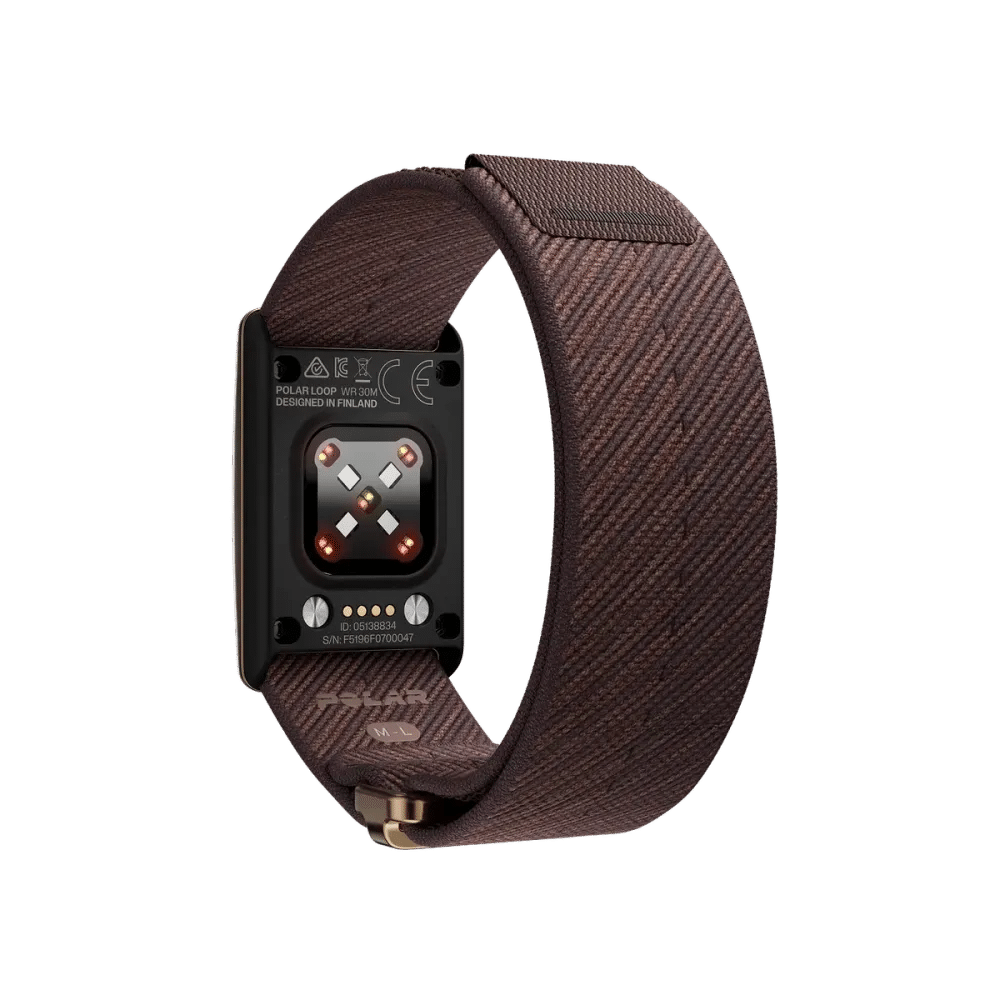
The Polar Loop features a suite of internal sensors targeted at accurate activity and physiological monitoring without a visual interface.
Included Sensors
- Precision Prime Optical Heart Rate Sensor (Gen 3.5) for continuous HR and heart rate variability (HRV) tracking.
- Accelerometer to detect motion, steps, and activity patterns.
- Temperature Sensor (Gen 1) included in hardware but not fully user-accessible in the app.
What’s Not Included
- No built-in GPS
- No barometer, gyroscope, or compass
- No SpO2 or advanced biometric sensors exposed in the app
These omissions reflect the Loop’s focus on core fitness metrics rather than full biometric profiling.
Battery Life and Charging
One of the Loop’s strong points is its battery endurance. According to official specs:
- Battery Life: Up to 8–9 days on a full charge with typical use.
- Charging: USB-C via proprietary Polar connector.
- Data Storage: The tracker can hold several weeks’ worth of data offline before syncing according to Tom’s Guide.
Many users appreciate this extended life compared with battery drains on screen-based devices. Battery life rivals that of competing screenless bands Like Whoop and Amazfit Helio Strap, and significantly outlasts most smartwatches.
Sport Tracking Features
Without a built-in display or standalone GPS, the Polar Loop relies on its internal sensors and connected smartphone to handle sport and training data.
Core Sport Metrics
- Continuous heart rate monitoring
- Steps, calories, and movement
- Training Load Pro — Polar’s framework for measuring training stress and load
- Basic session detection and logging
- Syncs with smartphone GPS for pace/distance via Polar Flow (when used).
Limitations
- Automatic workout detection may be unreliable or inconsistent compared with leading competitors.
- Lack of built-in GPS means no standalone route maps — ideal for runners using a phone or traditional Polar sports watch alongside.
Health Tracking Features and Wellness Metrics
The Loop provides more comprehensive health monitoring than many basic trackers:
Wellness Metrics
- 24/7 Heart Rate & HRV Trends
- Sleep Duration and Stages
- Recovery and Stress Metrics such as Polar’s Nightly Recharge and sleep insights
- Resting heart rate and activity balance metrics.
Unlike some competitors, Polar’s implementation avoids recurring subscription fees.
However, advanced metrics such as SpO2 or body temperature readings currently aren’t fully accessible in the Flow app despite hardware presence.
Sleep and recovery metrics are solid and often dependable, but the app interface and automatic detection lag behind more polished platforms.
Integration with Polar Flow APP
The Polar Loop integrates seamlessly with the Polar Flow app, the same platform used by Polar’s GPS watches like Vantage V3 and heart rate monitors. Key advantages:
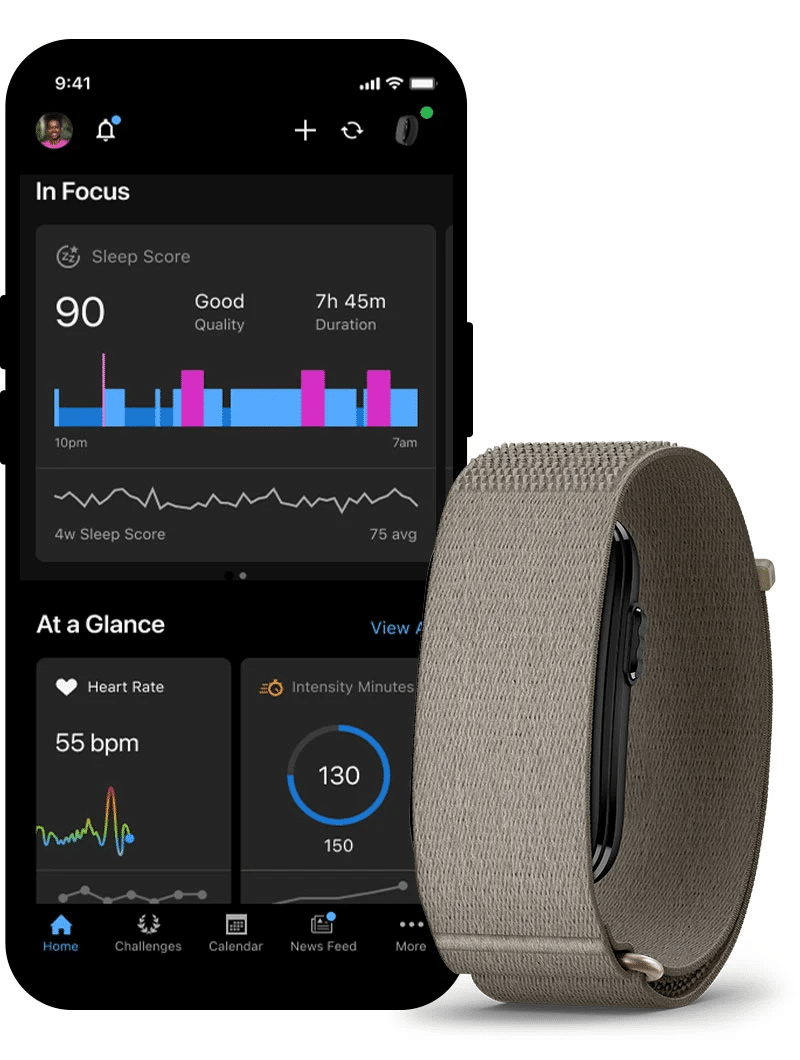
- Centralized dashboard for activity, sleep, HR, and training data
- Compatibility with Polar’s ecosystem — workouts from Loop can complement data from other Polar devices
- Syncing with Polar’s web portal for in-depth analysis
Who It’s Useful For:
This integration is especially powerful for athletes who already use Polar devices and want continuous health and recovery data between structured training sessions.
Polar Loop vs Helio Strap
We have put a side by side comparison of Polar Loop vs Helio Strap and Whoop band.
| Feature | Polar Loop | WHOOP 50 Peak Health and Fitness Tracker | Amazfit Helio Strap Fitness Tracker Wristband |
|---|---|---|---|
| Screen | No | No | No |
| Subscription | None | Required for full features | None |
| Heart Rate & HRV | Yes | Yes | Yes |
| Sleep & Recovery | Yes | Advanced | Advanced |
| GPS | Smartphone only | Smartphone only | Smartphone only |
| SpO2 | No | Yes | Yes |
| Battery Life | ~8 days | ~14 days | ~10 days |
| App Ecosystem | Polar Flow | Whoop app | Zepp / integrated apps |
Polar Loop vs Whoop Band
- Strengths: No subscription fees, solid sleep and recovery metrics, integration with Polar Flow.
- Weaknesses: App and auto detection less refined; Whoop still leads in intuitive recovery analytics and community.
Polar Loop delivers significant value but lacks some of Whoop’s polished performance metrics.
Polar Loop vs Amazfit Helio Strap
- Loop Pros: Polar’s training analytics and ease of integration for Polar users.
- Helio Pros: Broader biometric sensors like SpO2, stress, and temperature with a slightly longer battery life.
Who the Polar Loop Is Best For
The Polar Loop appeals to:
- Individuals focused on wellness and recovery without constant screen interaction
- Athletes using other Polar devices who want continuous monitoring
- Users who prefer a no-subscription model
- People comfortable relying on a companion app for detailed insights
In contrast, smartwatches with displays (like Garmin, Apple Watch, or Fitbit) suit users who want real-time feedback, app notifications, and interactive interfaces.
Conclusion
The Polar Loop is a thoughtfully minimalist fitness tracker that sacrifices a display and some advanced sensors for a distraction-free, subscription-free experience.
Its strength lies in solid battery life, seamless Polar Flow integration, and reliable core health metrics.
Reviewers and users generally appreciate its comfort and sleep tracking but note that the app and automatic workout detection need refinement to compete fully with modern rivals like Whoop and Amazfit’s Helio Strap.
If your priority is continuous health insights without visual clutter — and you’re already woven into the Polar ecosystem — the Loop is a compelling choice.
Otherwise, competitors may offer broader tracking capabilities depending on your fitness needs.