The Samsung Galaxy A57 vs Galaxy A56 comparison centers on a lighter body, stronger water resistance and a newer processor. The A57 keeps the familiar large-screen format, triple rear cameras and battery capacity, so this generation changes how the phone is packaged more than the basic feature list.
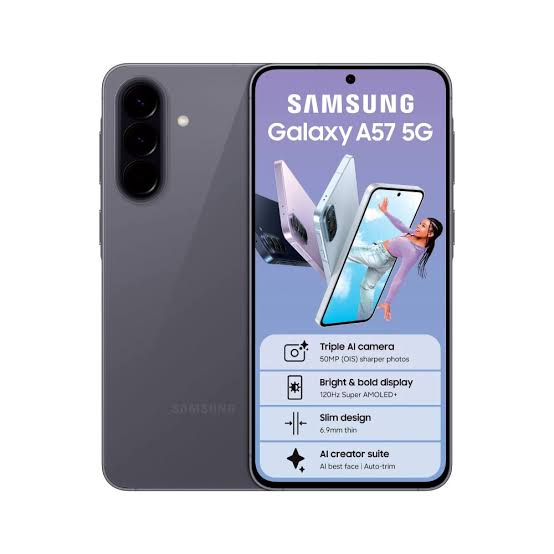
Both models belong to Samsung’s upper Galaxy A range. Their shared features remain substantial, while the differences are most obvious in dimensions, processing hardware and the software version supplied at launch.
Design and Build: A Lighter, Thinner Body
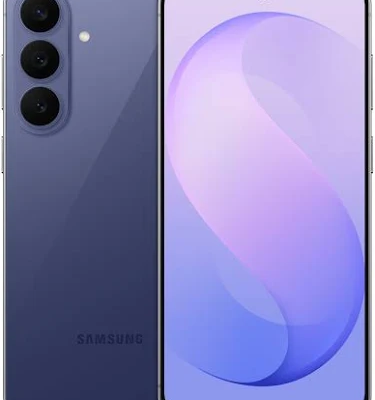
The Galaxy A57 measures 161.5 × 76.8 × 6.9mm and weighs 179g. The Galaxy A56 measures 162.2 × 77.5 × 7.4mm and weighs 198g. That makes the newer phone 19g lighter and 0.5mm thinner, with a slightly smaller footprint despite retaining the same display size.
Gorilla Glass Victus+ remains part of the construction. Water resistance improves from IP67 on the A56 to IP68 on the A57. The rated freshwater test depth rises from 1 metre to 1.5 metres for up to 30 minutes; neither rating makes water resistance permanent. The slimmer body is the more consistent everyday difference, particularly when holding the phone for extended reading or video calls.
| Feature | Galaxy A57 | Galaxy A56 |
|---|---|---|
| Dimensions | 161.5 × 76.8 × 6.9mm | 162.2 × 77.5 × 7.4mm |
| Weight | 179g | 198g |
| Glass protection | Gorilla Glass Victus+ | Gorilla Glass Victus+ |
| Dust/water rating | IP68 | IP67 |
Display: Familiar Size and Resolution
Both phones have a 6.7-inch display with a 1080 × 2340 resolution and refresh rates up to 120Hz. Text and video therefore occupy a similar amount of screen space, and the newer model does not add more pixels.
The A57 uses Super AMOLED Plus branding, while the A56 uses Super AMOLED.
The A57’s slimmer bezels help fit that screen into its smaller body. The shared refresh-rate ceiling is also relevant: smooth scrolling was already available on the A56. Display size, resolution and refresh rate alone do not establish a large generational change in viewing quality.
| Feature | Galaxy A57 | Galaxy A56 |
|---|---|---|
| Panel | Super AMOLED + | Super AMOLED |
| Size | 6.7 inches | 6.7 inches |
| Resolution | 1080 × 2340 | 1080 × 2340 |
| Refresh rate | Up to 120Hz | Up to 120Hz |
Galaxy A57 vs Galaxy A56: Processor
The Exynos 1680 replaces the Exynos 1580. Both are octa-core processors, but core count does not describe the entire upgrade: graphics, image processing and the surrounding memory and cooling systems also affect how a phone handles work.
Samsung pairs the A57 with an enlarged vapour chamber, aimed at controlling heat during gaming and recording. This is useful context for the new processor, although it does not establish a fixed frame-rate advantage in every game. The main confirmed change is the platform itself; everyday responsiveness also depends on software, the application and the selected memory configuration.
| Feature | Galaxy A57 | Galaxy A56 |
|---|---|---|
| Processor | Exynos 1680 | Exynos 1580 |
| CPU | Octa-core | Octa-core |
Cameras: The Same Lens Roles
The A57 retains a 50MP main camera with optical image stabilisation, a 12MP ultrawide and a 5MP macro camera. The A56 has the same resolutions and lens roles. Neither setup adds a dedicated telephoto camera, so the newer model does not expand the rear camera selection.
A 12MP front camera also carries over, and rear video recording reaches 4K at 30fps on both phones. Samsung’s work on the A57 includes image processing and subject recognition.
Those changes can affect the finished image, but matching megapixel counts alone cannot show their impact. The hardware comparison is therefore straightforward: a familiar camera arrangement with updated processing behind it.
| Feature | Galaxy A57 | Galaxy A56 |
|---|---|---|
| Main camera | 50MP, OIS | 50MP, OIS |
| Ultrawide / macro | 12MP / 5MP | 12MP / 5MP |
| Front camera | 12MP | 12MP |
| Rear video | Up to 4K/30fps | Up to 4K/30fps |
Software: A Newer Starting Point
The Galaxy A57 launched with Android 16 and One UI 8.5; the A56 launched with Android 15 and One UI 7. These are launch versions, both phones can be updated to support latest features.
Both have support for up to six major Android upgrades. The A57 therefore starts its update path one Android generation later. Its software also includes tools such as voice transcription and photo editing, with feature availability dependent on language, region and software version.
| Feature | Galaxy A57 | Galaxy A56 |
|---|---|---|
| Launch Android | Android 16 | Android 15 |
| Launch interface | One UI 8.5 | One UI 7 |
| Major OS upgrades | Up to six years | Up to six years |
Storage: A Higher Capacity Option
The A57’s configurations include 128GB and 256GB versions with 8GB RAM, alongside a 512GB version with 12GB RAM in selected markets. The A56 offers 128GB and 256GB storage with several RAM combinations.
The higher A57 capacity provides more space for large games, offline video and camera files. It should not be confused with a universal RAM increase: a higher storage ceiling and the memory in an individual handset are separate specifications.
| Feature | Galaxy A57 | Galaxy A56 |
|---|---|---|
| Storage choices | 128GB, 256GB, 512GB; market-dependent | 128GB, 256GB |
| Example configuration | 512GB with 12GB RAM | 256GB with 12GB RAM |
Battery and Charging: Capacity Is Unchanged
Both phones have a 5,000mAh battery and 45W wired charging. The A57 therefore fits the same nominal capacity into a thinner, lighter body. Neither the battery figure nor the charging wattage represents a generational increase.
Processor efficiency and software can still influence runtime, but equal capacity is not evidence of equal endurance under every workload.
| Feature | Galaxy A57 | Galaxy A56 |
|---|---|---|
| Battery | 5,000mAh | 5,000mAh |
| Wired charging | 45W | 45W |
Main Differences
The Galaxy A57’s strongest changes are its reduced weight, thinner body, IP68 rating and Exynos 1680 processor. A newer software starting point and a 512GB option add further distinctions. Screen size, camera resolutions, battery capacity and charging power remain closely aligned with the A56.